

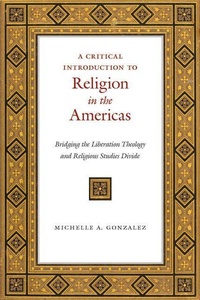
A Critical Introduction to Religion in the Americas
Bridging the Liberation Theology and Religious Studies Divide
1st Edition
Published on 18. July 2014
277 pages
978-1-4798-2121-1 (ISBN)
Description

A Critical Introduction to Religion in
the Americas argues
that we cannot understand religion in the Americas without understanding its
marginalized communities. Despite frequently voiced doubts among religious
studies scholars, it makes the case that theology, and particularly liberation
theology, is still useful, but it must be reframed to attend to the ways in
which religion is actually experienced on the ground. That is, a liberation
theology that assumes a need to work on behalf of the poor can seem out of
touch with a population experiencing huge Pentecostal and Charismatic growth,
where the focus is not on inequality or social action but on individual
relationships with the divine.
By
drawing on a combination of historical and ethnographic sources, this volume provides
a basic introduction to the study of religion and theology in the Latino/a,
Black, and Latin American contexts, and then shows how theology can be reframed
to better speak to the concerns of both religious studies and the real people
the theologians' work is meant to represent. Informed by
the dialogue partners explored throughout the text, this volume presents a
hemispheric approach to discussing lived religious movements. While not
dismissive of liberation theologies, this approach is critical of their past
and offers challenges to their future as well as suggestions for preventing
their untimely demise. It is clear that the liberation theologies of tomorrow
cannot look like the liberation theologies of today.
the Americas argues
that we cannot understand religion in the Americas without understanding its
marginalized communities. Despite frequently voiced doubts among religious
studies scholars, it makes the case that theology, and particularly liberation
theology, is still useful, but it must be reframed to attend to the ways in
which religion is actually experienced on the ground. That is, a liberation
theology that assumes a need to work on behalf of the poor can seem out of
touch with a population experiencing huge Pentecostal and Charismatic growth,
where the focus is not on inequality or social action but on individual
relationships with the divine.
By
drawing on a combination of historical and ethnographic sources, this volume provides
a basic introduction to the study of religion and theology in the Latino/a,
Black, and Latin American contexts, and then shows how theology can be reframed
to better speak to the concerns of both religious studies and the real people
the theologians' work is meant to represent. Informed by
the dialogue partners explored throughout the text, this volume presents a
hemispheric approach to discussing lived religious movements. While not
dismissive of liberation theologies, this approach is critical of their past
and offers challenges to their future as well as suggestions for preventing
their untimely demise. It is clear that the liberation theologies of tomorrow
cannot look like the liberation theologies of today.
Reviews / Votes
"Franklin has penned a valuable book that examines the changing context of youth activism in the post-civil rights era...The book closes by explaining how the issues of today are linked to the past, with particular attention to juvenile justice and the labor movement. This is extraordinarily difficult to do, and the author does it withgreat ease . . . A progressive and valuable book." (Choice) "Thoroughly interrogates methodological presuppositions in contemporary studies of theology and religion. I strongly recommend this book to scholars from either discipline who desire to honestly appraise how we investigate our subjects and what we intend to accomplish in our work." - Timothy Matovina,University of Notre Dame "Gonzalezs work is provocative. Her introduction to Latin American, Black, and Latino/a liberation theologies is sharply critical." (Modern Theology) "A great resource for introducing the interdisciplinary study of religion in the Americas, with a focus on the relevance of the reflected faith experience and religious practices of marginalized populations for the academic study of religion. Presenting a hemispheric landscape, this book argues for constructive relationships and collaborative methodologies between theology and religious studies in the interest of both engaging todays lived religion and affirming the necessity of Liberation Theologies in todays world." - Maria Pilar Aquino,University of San DiegoMore details
Language
English
Place of publication
New York
United States
Target group
Professional and scholarly
File size
1,71 MB
ISBN-13
978-1-4798-2121-1 (9781479821211)
Copyright in bibliographic data and cover images is held by Nielsen Book Services Limited or by the publishers or by their respective licensors: all rights reserved.
Schweitzer Classification
Other editions
Additional editions
Michelle A. Gonzalez
A Critical Introduction to Religion in the Americas
Bridging the Liberation Theology and Religious Studies Divide
Book
07/2014
New York University Press
€97.99
Shipment within 10-20 days
Michelle A. Gonzalez
A Critical Introduction to Religion in the Americas
Bridging the Liberation Theology and Religious Studies Divide
Book
07/2014
New York University Press
€34.50
Shipment within 10-20 days
Person
Michelle A. Gonzalez is Associate Professor of Religious Studies at the University of Miami and author of Afro-Cuban Theology: Religion, Race, Culture, and Identity.
Content
- Cover
- Contents
- Acknowledgments
- Introduction
- 1. Latin American Liberation Theology
- 2. Black Liberation Theology
- 3. Latino/a Theology: To Liberate or Not to Liberate?
- 4. African Diaspora Religion
- Conclusion
- Notes
- Bibliography
- Index
- A
- B
- C
- D
- E
- F
- G
- H
- I
- J
- K
- L
- M
- N
- O
- P
- R
- S
- T
- U
- V
- W
- Y
- About the Author
