

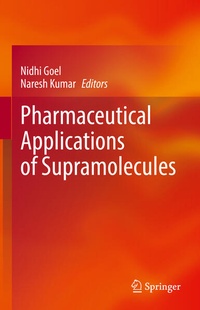
Pharmaceutical Applications of Supramolecules
Description

This book outlines the use of supramolecules as different pharmaceutical drugs. Supramolecular chemistry in pharmaceutical sciences is quite a young and rapidly developing field. Supramolecular assemblies might offer an alternative for existing pharmaceutical formulations, as they facilitate the improvement of physicochemical and pharmacological properties i.e., higher bioavailability, better biocompatibility and drug-targeting, fewer multidrug-resistances. This book offers an overview of the recent advances in supramolecular structures and discusses the future aspects and challenges related to the development of these molecules, providing also a perspective on how to overcome these issues.
Divided into 13 chapters contributed by experts in their field, the book provides a deeper understanding of intermolecular forces playing pivotal roles in mediating the interactions between chemical molecules and biological systems by focusing on different applications of supramolecularcompounds. In this book, readers will find valuable insights into the preparation of supramolecules and the latest research and development trends of supramolecules as anticancer drugs, including liquid-crystalline supramolecular assemblies, and as antimicrobial, antiviral, anti-inflammatory and cardiovascular drugs. Particular attention is given to the application of supramolecules in the fields of biomedicine, bioimaging, and vaccine development.Given its breadth, this book will appeal to a wide readership from researchers and students interested in these fields to professionals in the pharma industry.
More details
Other editions
Additional editions
Persons
Content
Chapter 1: Supramolecules in pharmaceutical science: A brief overview.- Chapter 2: Basic strategy and methods of preparation for supramolecules.- Chapter 3: Research and development of supramolecules as anticancer drugs.- Chapter 4: Research and development of liquid-crystalline supramolecular assemblies as anticancer drugs.- Chapter 5: Progressive approach of supramolecules towards the advancement of antimicrobial drugs.- Chapter 6: Promising functional supramolecules in antiviral drugs.- Chapter 7: Role of supramolecules in anti-inflammatory drugs.- Chapter 8: Recent advancements of supramolecules in the evolution of cardiovascular drugs.- Chapter 9: Development of supramolecules in the field of nanomedicines.- Chapter 10: Supramolecular self-assembled peptide-based nanostructures and their applications in biomedicine.- Chapter 11: Recent advancement of supramolecules in the field of bioimaging.- Chapter 12: Role of supramolecules in vaccine development.- Chapter 13: Supramolecules: Future challenges and perspectives.
