

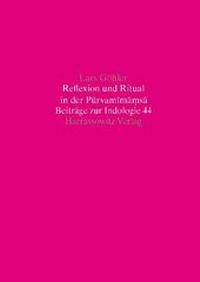
Reflexion und Ritual in der Purvamimamsa
1st Edition
Published on 1. May 2014
VIII, 145 pages
978-3-447-19092-3 (ISBN)
Description

Der Übergang von der Ideenwelt des Veda zu derjenigen der Upanisaden wird in der Regel als Beginn der indischen Philosophie angesehen. Lars Göhler zeigt in seiner Monographie zur frühen Philosophie in Indien, dass es neben den Upanisaden hingegen noch eine weitere Traditionslinie in der Entstehung der indischen Philosophie gegeben hat: Sie führt von der Opferritualistik des Veda zu der ihr nachfolgenden Ritualwissenschaft und Hermeneutik der Mimamsa. Ein Großteil der Begriffe der indischen Philosophie, die ursprünglich aus dem Bereich der Opferritualistik stammen, wurden in der Mimamsa von ihrem engeren rituellen Gebrauch gelöst und erhielten eine philosophische Dimension. Ebenso haben die Diskurslogik, Sprachphilosophie und Hermeneutik der Mimamsa in methodischer Hinsicht wichtige Ausgangspunkte für die klassische Philosophie Indiens dargestellt. Göhler beleuchtet in seiner Studie detailliert diese weitgehend unbekannte Traditionslinie und zeigt ihren entscheidenden Einfluss auf die Entwicklung der indischen Philosophie auf.
All prices
More details
Other editions
Additional editions

Lars Göhler
Reflexion und Ritual in der Purvamimamsa
Book
03/2011
1st Edition
Harrassowitz Verlag
€38.00
No shipping information available
Content
- Cover
- Title Page
- Copyright
- Table of Contents
- Body
- Abkürzungen
- 1. Einleitung
- 1.1 Rituelle Tradition und Philosophie
- 1.2 Die Mimam?sa in den philosophiehistorischen Werken
- 1.3 Die Mimam?sa als Philosophie
- 2. Die Geschichte der Ritualinterpretationen
- 2.1 Vom Mythos zum Mantra: Die Texte des R?gveda
- 2.2 Vorwissenschaftliche Ritualwissenschaft: Die Spekulationen Brahma?a-Texte
- 2.3 Von der Mythologie zur Struktur: Ritualdeutungen der Srautasutras
- 2.4 Von der Regel zum System: das Ritualbild der Mimam?sa
- 2.5 Die Rationalisierung der Tradition: Kausalität und Resultat in der Mimam?sa
- 2.6 Fragmente einer neuen Sicht: Bhavadasa und der V?ttikara
- 2.7 Grammatik und Ritualistik: die Mimam?sa und die Sprachwissenschaft
- 3. Die Beweismittel als Basis des Diskurses
- 3.1 Überprüfbares Wissen: die Beweismittel
- 3.2 In den Sinnen nichts Neues: die Wahrnehmung pratyak?a
- 3.3 Argumentation mit Gründen: die Schlussfolgerung, anumana
- 3.4 Ähnliches wird austauschbar: der Vergleich, upamana
- 3.5 Lücken im rituellen Gefüge: die Abwesenheit abhava
- 3.6 Konstruieren, was anders nicht sein kann: die selbstverständliche Annahme, arthapatti
- 3.7 Die Funktion der Beweismittel in der frühen Mimam?sa
- 4. Sprachphilosophie und Semantik
- 4.1 Exegese und Pragmatik: die Sprachphilosophie der Mimam?sa
- 4.2 Wort, Beweismittel und Sprache: sabda
- 4.3 Die Grundlegung der Semantik: Gegenstand und Ziel der Sprache artha
- 4.4 Die Allgemeinheit der rituellen Pflicht: samanya und ak?ti
- 4.5 Die kleinste Einheit des 'Sollens': der Satz vakya
- 4.6 Der 'wahre' Veda: die rituelle Weisung, codana und vidhi
- 4.7 Sprache und Bewirken: das Tätigkeitskonzept
- 5. Hermeneutik und Ritualistik
- 5.1 Hierarchien im Veda und im Opfer
- 5.2 Exzentrische Hermeneutik: die exegetischen Beweismittel
- 5.3 Qualität und Substrat: gu?a und dravya
- 5.4 Grundform und Ableitung: prak?ti und vik?ti
- 5.5 Ursprüngliche und abgeleitete Autorität: sruti und sm?ti
- 5.6 Die Teilung der Sruti: Brahma?as, Mantras und Arthavadas
- 5.7 Vom Rätsel zur Abhandlung: die Einführung von diskursiven Methoden
- 5.8 Konstruktion und Rekonstruktion von Texten und Ritualen
- 5.9 Die Mimam?sa-Hermeneutik: eine Konstruktion des idealen Veda
- 6. Schlussbemerkungen
- Bibliographie
- Index
