

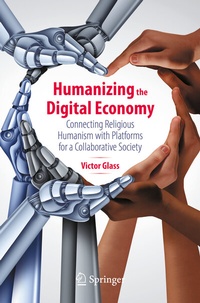
Humanizing the Digital Economy
Description

The Coding Revolution-a combination of the Digital Revolution and genetic engineering-has had a destructive effect on society. It has created a platform for extreme views that is loosening our economic, cultural, and political moorings. This book provides a systematic approach to policy and management to promote societal collaboration and unity. It describes the changes caused by the Digital Age, including the Internet, Artificial Intelligence, and various other technologies. The author then offers a new framework, Religious Humanism, which incorporates covenants of the Bible, the US Constitution and other sources of wisdom to foster collaboration and create a revitalized and inclusive global society. Narrative and analytical tools are offered as well as case examples.
More details
Other editions
Additional editions
Person
Victor Glass is Professor of Professional Practice and Director of the Center for Research in Regulated Industries (CRRI) in the Department of Finance and Economics at Rutgers University Business School, Newark, New Jersey, USA. He holds a Ph.D. in Economics and an MBA from Columbia University. He has published articles and books on net neutrality, business data services, customers as competitors, the next generation of wireless technology, smart grid technologies, and antitrust policies, among others.
Content
The Roots of Political Gridlock and Foreshadowing a Way out.- Part I: Respect: Uncovering the Wisdom of America's Ideologies.- Libertarianism: Centralization can Lead to Serfdom.- Conservatism: Cultural Dissolution can Lead to Despotism.- Liberalism: Economic Instability and Exclusion can Lead to Riots and Revolutions.- Assessment: Common Goals, Different Narratives.- Radicalism: From Babel to Sodom.- Part II: Coding Crisis: Existential Threats to Core Values and Human Nature.- Cyberspace Capitalism Part 1: Introduction to the Online Economy and Its Fragilities.- Cyberspace Capitalism Part 2: The Rise of Platforms, Cryptocurrency, and the Dark Web.- Digital Overexposure.- Palace Intrigues and Stealthy Security: Uncomfortable Tradeoffs Between Liberty and Security.- Eugenics and the Nearsighted God.- Unsettling Perspectives.- Part III: Reconciliation and Collaboration.- Religious Humanism Defined.- Elements of Religious Humanism.- Dynamic Integration of Ideological Perspectives.- Case Study: Drilling for Oil in Alaska.- Case Study: Sustainable Growth Applied to the Nation's Power Grid.- A Macro View: Using System Analysis.- Summary, Conclusions and Outlook.
