

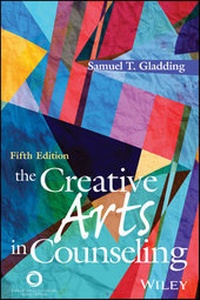
The Creative Arts in Counseling
5th Edition
Published on 17. March 2016
354 pages
978-1-119-29194-7 (ISBN)
Description

This latest edition of The Creative Arts in Counseling is a powerful, evidence-based examination of how creative expression can be used in counseling with clients of various ages and backgrounds. It explores the clinical application of all of the major creative arts, including music, dance/movement, imagery, visual arts, writing/literature, drama, play and humor, and--new to this edition--animal-assisted therapy, therapeutic horticulture, and nature/wilderness experiences.
The history, rationale, and theory behind each art form are discussed, in addition to its clinical benefits and uses in counseling settings. Each chapter contains a variety of practical exercises that clinicians, instructors, and students can incorporate immediately into their work, as well as "creative reflections" for personal and professional self-evaluation. The final chapter summarizes the 126 exercises that appear throughout the text so that readers can quickly access exercises that meet their needs.
*Requests for digital versions from the ACA can be found on wiley.com.
*To request print copies, please visit the ACA website.
Reviews / Votes
"Illuminating, inspirational, and eloquently written, this book has it all! Not only is The Creative Arts in Counseling remarkably comprehensive, it is rich in history and jam-packed with creative resources for professionals working with clients of all ages and in diverse settings. Dr. Gladding is a beloved and widely respected professional leader whose focus on creativity has championed its role within the profession. Through this new edition, he provides us with yet one more professional treasure." --Thelma Duffey, PhD, 2015-2016 President, American Counseling Association, Founding President, Association for Creativity in Counseling, Professor and Chair, University of Texas at San Antonio "Dr. Gladding, the pioneer of bringing the arts into the counseling profession, has done it again. With this new edition, he offers a personal and professional banquet of fine food that nourishes both counselor and client. This book continues to be an inspiring classic and a unique and important contribution to the counseling literature." --Sally S. Atkins, EdD, Professor, The European Graduate School; Professor Emerita and Founding Director of Expressive Arts, Appalachian State UniversityMore details
Other editions
New editions
Samuel T. Gladding
The Creative Arts in Counseling
E-Book
03/2021
6th Edition
Wiley
€64.99
Available for download
Additional editions
Samuel T. Gladding
The Creative Arts in Counseling
Software
03/2016
Wiley
€64.46
Article exhausted; check different version
Content
- Intro
- Title Page
- Copyright
- Dedication
- Preface
- Acknowledgments
- About the Author
- Chapter 1: History of, Rationale for, and Benefits of Using the Arts in Counseling
- The Nature of Creativity
- History of the Creative Arts in the Helping Professions
- Rationale for Using the Creative Arts in Counseling
- The SCAMPER Model as a Way of Becoming More Creative
- Advantages and Limitations of the Creative Arts in Counseling
- Summary
- Exercises
- Chapter 2: Music and Counseling
- Premise of the Use of Music in Counseling
- Practice of the Use of Music in Counseling
- Music in Counseling With Specific Populations
- Music in Counseling With Other Creative Arts
- Summary
- Exercises
- Chapter 3: Dance and Movement in Counseling
- Premise of the Use of Dance and Movement in Counseling
- Practice of the Use of Dance and Movement in Counseling
- Dance and Movement in Counseling With Specific Populations
- Dance and Movement in Counseling With Other Creative Arts
- Summary
- Exercises
- Chapter 4: Imagery and Counseling
- Premise of the Use of Imagery in Counseling
- Practice of the Use of Imagery in Counseling
- Imagery in Counseling With Specific Populations
- Imagery in Counseling With Other Creative Arts
- Summary
- Exercises
- Chapter 5: Visual Arts and Counseling
- Premise of the Use of Visual Arts in Counseling
- Practice of the Use of Visual Arts in Counseling
- Visual Arts in Counseling With Specific Populations
- Visual Arts in Counseling With Other Creative Arts
- Summary
- Exercises
- Chapter 6: Writing and Literature in Counseling
- Premise of the Use of Literature in Counseling
- Practice of the Use of Literature in Counseling
- Literature in Counseling With Specific Populations
- Literature in Counseling With Other Creative Arts
- Summary
- Exercises
- Chapter 7: Drama and Counseling
- Premise of the Use of Drama in Counseling
- Practice of the Use of Drama in Counseling
- Drama in Counseling With Specific Populations
- Drama in Counseling With Other Creative Arts
- Summary
- Exercises
- Chapter 8: Play and Humor in Counseling
- Premise of the Use of Play and Humor in Counseling
- Practice of the Use of Play and Humor in Counseling
- Play and Humor in Counseling With Specific Populations
- Play and Humor in Counseling With Other Creative Arts
- Summary
- Exercises
- Chapter 9: Animal-Assisted Therapy in Counseling, Therapeutic Horticulture, and Wilderness/Nature Therapy
- Premise of the Use of Animals, Plants, and the Wilderness/Nature in Counseling
- Practice of Using Animals, Horticulture, and the Wilderness/Nature in Counseling
- Use of Animals, Plants, and the Wilderness/Nature in Counseling With Specific Populations
- Animal-Assisted Therapy, Horticulture Therapy, and Nature Therapy With Other Creative Arts
- Summary
- Exercises
- Chapter 10: Trends in Counseling and the Creative Arts
- Research
- Education
- Identity
- Interdisciplinary Efforts
- Technology
- Summary
- Exercises
- Chapter 11: Creative Arts Exercises
- Creative Arts Activities-Music
- Creative Arts Activities-Dance/Movement
- Creative Arts Activities-Imagery
- Creative Arts Exercises-Visual Art
- Creative Arts Exercises-Literature
- Creative Arts Activities-Drama
- Creative Arts Activities-Play and Humor
- Creative Arts Activities-Animals, Horticulture, and Nature
- References
- Subject Index
- Name Index
- Technical Support
- End User License Agreement
