

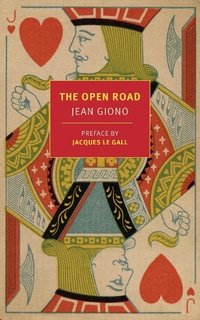
The Open Road
Published on 12. October 2021
224 pages
978-1-68137-511-3 (ISBN)
Description

A nomad and a swindler embark on an eccentric road trip in this picaresque, philosophical novel by the author of The Man Who Planted Trees.
South of France, 1950: A solitary vagabond walks through the villages, towns, valleys, and foothills of the region between northern Provence and the Alps. He picks up casual work along the way, and spends the winter as the custodian of a walnut oil mill. He also picks up a problematic companion: a card sharp and con man, whom he calls "the Artist." The action moves from place to place, and episode to episode, in truly picaresque fashion. Everything is told in the first person, present tense, by the vagabond Narrator, who goes unnamed. He himself is a curious combination of qualities--poetic, resentful, cynical, compassionate, flirtatious, and self-absorbed.
While The Open Road can be read as loosely strung entertainment, interspersed with caustic reflections, it can also be interpreted as a projection of the relationship between author, art, and audience. But it is ultimately an exploration of the tensions and boundaries between affection and commitment, and of the competing needs for solitude, independence, and human bonds. As always in Giono, the language is rich in natural imagery. Colourful idiomatic expressions--many of them unfamiliar even in France today--pepper every page.
"Eh, mister, a novel is a mirror, out strolling along the open road. Sometimes it reflects the azure of the heavens, sometimes the muck of the potholes." Whether Giono took his title and inspiration from this passage in Stendhal's Scarlet and Black, or from Whitman's "Song of the Open Road," both these sources course powerfully along The Open Road.
South of France, 1950: A solitary vagabond walks through the villages, towns, valleys, and foothills of the region between northern Provence and the Alps. He picks up casual work along the way, and spends the winter as the custodian of a walnut oil mill. He also picks up a problematic companion: a card sharp and con man, whom he calls "the Artist." The action moves from place to place, and episode to episode, in truly picaresque fashion. Everything is told in the first person, present tense, by the vagabond Narrator, who goes unnamed. He himself is a curious combination of qualities--poetic, resentful, cynical, compassionate, flirtatious, and self-absorbed.
While The Open Road can be read as loosely strung entertainment, interspersed with caustic reflections, it can also be interpreted as a projection of the relationship between author, art, and audience. But it is ultimately an exploration of the tensions and boundaries between affection and commitment, and of the competing needs for solitude, independence, and human bonds. As always in Giono, the language is rich in natural imagery. Colourful idiomatic expressions--many of them unfamiliar even in France today--pepper every page.
"Eh, mister, a novel is a mirror, out strolling along the open road. Sometimes it reflects the azure of the heavens, sometimes the muck of the potholes." Whether Giono took his title and inspiration from this passage in Stendhal's Scarlet and Black, or from Whitman's "Song of the Open Road," both these sources course powerfully along The Open Road.
More details
Other editions
Additional editions
Persons
Jean Giono (1895-1970) was born and lived most of his life in the town of Manosque, Alpes-de-Haute-Provence. He was elected to the Académie Goncourt in 1954. Three of his novels, Hill, Melville, and A King Alone, are available from NYRB Classics.
Paul Eprile is a publisher, poet, and translator. He was a co-winner of the 2018 Annual Translation Prize of the French-American Foundation for his translation of Jean Giono's Melville. He lives on the Niagara Escarpment in Ontario, Canada.
Jacques Le Gall is Professor of Literature at the University of Pau and one of France's foremost interpreters of Jean Giono's works. He contributed extensively to the monumental Dictionnaire Giono.
Paul Eprile is a publisher, poet, and translator. He was a co-winner of the 2018 Annual Translation Prize of the French-American Foundation for his translation of Jean Giono's Melville. He lives on the Niagara Escarpment in Ontario, Canada.
Jacques Le Gall is Professor of Literature at the University of Pau and one of France's foremost interpreters of Jean Giono's works. He contributed extensively to the monumental Dictionnaire Giono.
