

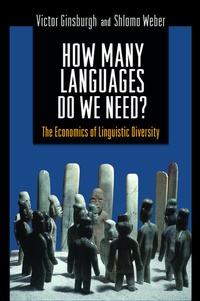
How Many Languages Do We Need?
The Economics of Linguistic Diversity
1st Edition
Published on 4. April 2011
256 pages
978-1-4008-3890-5 (ISBN)
Description

In the global economy, linguistic diversity influences economic and political development as well as public policies in positive and negative ways. It leads to financial costs, communication barriers, divisions in national unity, and, in some extreme cases, conflicts and war--but it also produces benefits related to group and individual identity. What are the specific advantages and disadvantages of linguistic diversity and how does it influence social and economic progress? This book examines linguistic diversity as a global social phenomenon and considers what degree of linguistic variety might result in the greatest economic good.
Victor Ginsburgh and Shlomo Weber look at linguistic proximity between groups and between languages. They describe and use simple economic, linguistic, and statistical tools to measure diversity's impact on growth, development, trade, the quality of institutions, translation issues, voting patterns in multinational competitions, and the likelihood and intensity of civil conflicts. They address the choosing of core languages in a multilingual community, such as the European Union, and argue that although too many official languages might harm cohesiveness, efficiency, and communication, reducing their number brings about alienation and disenfranchisement of groups.
Demonstrating that the value and drawbacks of linguistic diversity are universal, How Many Languages Do We Need? suggests ways for designing appropriate linguistic policies for today's multilingual world.
Victor Ginsburgh and Shlomo Weber look at linguistic proximity between groups and between languages. They describe and use simple economic, linguistic, and statistical tools to measure diversity's impact on growth, development, trade, the quality of institutions, translation issues, voting patterns in multinational competitions, and the likelihood and intensity of civil conflicts. They address the choosing of core languages in a multilingual community, such as the European Union, and argue that although too many official languages might harm cohesiveness, efficiency, and communication, reducing their number brings about alienation and disenfranchisement of groups.
Demonstrating that the value and drawbacks of linguistic diversity are universal, How Many Languages Do We Need? suggests ways for designing appropriate linguistic policies for today's multilingual world.
All prices
More details
Other editions
Additional editions
Book
04/2011
Princeton University Press
€59.00
Shipment within 10-20 days
Persons
Victor Ginsburgh is professor of economics emeritus, member of the European Center for Advanced Research in Economics and Statistics, Brussels, and member of the Center of Operations Research and Econometrics, Louvain-la-Neuve, Belgium. Shlomo Weber is the Robert H. and Nancy Dedman Trustee Professor of Economics at Southern Methodist University and professor of economics at the New Economic School, Moscow.
Content
Acknowledgments ix
Introduction 1
Chapter 1: My Language IsMy Homeland 7
Chapter 2: Linguistic Policies, Disenfranchisement, and Standardization 16
1. Linguistic Diversity: A Brief Look at the Past 16
2. Linguistic Standardization: Roots, Benefits, and Some Examples 18
3. Some Painful Aspects of Standardization 21
4. HowMany Languages: IsMore theMerrier, or Is Small Beautiful? 26
5. Summary 28
Chapter 3: Linguistic, Genetic, and Cultural Distances: How Far Is Nostratic? 29
1. Languages and Dialects 30
2. Distances between Languages 33
3. Distances between Groups 48
4. Summary 55
Chapter 4: DistancesMatter 56
1. International Trade 57
2. Migrations 63
3. Literary Translations 65
4. The Eurovision Song Contest: Is Voting Political or Cultural? 74
5. Summary 82
Chapter 5: Individual Communicative Benefits 84
1. Modeling Language Learning 86
2. Demand Functions for Languages 93
3. Private Returns on Languages 98
4. Summary 107
Chapter 6: Diversity and Disenfranchisement Indices 108
1. Fractionalization and Polarization Indices 110
2. Disenfranchisement Indices 126
3. Links between Fractionalization, Disenfranchisement, and Communication Indices 137
4. Summary 139
5. Appendix: Numerical Calculation of the Various Disenfranchisement Indices 140
Chapter 7: Diversity and Disenfranchisement: Applications 142
1. Fractionalization and Polarization Indices 143
2. Disenfranchisement Indices: The Example of the EU 151
3. Summary 160
Chapter 8: Multilingualism in the European Union: A Case Study in Linguistic Policy 162
1. Twenty-three Languages, and More to Come 162
2. Possible Solutions 177
3. Summary 199
Conclusions 201
Bibliography 205
Index 223
Introduction 1
Chapter 1: My Language IsMy Homeland 7
Chapter 2: Linguistic Policies, Disenfranchisement, and Standardization 16
1. Linguistic Diversity: A Brief Look at the Past 16
2. Linguistic Standardization: Roots, Benefits, and Some Examples 18
3. Some Painful Aspects of Standardization 21
4. HowMany Languages: IsMore theMerrier, or Is Small Beautiful? 26
5. Summary 28
Chapter 3: Linguistic, Genetic, and Cultural Distances: How Far Is Nostratic? 29
1. Languages and Dialects 30
2. Distances between Languages 33
3. Distances between Groups 48
4. Summary 55
Chapter 4: DistancesMatter 56
1. International Trade 57
2. Migrations 63
3. Literary Translations 65
4. The Eurovision Song Contest: Is Voting Political or Cultural? 74
5. Summary 82
Chapter 5: Individual Communicative Benefits 84
1. Modeling Language Learning 86
2. Demand Functions for Languages 93
3. Private Returns on Languages 98
4. Summary 107
Chapter 6: Diversity and Disenfranchisement Indices 108
1. Fractionalization and Polarization Indices 110
2. Disenfranchisement Indices 126
3. Links between Fractionalization, Disenfranchisement, and Communication Indices 137
4. Summary 139
5. Appendix: Numerical Calculation of the Various Disenfranchisement Indices 140
Chapter 7: Diversity and Disenfranchisement: Applications 142
1. Fractionalization and Polarization Indices 143
2. Disenfranchisement Indices: The Example of the EU 151
3. Summary 160
Chapter 8: Multilingualism in the European Union: A Case Study in Linguistic Policy 162
1. Twenty-three Languages, and More to Come 162
2. Possible Solutions 177
3. Summary 199
Conclusions 201
Bibliography 205
Index 223

