

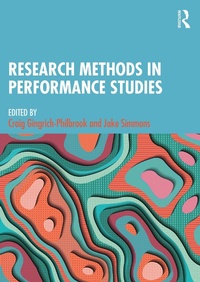
Research Methods in Performance Studies
1st Edition
Published on 5. May 2023
252 pages
978-1-351-04478-3 (ISBN)
Description

Research Methods in Performance Studies offers a unique approach for readers to engage with performance research and methods in practice. It examines ways of making performance, researching performance cultures, researching performers who themselves are engaged in research, and conducting research in the context of enduring and emergent themes of performance studies inquiry.
This book features the work of eighteen scholar-artists currently working in performance studies who demonstrate-through applied projects-various methods for conducting performance research. The result is a wide array of novel scholarship including activist performance, slam poetry, video performance, stand-up comedy, adaptation for the Broadway stage, naturecultural performance, intersectional performance, performances of cultural and material preservation, and many others.
Faculty, undergraduate and graduate students, and performance practitioners alike will benefit from the approaches to performance studies research methods articulated by the scholar-artists featured in this collection.
This book features the work of eighteen scholar-artists currently working in performance studies who demonstrate-through applied projects-various methods for conducting performance research. The result is a wide array of novel scholarship including activist performance, slam poetry, video performance, stand-up comedy, adaptation for the Broadway stage, naturecultural performance, intersectional performance, performances of cultural and material preservation, and many others.
Faculty, undergraduate and graduate students, and performance practitioners alike will benefit from the approaches to performance studies research methods articulated by the scholar-artists featured in this collection.
More details
Edition
1. Auflage
Language
English
Place of publication
London
United Kingdom
Publishing group
Taylor & Francis Ltd
Target group
College/higher education
Professional and scholarly
ISBN-13
978-1-351-04478-3 (9781351044783)
Copyright in bibliographic data and cover images is held by Nielsen Book Services Limited or by the publishers or by their respective licensors: all rights reserved.
Schweitzer Classification
Other editions
Additional editions
Craig Gingrich-Philbrook | Jake Simmons
Research Methods in Performance Studies
Book
05/2023
1st Edition
Routledge
€186.20
Shipment within 10-20 days
Craig Gingrich-Philbrook | Jake Simmons
Research Methods in Performance Studies
Book
05/2023
1st Edition
Routledge
€67.80
Shipment within 10-20 days
Persons
Craig Gingrich-Philbrook is Professor of Communication Studies at Southern Illinois University, Carbondale, USA. His interests include postmodern performance, queer performance and theory, performance in mediated environments, philosophy of communication, and communication theory.
Jake Simmons is Associate Dean of the Judith Enyeart Reynolds College of Arts and Letters and Associate Professor of Communication at Missouri State University, USA. His research focuses on new materialist approaches to performative writing, autoethnography, and staging practices. He is editor of Text and Performance Quarterly (2022-2024).
Jake Simmons is Associate Dean of the Judith Enyeart Reynolds College of Arts and Letters and Associate Professor of Communication at Missouri State University, USA. His research focuses on new materialist approaches to performative writing, autoethnography, and staging practices. He is editor of Text and Performance Quarterly (2022-2024).
Content
Introduction: Performance, Performativity, Research, Method
Craig Gingrich-Philbrook and Jake Simmons
Section I: Means of Making
1. Adaptation of Literature as Method: Text, Politics, and Representation
Matthew Spangler and Humaira Ghilzai
2. Methods on My Mind in the Doing of Performance and Performed Ethnography
D. Soyini Madison
3. A Critical Method for Performing Popular Texts: The Adventures of Little Red Riding Hood as Case Study
Tracy Stephenson Shaffer
4. Personal Narrative Performance Research: The Visceral, Collaborative, and Susceptible Exploration of the Stories We Tell Others
Julie-Ann Scott-Pollock
Section II: Researching Performance Cultures
5. Disability and Performance
Donna Marie Nudd
6. Expanding Frames of Analysis in Stand-up Comedy
Dustin Goltz
7. The Ethnography of Poetry: Or, Slamming Methods
Javon Johnson
8. Performance Space and the Architecture of Experience
Nathan Stucky
9. Beyond the Bounds of the Classroom: Facilitating Student's Public Performances
Charles Parrott
Section III: Researching Performers/Performers Researching
10. Mistranslation as Method in Artistic Research
Alys Longley
11. Performative Autoethnography: A Matterphor of Things
Tami Spry
12. Race and Social Justice: Performing the Radical Imagination
Amber Johnson
13. Critical/Performance Ethnography, Oral History Performance, and Listening: Notes on Methods for Living Research
Daniel B. Coleman
14. The Hero's Journey: Creating a Theatre/Storytelling Performance Inspired by the Work of Joseph Campbell
John S. Gentile
Section IV: Emerging and Enduring Contexts
15. Posthumanist Performance Studies: Four Practical Assertions
Travis Brisini
16. Tourism
Rebecca Walker
17. Performance, Technologies, Ontologies: The Video Performance Does Not Stand Alone
Lyndsay Michalik Gratch
18. Navigating Place as a Performance Studies Researcher: Waypoints and Breadcrumbs
Shauna M. MacDonald
Conclusion: Observations on Performance Studies Research and Methods
Jake Simmons
Craig Gingrich-Philbrook and Jake Simmons
Section I: Means of Making
1. Adaptation of Literature as Method: Text, Politics, and Representation
Matthew Spangler and Humaira Ghilzai
2. Methods on My Mind in the Doing of Performance and Performed Ethnography
D. Soyini Madison
3. A Critical Method for Performing Popular Texts: The Adventures of Little Red Riding Hood as Case Study
Tracy Stephenson Shaffer
4. Personal Narrative Performance Research: The Visceral, Collaborative, and Susceptible Exploration of the Stories We Tell Others
Julie-Ann Scott-Pollock
Section II: Researching Performance Cultures
5. Disability and Performance
Donna Marie Nudd
6. Expanding Frames of Analysis in Stand-up Comedy
Dustin Goltz
7. The Ethnography of Poetry: Or, Slamming Methods
Javon Johnson
8. Performance Space and the Architecture of Experience
Nathan Stucky
9. Beyond the Bounds of the Classroom: Facilitating Student's Public Performances
Charles Parrott
Section III: Researching Performers/Performers Researching
10. Mistranslation as Method in Artistic Research
Alys Longley
11. Performative Autoethnography: A Matterphor of Things
Tami Spry
12. Race and Social Justice: Performing the Radical Imagination
Amber Johnson
13. Critical/Performance Ethnography, Oral History Performance, and Listening: Notes on Methods for Living Research
Daniel B. Coleman
14. The Hero's Journey: Creating a Theatre/Storytelling Performance Inspired by the Work of Joseph Campbell
John S. Gentile
Section IV: Emerging and Enduring Contexts
15. Posthumanist Performance Studies: Four Practical Assertions
Travis Brisini
16. Tourism
Rebecca Walker
17. Performance, Technologies, Ontologies: The Video Performance Does Not Stand Alone
Lyndsay Michalik Gratch
18. Navigating Place as a Performance Studies Researcher: Waypoints and Breadcrumbs
Shauna M. MacDonald
Conclusion: Observations on Performance Studies Research and Methods
Jake Simmons
