

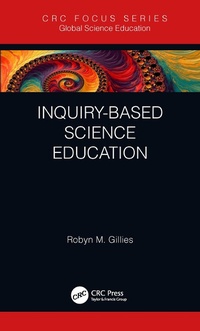
Inquiry-based Science Education
1st Edition
Published on 24. January 2020
122 pages
978-1-000-03631-2 (ISBN)
Description

Students often think of science as disconnected pieces of information rather than a narrative that challenges their thinking, requires them to develop evidence-based explanations for the phenomena under investigation, and communicate their ideas in discipline-specific language as to why certain solutions to a problem work. The author provides teachers in primary and junior secondary school with different evidence-based strategies they can use to teach inquiry science in their classrooms. The research and theoretical perspectives that underpin the strategies are discussed as are examples of how different ones areimplemented in science classrooms to affect student engagement and learning.
Key Features:
Presents processes involved in teaching inquiry-based science
Discusses importance of multi-modal representations in teaching inquiry based-science
Covers ways to develop scientifically literacy
Uses the Structure of Observed learning Outcomes (SOLO) Taxonomy to assess student reasoning, problem-solving and learning
Presents ways to promote scientific discourse, including teacher-student interactions, student-student interactions, and meta-cognitive thinking
Key Features:
Presents processes involved in teaching inquiry-based science
Discusses importance of multi-modal representations in teaching inquiry based-science
Covers ways to develop scientifically literacy
Uses the Structure of Observed learning Outcomes (SOLO) Taxonomy to assess student reasoning, problem-solving and learning
Presents ways to promote scientific discourse, including teacher-student interactions, student-student interactions, and meta-cognitive thinking
More details
Series
Edition
1. Auflage
Language
English
Place of publication
London
United Kingdom
Publishing group
Taylor & Francis Ltd
Target group
Professional and scholarly
Product notice
Reflowable
Illustrations
9 Tables, black and white; 10 Illustrations, black and white
ISBN-13
978-1-000-03631-2 (9781000036312)
Copyright in bibliographic data and cover images is held by Nielsen Book Services Limited or by the publishers or by their respective licensors: all rights reserved.
Schweitzer Classification
Other editions
Additional editions
Robyn M. Gillies
Inquiry-based Science Education
Book
10/2024
1st Edition
CRC Press
€25.00
Shipment within 10-20 days

Robyn M. Gillies
Inquiry-based Science Education
Book
02/2020
1st Edition
CRC Press
€83.80
Shipment within 15-20 days
Person
Professor Robyn Gillies has worked extensively in both primary and secondary schools to embed STEM education initiatives into the science curriculum. This includes helping teachers to embed inquiry skills into the science curricula so they capture students' interests, provide opportunities for them to explore possible solutions to problems, explain phenomena, elaborate on potential outcomes, and evaluate findings. Professor Gillies is a Chief Investigator on the Science of Learning Research Centre (SLRC), her recommendations on how teachers can translate research into practice have been widely profiled in the international literature and on the website of the Smithsonian Science Education Center in Washington, DC.
Content
Chapter 1: Inquiry-based science
BACKGROUND
INQUIRY-BASED SCIENCE
USING INQUIRY-BASED SCIENCE TO CHALLENGE THINKING
Cooperative Learning Activities
Strategies to help students learn to work cooperatively together
Group size
Group composition.
Type of task
Individual reflection activity
Group's Action Plan
Characteristics of Complex Tasks
CHALLENGES IMPLEMENTING INQUIRY-BASED SCIENCE
CHAPTER SUMMARY
ADDITIONAL READINGS
Chapter 2: Visual, embodied and language representations in teaching inquiry based-science: A case study
INTRODUCTION
TYPES OF REPRESENTATIONS
Purpose of the case study
METHOD
Context for the study
Inquiry-based science unit
Data collection
Teacher measures
RESULTS AND DISCUSSION
The inquiry-based science lessons
Lesson 1: Engage
Lesson 2: Explore
Lesson 3: Explain
Lesson 4: Elaborate
Lesson 5: Evaluate
CHAPTER SUMMARY
ADDITIONAL READINGS
Chapter 3: Developing scientific literacy
INTRODUCTION
BACKGROUND
SCIENTIFIC LITERACY
Questions that challenge children's understandings
Question Stems and Cognitive Processes
The discourse of science
Encouraging audience participation
Linguistic Tools that promote student discussion
Accountable Talk
Exploratory Talk
Philosophy for Children (P4C)
CHAPTER SUMMARY
ADDITIONAL READINGS
Chapter 4: Promoting scientific discourse
INTRODUCTION
DIALOGIC TEACHING
Example of Dialogic Teaching
Dialogic interactions in a cooperative group setting
STRATEGIES TO PROMOTE DIALOGIC INTERACTIONS
DIALOGIC STRATEGIES FOR STUDENTS
Critical Thinking Skills
CHAPTER SUMMARY
ADDITIONAL READINGS
Chapter 5: Structuring cooperative learning to promote social and academic learning
INTRODUCTION
COOPERATIVE LEARNING
BENEFITS OF COOPERATIVE LEARNING
Advantages of small, cooperative group instruction
Types of cooperative learning groups
KEY ELEMENTS IN COOPERATIVE LEARNING
Skills that Facilitate Interpersonal Communication
STRATEGIES FOR CONSTRUCTING COOPERATION IN GROUPS
STRATEGIES FOR ASSESSING COOPERATIVE LEARNING
CHAPTER SUMMARY
ADDITIONAL READINGS
Chapter 6: The Structure of Observed Learning Outcomes (SOLO) Taxonomy: Assessing students' reasoning, problem-solving and learning
INTRODUCTION
THE SOLO TAXONOMY
FIVE LEVELS OF THE SOLO TAXONOMY
INTENDED LEARNING OUTCOMES
Examples of the increasing complexity in students' language: Using the SOLO Taxonomy
CHAPTER SUMMARY
ADDITIONAL READINGS
BACKGROUND
INQUIRY-BASED SCIENCE
USING INQUIRY-BASED SCIENCE TO CHALLENGE THINKING
Cooperative Learning Activities
Strategies to help students learn to work cooperatively together
Group size
Group composition.
Type of task
Individual reflection activity
Group's Action Plan
Characteristics of Complex Tasks
CHALLENGES IMPLEMENTING INQUIRY-BASED SCIENCE
CHAPTER SUMMARY
ADDITIONAL READINGS
Chapter 2: Visual, embodied and language representations in teaching inquiry based-science: A case study
INTRODUCTION
TYPES OF REPRESENTATIONS
Purpose of the case study
METHOD
Context for the study
Inquiry-based science unit
Data collection
Teacher measures
RESULTS AND DISCUSSION
The inquiry-based science lessons
Lesson 1: Engage
Lesson 2: Explore
Lesson 3: Explain
Lesson 4: Elaborate
Lesson 5: Evaluate
CHAPTER SUMMARY
ADDITIONAL READINGS
Chapter 3: Developing scientific literacy
INTRODUCTION
BACKGROUND
SCIENTIFIC LITERACY
Questions that challenge children's understandings
Question Stems and Cognitive Processes
The discourse of science
Encouraging audience participation
Linguistic Tools that promote student discussion
Accountable Talk
Exploratory Talk
Philosophy for Children (P4C)
CHAPTER SUMMARY
ADDITIONAL READINGS
Chapter 4: Promoting scientific discourse
INTRODUCTION
DIALOGIC TEACHING
Example of Dialogic Teaching
Dialogic interactions in a cooperative group setting
STRATEGIES TO PROMOTE DIALOGIC INTERACTIONS
DIALOGIC STRATEGIES FOR STUDENTS
Critical Thinking Skills
CHAPTER SUMMARY
ADDITIONAL READINGS
Chapter 5: Structuring cooperative learning to promote social and academic learning
INTRODUCTION
COOPERATIVE LEARNING
BENEFITS OF COOPERATIVE LEARNING
Advantages of small, cooperative group instruction
Types of cooperative learning groups
KEY ELEMENTS IN COOPERATIVE LEARNING
Skills that Facilitate Interpersonal Communication
STRATEGIES FOR CONSTRUCTING COOPERATION IN GROUPS
STRATEGIES FOR ASSESSING COOPERATIVE LEARNING
CHAPTER SUMMARY
ADDITIONAL READINGS
Chapter 6: The Structure of Observed Learning Outcomes (SOLO) Taxonomy: Assessing students' reasoning, problem-solving and learning
INTRODUCTION
THE SOLO TAXONOMY
FIVE LEVELS OF THE SOLO TAXONOMY
INTENDED LEARNING OUTCOMES
Examples of the increasing complexity in students' language: Using the SOLO Taxonomy
CHAPTER SUMMARY
ADDITIONAL READINGS
