

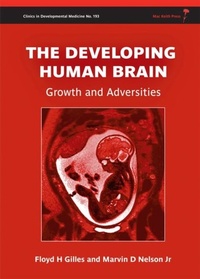
The Developing Human Brain
Description

This book is about human brain development, focusing on the last half of gestation and the neonatal and infant periods. These periods bring the greatest risk for the acquisition of childhood functional neurologic deficits, including cerebral palsy, developmental delay and intellectual disability. Section 1 covers typical development, including growth in brain weight, ventricular surfaces, gyral development, myelinated tract development, magnetic resonance spectroscopy, and angiogenesis, all serving as reference points for section 2, which deals with common acquired brain abnormalities, some of which are often underemphasized or overlooked. The topics in section 2 include retrocerebellar cysts, abnormal events in fetal brain, white-matter abnormalities, lesions of gray and white matter, hemorrhage, ventriculomegaly and hydrocephalus, late expressions of fetal brain disease, and reactions of the developing brain to chronic disease. Between sections 1 and 2 is a chapter on embryonic and fetal physiologic reactions to external stimuli. Where appropriate, the authors have combined pathologic with neuroimaging examples to help the reader better understand the neuroimages that they encounter. Much of the information in the book is based on data from the National Collaborative Perinatal Project, still the only large autopsy survey of late fetal brain lesions.
More details
Other editions
Additional editions
Persons
- Established quantitative standards for developmental myelin deposition in human fetal, neonatal, and early childhood periods.
- Identified delayed myelination risk factors.
- Established the histologic characteristics and risk factors for the common abnormalities in the human fetal brain.
- Established the normative patterns of human forebrain microvasculature development.
- Developed a quantitative histologic technique to predict survival in children with brain tumors, which has now been computerized for the front-line pathologist (we hold the copyright).
- Demonstrated that the standard World Health Organization (WHO) Classification and grading schemes were not reliable predictors of survival for children with brain tumors.
- Participated in the development of a modification of the WHO Classification for Childhood Brain Tumors.
- Participated in 25 studies clarifying several distinctive neuroradiologic-neuropathologic relationships.
"
