

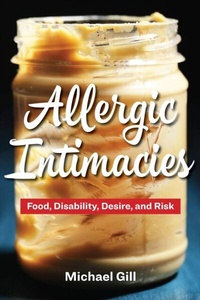
Allergic Intimacies
Food, Disability, Desire, and Risk
Published on 17. January 2023
160 pages
978-1-5315-0118-1 (ISBN)
Description

The first book to explore food allergies in the United States from the perspective of disability and race
Are food allergies disabilities? What structures and systems ensure the survival of some with food allergies and not others? Allergic Intimacies is a groundbreaking critical engagement with food allergies in their cultural representations, advocacy, law, and stories about personal experiences from a disability studies perspective. Author Michael Gill questions the predominantly individualized medical approaches to food allergies, pointing out that these approaches are particularly problematic where allergy testing and treatments are expensive, inconsistent, and inaccessible for many people of color.
This thought-provoking book explores the multiple meanings of food allergies and eating in the United States, demonstrating how much more is at stake than we realize, at a critical time when food allergies are on the rise: An estimated 32 million Americans, including one in thirteen children, have food allergies. Diagnoses of food allergies in children have increased by 50 percent since 1997. Yet as the author makes clear, the whiteness of the food allergy community and single-identity disability theory is inherently limiting and insufficient to address the complex choices that those with food allergies make. Gill argues that racism and ableism create unique precarity for disabled people of color that food allergic communities are only beginning to address. There is a huge disparity in access to testing and treatment, with African American and Latinx children having higher risk of adverse outcomes than white children, including more rates of anaphylaxis. Food allergy professionals have a responsibility to move beyond individualized approaches to more robust coalitional efforts grounded in disability and racial justice to undo these patterns of exclusion.
Allergic Intimacies celebrates the various creative ways food allergic communities are challenging historical and current practice of exclusion, while identifying the depth of work that still needs to be done to shift focus from a white allergic experience toward a more representative understanding of the racial, ethnic, religious, and economic diversity of those in the United States. Gill's book is a discerning and vital exploration of the key debates about risks, dangers, safety, representations, and political concerns affecting the lives of individuals with food allergies.
Are food allergies disabilities? What structures and systems ensure the survival of some with food allergies and not others? Allergic Intimacies is a groundbreaking critical engagement with food allergies in their cultural representations, advocacy, law, and stories about personal experiences from a disability studies perspective. Author Michael Gill questions the predominantly individualized medical approaches to food allergies, pointing out that these approaches are particularly problematic where allergy testing and treatments are expensive, inconsistent, and inaccessible for many people of color.
This thought-provoking book explores the multiple meanings of food allergies and eating in the United States, demonstrating how much more is at stake than we realize, at a critical time when food allergies are on the rise: An estimated 32 million Americans, including one in thirteen children, have food allergies. Diagnoses of food allergies in children have increased by 50 percent since 1997. Yet as the author makes clear, the whiteness of the food allergy community and single-identity disability theory is inherently limiting and insufficient to address the complex choices that those with food allergies make. Gill argues that racism and ableism create unique precarity for disabled people of color that food allergic communities are only beginning to address. There is a huge disparity in access to testing and treatment, with African American and Latinx children having higher risk of adverse outcomes than white children, including more rates of anaphylaxis. Food allergy professionals have a responsibility to move beyond individualized approaches to more robust coalitional efforts grounded in disability and racial justice to undo these patterns of exclusion.
Allergic Intimacies celebrates the various creative ways food allergic communities are challenging historical and current practice of exclusion, while identifying the depth of work that still needs to be done to shift focus from a white allergic experience toward a more representative understanding of the racial, ethnic, religious, and economic diversity of those in the United States. Gill's book is a discerning and vital exploration of the key debates about risks, dangers, safety, representations, and political concerns affecting the lives of individuals with food allergies.
More details
Edition
New edition
Language
English
Place of publication
New York
United States
Edition type
New edition
File size
2,75 MB
ISBN-13
978-1-5315-0118-1 (9781531501181)
Copyright in bibliographic data and cover images is held by Nielsen Book Services Limited or by the publishers or by their respective licensors: all rights reserved.
Schweitzer Classification
Other editions
Additional editions
Book
01/2023
Fordham University Press
€100.50
Shipment within 3-4 weeks
Person
Michael Gill is an associate professor of disability studies as well as the disability studies program coordinator in the Department of Cultural Foundations of Education at Syracuse University. He is the author of Already Doing It: Intellectual Disability and Sexual Agency.
Content
Preface ix
Introduction: Why Food Allergies? 1
1 Relational Food Allergy, Immunity, and Environments 25
2 Nut-Free Squirrels and Princesses with Peanut Allergies:
Food Allergies, Identity, and Children's Books 43
3 Allergic Reactions through Fluid Exchanges 56
4 You Ate What? Intentionality, Accidents, and Death 77
Conclusion: Pandemics and the Need for Coalitions 97
Acknowledgments 101
Notes 103
Index 123
Introduction: Why Food Allergies? 1
1 Relational Food Allergy, Immunity, and Environments 25
2 Nut-Free Squirrels and Princesses with Peanut Allergies:
Food Allergies, Identity, and Children's Books 43
3 Allergic Reactions through Fluid Exchanges 56
4 You Ate What? Intentionality, Accidents, and Death 77
Conclusion: Pandemics and the Need for Coalitions 97
Acknowledgments 101
Notes 103
Index 123
