

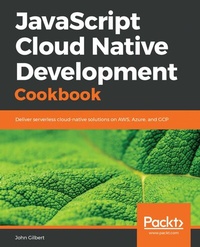
JavaScript Cloud Native Development Cookbook
Deliver serverless cloud-native solutions on AWS, Azure, and GCP
1st Edition
Published on 23. September 2024
352 pages
978-1-78847-537-2 (ISBN)
Description

Master over 60 recipes to help you deliver completely scalable and serverless cloud-native applicationsKey Features - Develop global scale and event-driven autonomous services
- Continuously deploy, test, observe, and optimize your services
- Practical Node.js recipes for serverless cloud-native development
Book DescriptionCloud-native development is a modern approach to building and running applications that leverages the merits of the cloud computing model. With cloud-native development, teams can deliver faster and in a more lean and agile manner as compared to traditional approaches. This recipe-based guide provides quick solutions for your cloud-native applications. Beginning with a brief introduction, JavaScript Cloud-Native Development Cookbook guides you in building and deploying serverless, event-driven, cloud-native microservices on AWS with Node.js. You'll then move on to the fundamental patterns of developing autonomous cloud-native services and understand the tools and techniques involved in creating globally scalable, highly available, and resilient cloud-native applications. The book also covers multi-regional deployments and leveraging the edge of the cloud to maximize responsiveness, resilience, and elasticity. In the latter chapters you'll explore techniques for building fully automated, continuous deployment pipelines and gain insights into polyglot cloud-native development on popular cloud platforms such as Azure and Google Cloud Platform (GCP). By the end of the book, you'll be able to apply these skills to build powerful cloud-native solutions. What you will learn - Implement patterns such as Event Streaming, CQRS, and Event Sourcing
- Deploy multi-regional, multi-master solutions
- Secure your cloud-native services with OAuth and OpenID Connect
- Create a robust cloud-native continuous deployment pipeline
- Run services on AWS, Azure, and GCP
- Implement autonomous services to limit the impact of failures
Who this book is forIf you want to develop powerful serverless, cloud-native solutions, this book is for you. You are expected to have basic knowledge of concepts of microservices and hands-on experience with Node.js to understand the recipes in this book.
- Continuously deploy, test, observe, and optimize your services
- Practical Node.js recipes for serverless cloud-native development
Book DescriptionCloud-native development is a modern approach to building and running applications that leverages the merits of the cloud computing model. With cloud-native development, teams can deliver faster and in a more lean and agile manner as compared to traditional approaches. This recipe-based guide provides quick solutions for your cloud-native applications. Beginning with a brief introduction, JavaScript Cloud-Native Development Cookbook guides you in building and deploying serverless, event-driven, cloud-native microservices on AWS with Node.js. You'll then move on to the fundamental patterns of developing autonomous cloud-native services and understand the tools and techniques involved in creating globally scalable, highly available, and resilient cloud-native applications. The book also covers multi-regional deployments and leveraging the edge of the cloud to maximize responsiveness, resilience, and elasticity. In the latter chapters you'll explore techniques for building fully automated, continuous deployment pipelines and gain insights into polyglot cloud-native development on popular cloud platforms such as Azure and Google Cloud Platform (GCP). By the end of the book, you'll be able to apply these skills to build powerful cloud-native solutions. What you will learn - Implement patterns such as Event Streaming, CQRS, and Event Sourcing
- Deploy multi-regional, multi-master solutions
- Secure your cloud-native services with OAuth and OpenID Connect
- Create a robust cloud-native continuous deployment pipeline
- Run services on AWS, Azure, and GCP
- Implement autonomous services to limit the impact of failures
Who this book is forIf you want to develop powerful serverless, cloud-native solutions, this book is for you. You are expected to have basic knowledge of concepts of microservices and hands-on experience with Node.js to understand the recipes in this book.
More details
Other editions
Additional editions
John Gilbert
JavaScript Cloud Native Development Cookbook
Deliver serverless cloud-native solutions on AWS, Azure, and GCP
Book
09/2018
Packt Publishing
€56.50
Shipment within 3-4 weeks
Person
Gilbert John :
John Gilbert is a CTO with over 30 years of experience in architecting and delivering software systems across many industries. His cloud journey has spanned all the levels of cloud maturity, from lift and shift and software-defined infrastructure to microservices and continuous deployment. He was an early serverless adopter and put his first serverless workloads into production just months after AWS Lambda's introduction. He has also authored Cloud Native Development Patterns and Best Practices and JavaScript Cloud Native Development Cookbook. He finds delivering serverless solutions to be, by far, the most fun and satisfying, as they force us to rewire how we reason about systems and enable us to accomplish far more with much less effort and risk.
John Gilbert is a CTO with over 30 years of experience in architecting and delivering software systems across many industries. His cloud journey has spanned all the levels of cloud maturity, from lift and shift and software-defined infrastructure to microservices and continuous deployment. He was an early serverless adopter and put his first serverless workloads into production just months after AWS Lambda's introduction. He has also authored Cloud Native Development Patterns and Best Practices and JavaScript Cloud Native Development Cookbook. He finds delivering serverless solutions to be, by far, the most fun and satisfying, as they force us to rewire how we reason about systems and enable us to accomplish far more with much less effort and risk.
Content
Table of Contents - Getting Started with Cloud-Native
- Applying the Event Sourcing and CQRS Patterns
- Implementing Autonomous Services
- Leveraging the Edge of the Cloud
- Securing Cloud-Native Systems
- Building a Continuous Deployment Pipeline
- Optimizing Observability
- Designing for Failure
- Optimizing Performance
- Deploying to Multiple Regions
- Welcoming Polycloud
- Applying the Event Sourcing and CQRS Patterns
- Implementing Autonomous Services
- Leveraging the Edge of the Cloud
- Securing Cloud-Native Systems
- Building a Continuous Deployment Pipeline
- Optimizing Observability
- Designing for Failure
- Optimizing Performance
- Deploying to Multiple Regions
- Welcoming Polycloud
