

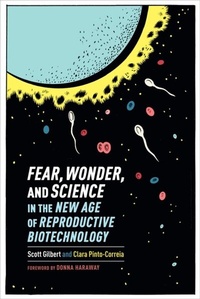
Fear, Wonder, and Science in the New Age of Reproductive Biotechnology
1st Edition
Published on 25. September 2017
224 pages
978-0-231-54458-0 (ISBN)
Description

How does one make decisions today about in vitro fertilization, abortion, egg freezing, surrogacy, and other matters of reproduction? This book provides the intellectual and emotional intelligence to help individuals make informed choices amid misinformation and competing claims. Scott Gilbert and Clara Pinto-Correia speak to the couple trying to become pregnant, the woman contemplating an abortion, and the student searching for sound information about human sex and reproduction. Their book is an enlightening read for men as well as for women, describing in clear terms how babies come into existence through both natural and assisted reproductive pathways. They update "the talk" for the twenty-first century: the birds, the bees, and the Petri dishes.
Fear, Wonder, and Science in the New Age of Reproductive Biotechnology first covers the most recent and well-grounded scientific conclusions about fertilization and early human embryology. It then discusses the reasons why some of the major forms of assisted reproductive technologies were invented, how they are used, and what they can and cannot accomplish. Most important, the authors explore the emotional side of using these technologies, focusing on those who have emptied their emotions and bank accounts in a valiant effort to conceive a child. This work of science and human biology is informed by a moral concern for our common humanity.
Fear, Wonder, and Science in the New Age of Reproductive Biotechnology first covers the most recent and well-grounded scientific conclusions about fertilization and early human embryology. It then discusses the reasons why some of the major forms of assisted reproductive technologies were invented, how they are used, and what they can and cannot accomplish. Most important, the authors explore the emotional side of using these technologies, focusing on those who have emptied their emotions and bank accounts in a valiant effort to conceive a child. This work of science and human biology is informed by a moral concern for our common humanity.
All prices
More details
Language
English
Place of publication
New York, NY
United States
Publishing group
De Gruyter
Target group
Professional and scholarly
Edition type
Digital original
Illustrations
18 schw.-w. Abb., <B>B&W Illus.: </B>18,
File size
2,17 MB
ISBN-13
978-0-231-54458-0 (9780231544580)
Schweitzer Classification
Other editions
Additional editions
Scott Gilbert | Clara Pinto-Correia
Fear, Wonder, and Science in the New Age of Reproductive Biotechnology
Book
08/2017
Columbia University Press
€37.14
Article not available at the moment
Persons
Scott Gilbert is the Howard A. Schneiderman Professor of Biology Emeritus at Swarthmore College and a Finland Distinguished Professor at the University of Helsinki. He is the author of the widely used textbooks Developmental Biology (eleventh edition, 2016), Ecological Developmental Biology: The Environmental Regulation of Development, Health, and Evolution (second edition, 2015), and Bioethics and the New Embryology: Springboards for Debate (2005).
Clara Pinto-Correia is a developmental biologist, novelist, historian of science, and professor. She performed some of the pioneering studies of mammalian cloning and has had a longstanding weekly biology program on Portuguese public radio. Her books include The Ovary of Eve: Egg and Sperm and Preformation (1997) and A Maravilhosa Aventura da Vida (The Marvelous Adventure of Life; 2008).
Clara Pinto-Correia is a developmental biologist, novelist, historian of science, and professor. She performed some of the pioneering studies of mammalian cloning and has had a longstanding weekly biology program on Portuguese public radio. Her books include The Ovary of Eve: Egg and Sperm and Preformation (1997) and A Maravilhosa Aventura da Vida (The Marvelous Adventure of Life; 2008).
Content
Foreword: Making Babies, Making Kin, by Donna Haraway
Preface
Acknowledgments
Part I. The Importance of the Story
1. Conceptual Detox: Returning to Hogwarts to Learn Human Embryology, by Scott Gilbert
2. Stories of Infertility and Its Conquest: The Sisterhood of Bloody Mary, by Clara Pinto-Correia
Part II. Fertilization and Its Discontents
3. Fertilization: Two Cells At The Verge of Death Cooperate to Form a New Body That Lasts Decades, by Scott Gilbert
4. Fertility Rites: Artificial Insemination and In Vitro Fertilization-Their Hopes and Their Fears, by Clara Pinto-Correia
Part III. The Mother and Her Fetus
5. Normal Development and The Beginning of Human Life: Why Scientists Are Being Asked Theological Questions and Why Theologians Are Being Asked Scientific Questions, by Scott Gilbert
6. Technological Motherhood, by Clara Pinto-Correia
Part IV. Improving The Human Condition Through Biology: The Reality and the Fantasy
7. Cloning Animals, Cells, and Genes: Where Did Cloning Come From, and Where Is It Going to Right Now?, by Scott Gilbert
8. Glory Days: My Personal Account of Cloning, by Clara Pinto-Correia
Part V. Epilogues
9. Infertility Wars: How Life Feels After Everything Fails, and, By the Way, How Do We Survive It?, by Clara Pinto-Correia
10. The Human Condition of Fear and Wonder: In Celebration of Bodies, by Scott Gilbert
Appendix: A Field Guide to Assisted Reproductive Technologies
Glossary
Notes
References
Index
Preface
Acknowledgments
Part I. The Importance of the Story
1. Conceptual Detox: Returning to Hogwarts to Learn Human Embryology, by Scott Gilbert
2. Stories of Infertility and Its Conquest: The Sisterhood of Bloody Mary, by Clara Pinto-Correia
Part II. Fertilization and Its Discontents
3. Fertilization: Two Cells At The Verge of Death Cooperate to Form a New Body That Lasts Decades, by Scott Gilbert
4. Fertility Rites: Artificial Insemination and In Vitro Fertilization-Their Hopes and Their Fears, by Clara Pinto-Correia
Part III. The Mother and Her Fetus
5. Normal Development and The Beginning of Human Life: Why Scientists Are Being Asked Theological Questions and Why Theologians Are Being Asked Scientific Questions, by Scott Gilbert
6. Technological Motherhood, by Clara Pinto-Correia
Part IV. Improving The Human Condition Through Biology: The Reality and the Fantasy
7. Cloning Animals, Cells, and Genes: Where Did Cloning Come From, and Where Is It Going to Right Now?, by Scott Gilbert
8. Glory Days: My Personal Account of Cloning, by Clara Pinto-Correia
Part V. Epilogues
9. Infertility Wars: How Life Feels After Everything Fails, and, By the Way, How Do We Survive It?, by Clara Pinto-Correia
10. The Human Condition of Fear and Wonder: In Celebration of Bodies, by Scott Gilbert
Appendix: A Field Guide to Assisted Reproductive Technologies
Glossary
Notes
References
Index

