

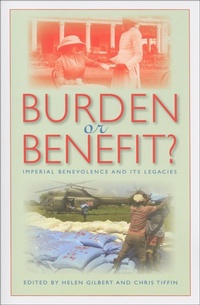
Burden or Benefit?
Imperial Benevolence and Its Legacies
Published on 12. March 2008
240 pages
978-0-253-02782-5 (ISBN)
Description

In the name of benevolence, philanthropy, and humanitarian aid, individuals, groups, and nations have sought to assist others and to redress forms of suffering and deprivation. Yet the inherent imbalances of power between the giver and the recipient of this benevolence have called into question the motives and rationale for such assistance. This volume examines the evolution of the ideas and practices of benevolence, chiefly in the context of British imperialism, from the late 18th century to the present. The authors consider more than a dozen examples of practical and theoretical benevolence from the anti-slavery movement of the late 18th century to such modern activities as refugee asylum in Europe, opposition to female genital mutilation in Africa, fundraising for charities, and restoring the wetlands in southern, post-Saddam Iraq.
Reviews / Votes
This book examines the evolution of the ideas and practices of benevolence, chiefly in the context of British imperialism, from the late eighteenth century to the present. The editors raise philosophical questions about the relationship between benevolence and self-interest, concluding that these concepts 'are not incompatible in the quest for a better world'. The collected essays cover more than a dozen examples of practical and theoretical benevolence, from the anti-slavery movement to modern activities such as refugee asylum, opposition to female genital mutilation and restoring the wetlands in post-Saddam Iraq. Of particular interest to Philanthropy UK readers will be Alan Lester's chapter on British humanitarianism and Sarah Richardson's chapter on women, philanthropy and imperialism in early nineteenth century Britain. -- Beth Breeze * Philanthropy UK Nwsltr * This book examines the evolution of the ideas and practices of benevolence, chiefly in the context of British imperialism, from the late eighteenth century to the present. . . . The collected essays cover more than a dozen examples of practical and theoretical benevolence, from the anti-slavery movement to modern activities such as refugee asylum, opposition to female genital mutilation and restoring the wetlands in post-Saddam Iraq.September 2008 -- Beth Breeze * Publications Editor * ...Burden or Benefit: Imperial Benevolence and Its Legacies will prove of interest to many students and scholars of British imperialism who will welcome this impressive work that reinterprets the complexities of the imperial past and sheds light on the present legacies.Jan. 2010 -- Dr Andrew Diniejko * Warsaw University, Poland *More details
Language
English
Place of publication
Bloomington, IN
United States
Target group
Professional and scholarly
US School Grade: College Graduate Student and over
File size
1,12 MB
ISBN-13
978-0-253-02782-5 (9780253027825)
Copyright in bibliographic data and cover images is held by Nielsen Book Services Limited or by the publishers or by their respective licensors: all rights reserved.
Schweitzer Classification
Other editions
Additional editions
Book
03/2008
Indiana University Press
€61.90
No shipping information available
Persons
Helen Gilbert is Professor of Theatre at Royal Holloway, University of London. She is author of Sightlines: Race, Gender, and Nation in Contemporary Australian Theatre and Post-Colonial Drama: Theory, Practice, Politics.
Chris Tiffin teaches in the School of English, Media Studies, and Art History at the University of Queensland and is editor of De-Scribing Empire, South Pacific Images, and South Pacific Stories.
Chris Tiffin teaches in the School of English, Media Studies, and Art History at the University of Queensland and is editor of De-Scribing Empire, South Pacific Images, and South Pacific Stories.
Content
1. Introduction: What's Wrong with Benevolence?, Chris Tiffin and Helen Gilbert
2. A Short History of Benevolence, Patrick Brantlinger
I. Colonial Burdens?
3. Thomas Fowell Buxton and the Networks of British Humanitarianism, Alan Lester
4. Settler Colonialism, Utility, Romance: E. G. Wakefield's Letter from Sydney, Lisa O'Connell
5. Benevolence, Slavery, and the Periodicals, Chris Tiffin
6. "This Nineteenth Century of Progress and Humanity": The Life and Times of Frederick Weld, Leigh Dale
7. Women, Philanthropy and Imperialism in Nineteenth-century Britain, Sarah Richardson
8. Blixen's Africa: Wonderland of the Self, Kirsten Holst Petersen
II. Contemporary Benefits?
9. From Benevolence to Partnership: The Persistence of Colonial Legacies in Aotearoa-New Zealand, Chris Prentice
10. Refusing Benevolence: Gandhi, Nehru, and the Ethics of Postcolonial Relations, Rajeswari Sunder Rajan
11. Rescuing African Women and Girls: Benevolence and the Civilizing Mission in Anti-FGM Discourse, Wairimu Njambi
12. Benevolence and Humiliation: Thinking Migrants, Integration, and Security in Europe, Prem Kumar Rajaram
13. Hearts, Minds, and Wetlands: Stakeholders and Ecosystem Restoration from Florida's Everglades to the Mesopotamian Marshlands, William E. O'Brien
Notes on Contributors
Index
2. A Short History of Benevolence, Patrick Brantlinger
I. Colonial Burdens?
3. Thomas Fowell Buxton and the Networks of British Humanitarianism, Alan Lester
4. Settler Colonialism, Utility, Romance: E. G. Wakefield's Letter from Sydney, Lisa O'Connell
5. Benevolence, Slavery, and the Periodicals, Chris Tiffin
6. "This Nineteenth Century of Progress and Humanity": The Life and Times of Frederick Weld, Leigh Dale
7. Women, Philanthropy and Imperialism in Nineteenth-century Britain, Sarah Richardson
8. Blixen's Africa: Wonderland of the Self, Kirsten Holst Petersen
II. Contemporary Benefits?
9. From Benevolence to Partnership: The Persistence of Colonial Legacies in Aotearoa-New Zealand, Chris Prentice
10. Refusing Benevolence: Gandhi, Nehru, and the Ethics of Postcolonial Relations, Rajeswari Sunder Rajan
11. Rescuing African Women and Girls: Benevolence and the Civilizing Mission in Anti-FGM Discourse, Wairimu Njambi
12. Benevolence and Humiliation: Thinking Migrants, Integration, and Security in Europe, Prem Kumar Rajaram
13. Hearts, Minds, and Wetlands: Stakeholders and Ecosystem Restoration from Florida's Everglades to the Mesopotamian Marshlands, William E. O'Brien
Notes on Contributors
Index
