

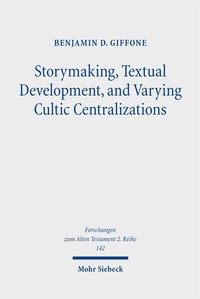
Storymaking, Textual Development, and Varying Cultic Centralizations
Gathering and Fitting Unhewn Stones
1st Edition
Published on 27. July 2023
269 pages
978-3-16-156239-6 (ISBN)
Description

Benjamin D. Giffone zeigt in dieser Studie, wie die Koexistenz von mindestens drei Modellen der kultischen Zentralisierung im Pentateuch, einschließlich der nördlichen, der benjaminitischen und der südlichen Tradition, dabei hilft, den Grad der theologischen Konsistenz zu bestimmen, der von den biblischen Texten angemessen erwartet werden kann. Die wissenschaftliche Tendenz, die biblischen Erzählungen als späte, tendenziöse Fiktionen zu betrachten, reicht nicht aus, um die endgültige Form der Texte zu erklären. Der Autor erklärt, wie die Verwendung von früherem erzählerischem und juristischem Material in der Chronik und anderen Texten des Zweiten Tempels Unebenheiten deutlich macht, die von späteren Auslegern bis zu einem gewissen Grad geglättet, aber im Text beibehalten wurden. Das Gemeinschaftsgedächtnis, das außerhalb der geschriebenen Texte existierte, setzte den Änderungen, die von den Schreibern vorgenommen werden konnten, Grenzen, war aber ausreichend formbar, um Änderungen zu ermöglichen. Die Narrativität als Hauptmerkmal der Texte ermöglichte die Beibehaltung bestimmter Erinnerungen, die durch verschiedene Techniken so gestaltet wurden, dass sie den Zielen der Geschichtenerzähler entsprachen.
More details
Other editions
Additional editions
Benjamin D. Giffone
Storymaking, Textual Development, and Varying Cultic Centralizations
Gathering and Fitting Unhewn Stones
Book
07/2023
1st Edition
Mohr Siebeck
€94.00
Shipment within 5-7 days
Person
Content
Chapter 1: The Unhewn Stones
1.1 Unevenness and the Origins of the Hebrew Bible: The Truth Is Stranger than Fiction
1.2 Proposed Contribution
1.3 Structure of the Book
Chapter 2: Narrative Historiography and Cultural/Community Memory
2.1 Ancient Israel, Biblical Israel, and the View from Somewhere
2.2 Ricoeur and Narrative Historiography
2.3 Assmann and Cultural Memory
2.4 Fleming: Israel in Judah's Narratives
2.5 Conclusion
Chapter 3: Models of Textual Development: Survey and Assessment
3.1 Introduction
3.2 Recent Challenges to the "Growth Model"
3.3 Empirical Studies and Test Cases
3.4 Conclusion: "Storymakers" and Intention
Chapter 4: Northern Israel, Disputed Cultural Memory, and the Politics of Centralization
4.1 Introduction
4.2 Studies on Northern Israel and Benjamin
4.3 Related Concepts of Political Economy: Selectorate and Heresthetic
4.4 Applied to Current Biblical Scholarship
4.5 Evaluation
Chapter 5: Interim Assessment
Chapter 6: Cultic Sites in the Babylonian and Persian Periods: Potential and Actual Competitors to Jerusalem
6.1 Scope
6.2 Outside Yehud
6.3 Within Yehud
6.4 Evaluation
Chapter 7: Centralization and Anachronism in the Laws and Narratives of the Pentateuch
7.1 Introduction
7.2 Wherever I Cause My Name to Be Remembered: Traces of Pre-Deuteronomic Non-Centralization
7.3 Gathering Unhewn Stones: The Sites of Abraham and the Patriarchs
7.4 Conclusions
Chapter 8: Next Layer Down: All Roads Lead to Jerusalem in the DtrH
8.1 Introduction
8.2 Tent of Meeting at Shiloh: Joshua 18 through 1 Samuel 4
8.3 From Samuel's Circuit to David's Tent: 1 Samuel 4 through 2 Samuel 6
8.4 Dual or Non-Centralization? Ark-Tent and the Tent of Meeting
through Solomon's Temple (2 Samuel 6 through 1 Kings 8)
8.5 Conclusion
Chapter 9: Bethel, Community Memory, and the (Non-)Erasure of "Decentralized" History in Kings and Beyond
9.1 Introduction
9.2 The Construal of Bethel and Northern Sites in Hosea and Amos
9.3 Portraits of Bethel and Non-centralization in Kings
9.4 The Chronicler's Reconstrual of Northern Sites, Deuteronomism, and Pre-Deuteronomistic Elements
9.5 Bethel in Pre-Dtr, Dtr, and Post-Dtr Texts: A Preliminary Conclusion
Chapter 10: Centralization and the Framing Conclusions of Joshua and Judges
10.1 Introduction
10.2 Judges 17-21
10.3 The Ending of Joshua: Priestly Completion of a Hexateuch, or Deuteronomistic Seam?
10.4 Transjordan "Shrine" in Joshua 22: Narrative Analysis
10.5 Shechem in Joshua 24
10.6 Summary: Burial of Northern Sites at the Seams of "Books" and of Collections
Chapter 11: Conclusions: Round Stones Forming a Square Altar
11.1 Danite Shrine Aetiology: A Thought Experiment
11.2 Summary of Key Theses
11.3 Synthesis: Heresthetic to Achieve Elite and Popular Support for Judah's Bible
11.4 Implications for Further Study
11.5 Epilogue: Modern Discomfort with "Unhewn Stones"
1.1 Unevenness and the Origins of the Hebrew Bible: The Truth Is Stranger than Fiction
1.2 Proposed Contribution
1.3 Structure of the Book
Chapter 2: Narrative Historiography and Cultural/Community Memory
2.1 Ancient Israel, Biblical Israel, and the View from Somewhere
2.2 Ricoeur and Narrative Historiography
2.3 Assmann and Cultural Memory
2.4 Fleming: Israel in Judah's Narratives
2.5 Conclusion
Chapter 3: Models of Textual Development: Survey and Assessment
3.1 Introduction
3.2 Recent Challenges to the "Growth Model"
3.3 Empirical Studies and Test Cases
3.4 Conclusion: "Storymakers" and Intention
Chapter 4: Northern Israel, Disputed Cultural Memory, and the Politics of Centralization
4.1 Introduction
4.2 Studies on Northern Israel and Benjamin
4.3 Related Concepts of Political Economy: Selectorate and Heresthetic
4.4 Applied to Current Biblical Scholarship
4.5 Evaluation
Chapter 5: Interim Assessment
Chapter 6: Cultic Sites in the Babylonian and Persian Periods: Potential and Actual Competitors to Jerusalem
6.1 Scope
6.2 Outside Yehud
6.3 Within Yehud
6.4 Evaluation
Chapter 7: Centralization and Anachronism in the Laws and Narratives of the Pentateuch
7.1 Introduction
7.2 Wherever I Cause My Name to Be Remembered: Traces of Pre-Deuteronomic Non-Centralization
7.3 Gathering Unhewn Stones: The Sites of Abraham and the Patriarchs
7.4 Conclusions
Chapter 8: Next Layer Down: All Roads Lead to Jerusalem in the DtrH
8.1 Introduction
8.2 Tent of Meeting at Shiloh: Joshua 18 through 1 Samuel 4
8.3 From Samuel's Circuit to David's Tent: 1 Samuel 4 through 2 Samuel 6
8.4 Dual or Non-Centralization? Ark-Tent and the Tent of Meeting
through Solomon's Temple (2 Samuel 6 through 1 Kings 8)
8.5 Conclusion
Chapter 9: Bethel, Community Memory, and the (Non-)Erasure of "Decentralized" History in Kings and Beyond
9.1 Introduction
9.2 The Construal of Bethel and Northern Sites in Hosea and Amos
9.3 Portraits of Bethel and Non-centralization in Kings
9.4 The Chronicler's Reconstrual of Northern Sites, Deuteronomism, and Pre-Deuteronomistic Elements
9.5 Bethel in Pre-Dtr, Dtr, and Post-Dtr Texts: A Preliminary Conclusion
Chapter 10: Centralization and the Framing Conclusions of Joshua and Judges
10.1 Introduction
10.2 Judges 17-21
10.3 The Ending of Joshua: Priestly Completion of a Hexateuch, or Deuteronomistic Seam?
10.4 Transjordan "Shrine" in Joshua 22: Narrative Analysis
10.5 Shechem in Joshua 24
10.6 Summary: Burial of Northern Sites at the Seams of "Books" and of Collections
Chapter 11: Conclusions: Round Stones Forming a Square Altar
11.1 Danite Shrine Aetiology: A Thought Experiment
11.2 Summary of Key Theses
11.3 Synthesis: Heresthetic to Achieve Elite and Popular Support for Judah's Bible
11.4 Implications for Further Study
11.5 Epilogue: Modern Discomfort with "Unhewn Stones"
