

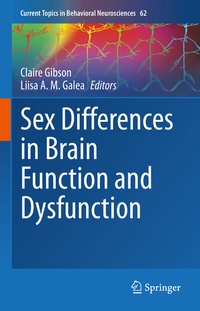
Sex Differences in Brain Function and Dysfunction
Description

Does sex matter when it comes to brain function? This volume attempts to answer this very important question which is of relevance to the disciplines of psychology, neuroscience, psychiatry and neurology. Understanding how brain function and resultant behaviors may differ between the sexes impacts upon our knowledge of the pathology and development of treatments for various neurological and psychiatric disorders, particularly those that show significant sex differences in either prevalence and/or manifestation of symptoms.
This volume covers three main themes of research into sex differences in basic neurobiology, psychology, preclinical research and clinical research. It begins by exploring our understanding of sex and gender in relation to both animal and human behaviors and discusses the relevance, and importance, of considering sex and gender when conducting research into brain function and behaviors. The second theme focuses on how sex and gender influence mentalhealth and considers the impact of our immune system and the changes that occur with ageing. Finally, the third aspect focuses on examples of neurological disorder which show sex differences in terms of their aetiology and/or symptomology and considers the relevance in the development of treatment for these disorders including dementia, stroke and multiple sclerosis.
This volume is of considerable interest to mental health and neurology professionals, including psychiatrists, neurologists, nurses, allied health clinicians and pharmacists. It is also helpful and important for preclinical researchers working in neuroscience, psychopharmacology and reproductive endocrinology.More details
Other editions
Additional editions
Content
Part 1: Considering sex and gender in research studies.- Sex and Gender Science.- Best practices in the study of sex? .- Best practices in the study of Gender Differences.- The special case of a lack of sex differences - the naked mole rat? .- Lateralization and .- Part 2: Sex differences in cognitive and mental health across the lifespan.- Depression.- Schizophrenia.- Immune and neurodevelopmental disorders - autism?.- Social Cognition.- Cognition and cognitive ageing.- Part 3: Diseases of the brain and relevance of sex.- Epilepsy.- Stroke.- AD.- Parkinson's.- Multiple Sclerosis.
