

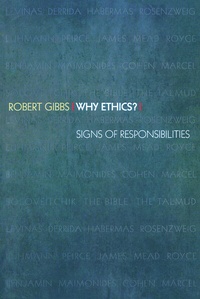
Why Ethics?
Signs of Responsibilities
1st Edition
Published on 16. June 2015
384 pages
978-1-4008-2373-4 (ISBN)
Description

Robert Gibbs presents here an ambitious new theory of ethics. Drawing on a striking combination of intellectual traditions, including Jewish thought, continental philosophy, and American pragmatism, Gibbs argues that ethics is primarily concerned with responsibility and is not--as philosophers have often assumed--principally a matter of thinking about the right thing to do and acting in accordance with the abstract dictates of reason or will. More specifically, ethics is concerned with attending to others' questions and bearing responsibility for what they do.
Gibbs builds this innovative case by exploring the implicit responsibilities in a broad range of human interactions, paying especially close attention to the signs that people give and receive as they relate to each other. Why Ethics? starts by examining the simple actions of listening and speaking, reading and writing, and by focusing on the different responsibilities that each action entails. The author discusses what he describes as the mutual responsibilities implicit in the actions of reasoning, mediating, and judging. He assesses the relationships among ethics, pragmatics, and Jewish philosophy. The book concludes by looking at the relation of memory and the immemorial, emphasizing the need to respond for past actions by confessing, seeking forgiveness, and making reconciliations.
In format, Gibbs adopts a Talmudic approach, interweaving brief citations from primary texts with his commentary. He draws these texts from diverse thinkers and sources, including Levinas, Derrida, Habermas, Rosenzweig, Luhmann, Peirce, James, Royce, Benjamin, Maimonides, the Bible, and the Talmud. Ranging over philosophy, literary theory, social theory, and historiography, this is an ambitious and provocative work that holds profound lessons for how we think about ethics and how we seek to live responsibly.
Gibbs builds this innovative case by exploring the implicit responsibilities in a broad range of human interactions, paying especially close attention to the signs that people give and receive as they relate to each other. Why Ethics? starts by examining the simple actions of listening and speaking, reading and writing, and by focusing on the different responsibilities that each action entails. The author discusses what he describes as the mutual responsibilities implicit in the actions of reasoning, mediating, and judging. He assesses the relationships among ethics, pragmatics, and Jewish philosophy. The book concludes by looking at the relation of memory and the immemorial, emphasizing the need to respond for past actions by confessing, seeking forgiveness, and making reconciliations.
In format, Gibbs adopts a Talmudic approach, interweaving brief citations from primary texts with his commentary. He draws these texts from diverse thinkers and sources, including Levinas, Derrida, Habermas, Rosenzweig, Luhmann, Peirce, James, Royce, Benjamin, Maimonides, the Bible, and the Talmud. Ranging over philosophy, literary theory, social theory, and historiography, this is an ambitious and provocative work that holds profound lessons for how we think about ethics and how we seek to live responsibly.
More details
Other editions
Additional editions

Book
09/2000
Princeton University Press
€74.28
Article exhausted; check different version
Book
09/2000
Princeton University Press
€49.40
Shipment within 10-20 days
Person
Robert Gibbs is Professor of Philosophy at the University of Toronto. Author of Correlations in Rosenzweig and Levinas and coauthor of Reasoning after Revelation: Dialogues in Postmodern Jewish Philosophy, he has written widely on questions of contemporary continental philosophy and its relations with Jewish thought.
Content
Acknowledgments xi
Abbreviations and Notes on Citations xiii
Introduction Why Questions? 3
A. The Response in Responsibility 3
B. Signs 6
C. Commentaries l0
D. A Map 13
E. The Authors and Texts 23
Part I: Attending the Future 27
Chapter 1: Why Listen? 29
A. Attending the Teacher 31
B. Asymmetry 35
C. Receiving the World 37
D. The Face and Consciosness 40
E. Apology 44
Chapter 2 Why Speak? 47
A. The Saving 48
B. Bodily Signifying 50
C. Saying the Saying 58
D. Witness to Glory 61
Chapter 3: Why Write? 66
A. Writing Withdratual 67
B. Saying and Writing 74
C. The Trace and Crossing out 79
Chapter 4: Why Read? 86
A. The Hidden Thread 87
B. Closure of Philosophy 89
C. Re-citation 95
Chapter 5: Why Comment? 114
A. The Written Command 115
B. Reading and Separation 116
C. Commentaries 123
Part II: Presentjudgments 131
Chapter 6: Why Reason? 133
A. The Third and Justice 134
B. Mutuality and Justice 141
C. Mutuality and Asymmetry 145
Chapter 7: Why Mediate? 156
A. Communication and Love 157
B. Media for Communication 167
C. Mediating Consensus 171
Chapter 8: Why Judge? 178
A. Attribution 180
B. We and Ye 182
C. Universality and the Outside 187
D. Judgment Day 192
E. Unjust Judgment 200
Chapter 9: Why Law? 210
A. Justifying the World 211
B. Preserving Contradictions 214 '
C Judgment and the Oppressed 218
Part III: Pragmatism, Pragmatics, and Method 225
Chapter 10: Why Verify? 227
A. Performative Method 229
B. Empiricisms: Absolute and Radical 234
C. Pragmatism and Pragmaticism 239
Chapter 11: Why Thirds? 246
A. The Third Person 247
B. Interpretation and Thirds 251
Chapter 12: Why Me? 258
A. Interpreters and Signs 259
B. Me and I 259
C. The Indeclinable Accusative (Me) 272
Chapter 13: Why Translate? 278
A. Reason and Jewish Sources 280
B. Jewish New Thinking 286
C. Contemporary Translation 290
D. A Necessary Trial 298
Part IV: Repenting History 305
Chapter 14: Why Repent? 307
A. Return 308
B. Great Is Repentance 310
C. Social Repentance 319
Chapter 15: Why Confess? 325
A. Confessing Orally 326
B. Performance of the "I" 329
C. Confession of Love 334
Chapter 16 Why Forgive? 338
A. Forgive or Forget 339
B. Changing the Past 341
C. Being Forgiven 345
Chapter 17: Why Remember? 354
A. Calendars 355
B. Historiography 362
C. Ruins and Remnants 372
Epilogue Postmodern Jewish Philosophy and Modernity 380
Pretext Index 385
Name Index 391
Subject Index 395
Abbreviations and Notes on Citations xiii
Introduction Why Questions? 3
A. The Response in Responsibility 3
B. Signs 6
C. Commentaries l0
D. A Map 13
E. The Authors and Texts 23
Part I: Attending the Future 27
Chapter 1: Why Listen? 29
A. Attending the Teacher 31
B. Asymmetry 35
C. Receiving the World 37
D. The Face and Consciosness 40
E. Apology 44
Chapter 2 Why Speak? 47
A. The Saving 48
B. Bodily Signifying 50
C. Saying the Saying 58
D. Witness to Glory 61
Chapter 3: Why Write? 66
A. Writing Withdratual 67
B. Saying and Writing 74
C. The Trace and Crossing out 79
Chapter 4: Why Read? 86
A. The Hidden Thread 87
B. Closure of Philosophy 89
C. Re-citation 95
Chapter 5: Why Comment? 114
A. The Written Command 115
B. Reading and Separation 116
C. Commentaries 123
Part II: Presentjudgments 131
Chapter 6: Why Reason? 133
A. The Third and Justice 134
B. Mutuality and Justice 141
C. Mutuality and Asymmetry 145
Chapter 7: Why Mediate? 156
A. Communication and Love 157
B. Media for Communication 167
C. Mediating Consensus 171
Chapter 8: Why Judge? 178
A. Attribution 180
B. We and Ye 182
C. Universality and the Outside 187
D. Judgment Day 192
E. Unjust Judgment 200
Chapter 9: Why Law? 210
A. Justifying the World 211
B. Preserving Contradictions 214 '
C Judgment and the Oppressed 218
Part III: Pragmatism, Pragmatics, and Method 225
Chapter 10: Why Verify? 227
A. Performative Method 229
B. Empiricisms: Absolute and Radical 234
C. Pragmatism and Pragmaticism 239
Chapter 11: Why Thirds? 246
A. The Third Person 247
B. Interpretation and Thirds 251
Chapter 12: Why Me? 258
A. Interpreters and Signs 259
B. Me and I 259
C. The Indeclinable Accusative (Me) 272
Chapter 13: Why Translate? 278
A. Reason and Jewish Sources 280
B. Jewish New Thinking 286
C. Contemporary Translation 290
D. A Necessary Trial 298
Part IV: Repenting History 305
Chapter 14: Why Repent? 307
A. Return 308
B. Great Is Repentance 310
C. Social Repentance 319
Chapter 15: Why Confess? 325
A. Confessing Orally 326
B. Performance of the "I" 329
C. Confession of Love 334
Chapter 16 Why Forgive? 338
A. Forgive or Forget 339
B. Changing the Past 341
C. Being Forgiven 345
Chapter 17: Why Remember? 354
A. Calendars 355
B. Historiography 362
C. Ruins and Remnants 372
Epilogue Postmodern Jewish Philosophy and Modernity 380
Pretext Index 385
Name Index 391
Subject Index 395
