


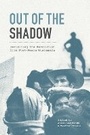
Out of the Shadow
Revisiting the Revolution from Post-Peace Guatemala
1st Edition
Published on 20. July 2020
277 pages
978-1-4773-2087-7 (ISBN)
Description

Guatemala's "Ten Years of Spring" (1944-1954) began when citizens overthrew a military dictatorship and ushered in a remarkable period of social reform. This decade of progressive policies ended abruptly when a coup d'etat, backed by the United States at the urging of the United Fruit Company, deposed a democratically elected president and set the stage for a period of systematic human rights abuses that endured for generations. Presenting the research of diverse anthropologists and historians, Out of the Shadow offers a new examination of this pivotal chapter in Latin American history.
Marshaling information on regions that have been neglected by other scholars, such as coastlines dominated by people of African descent, the contributors describe an era when Guatemalan peasants, Maya and non-Maya alike, embraced change, became landowners themselves, diversified agricultural production, and fully engaged in electoral democracy. Yet this volume also sheds light on the period's atrocities, such as the US Public Health Service's medical experimentation on Guatemalans between 1946 and 1948. Rethinking institutional memories of the Cold War, the book concludes by considering the process of translating memory into possibility among present-day urban activists.
Marshaling information on regions that have been neglected by other scholars, such as coastlines dominated by people of African descent, the contributors describe an era when Guatemalan peasants, Maya and non-Maya alike, embraced change, became landowners themselves, diversified agricultural production, and fully engaged in electoral democracy. Yet this volume also sheds light on the period's atrocities, such as the US Public Health Service's medical experimentation on Guatemalans between 1946 and 1948. Rethinking institutional memories of the Cold War, the book concludes by considering the process of translating memory into possibility among present-day urban activists.
Reviews / Votes
"By emphasizing narratives from 'new regions, new analytical frames, new historical actors, and new historical memories,' [Out of the Shadow] offers nuanced analysis that challenges the dominant, coup-centric interpretation of events...the volume offers a meticulous reflection of the period, region, and legacies of the revolution." (NACLA Report on the Americas)More details
Language
English
Place of publication
Austin, TX
United States
Target group
Professional and scholarly
ISBN-13
978-1-4773-2087-7 (9781477320877)
Copyright in bibliographic data and cover images is held by Nielsen Book Services Limited or by the publishers or by their respective licensors: all rights reserved.
Schweitzer Classification
Other editions
Additional editions
Book
07/2020
University of Texas Press
€64.64
Shipment within 15-20 days
Content
List of Figures
Foreword. The Path back to the Future--the Enduring Legacy of the Revolution (Jim Handy)
Acknowledgments
Introduction. Revisiting the Revolution in Contemporary Guatemala (Heather Vrana and Julie Gibbings)
Part I. New Regions
Chapter 1. "To Wrench Our Rights from La Frutera": Race, Labor, and Redefining National Belonging on the Caribbean Coast (Ingrid Sierakowski)
Chapter 2. The Coastal Laboratory: Milpa, Conservation, and Agrarian Reform (Patrick Chasse)
Chapter 3. Arevalo's Tomorrowland: The Revolutionary Crusade to Build and Defend the New Guatemala on the Peten Frontier (Anthony Andersson)
Part II. New Frames
Chapter 4. The "Indigenous Problem," Cold War US Anthropology, and Revolutionary Nationalism: New Approaches to Racial Thinking and Indigeneity in Guatemala (Jorge Ramon Gonzalez Ponciano)
Chapter 5. Youths and Juan Jose Arevalo's Democratic Government in Guatemala, 1945-1951 (Arturo Taracena Arriola)
Chapter 6. Rethinking Representation and Periodization in Guatemala's Democratic Experiment (David Carey Jr.)
Part III. New Actors
Chapter 7. "A pack of cigarettes or some soap": "Race," Security, International Public Health, and Human Medical Experimentation during Guatemala's October Revolution (Abigail E. Adams and Laura Giraudo)
Chapter 8. "Una obra revolucionaria": Indigenismo and the Guatemalan Revolution, 1944-1954 (Sarah Foss)
Part IV. New Memories
Chapter 9. Water Power Promise: Revisiting Revolutionary DIY (Diane M. Nelson)
Chapter 10. Reclaiming a Revolution: Memory as Possibility in Urban Guatemala (Betsy Konefal)
Selected Bibliography
Contributors
Index
Foreword. The Path back to the Future--the Enduring Legacy of the Revolution (Jim Handy)
Acknowledgments
Introduction. Revisiting the Revolution in Contemporary Guatemala (Heather Vrana and Julie Gibbings)
Part I. New Regions
Chapter 1. "To Wrench Our Rights from La Frutera": Race, Labor, and Redefining National Belonging on the Caribbean Coast (Ingrid Sierakowski)
Chapter 2. The Coastal Laboratory: Milpa, Conservation, and Agrarian Reform (Patrick Chasse)
Chapter 3. Arevalo's Tomorrowland: The Revolutionary Crusade to Build and Defend the New Guatemala on the Peten Frontier (Anthony Andersson)
Part II. New Frames
Chapter 4. The "Indigenous Problem," Cold War US Anthropology, and Revolutionary Nationalism: New Approaches to Racial Thinking and Indigeneity in Guatemala (Jorge Ramon Gonzalez Ponciano)
Chapter 5. Youths and Juan Jose Arevalo's Democratic Government in Guatemala, 1945-1951 (Arturo Taracena Arriola)
Chapter 6. Rethinking Representation and Periodization in Guatemala's Democratic Experiment (David Carey Jr.)
Part III. New Actors
Chapter 7. "A pack of cigarettes or some soap": "Race," Security, International Public Health, and Human Medical Experimentation during Guatemala's October Revolution (Abigail E. Adams and Laura Giraudo)
Chapter 8. "Una obra revolucionaria": Indigenismo and the Guatemalan Revolution, 1944-1954 (Sarah Foss)
Part IV. New Memories
Chapter 9. Water Power Promise: Revisiting Revolutionary DIY (Diane M. Nelson)
Chapter 10. Reclaiming a Revolution: Memory as Possibility in Urban Guatemala (Betsy Konefal)
Selected Bibliography
Contributors
Index
