

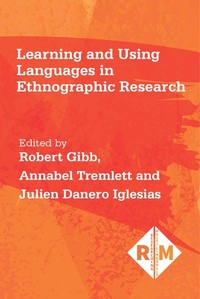
Learning and Using Languages in Ethnographic Research
Published on 11. October 2019
256 pages
978-1-78892-593-8 (ISBN)
Description

Learning and Using Languages in Ethnographic Research breaks the silence that still surrounds learning a language for ethnographic research and in the process demystifies some of the multilingual aspects of contemporary ethnographic work. It does this by offering a set of engaging and accessible accounts of language learning and use written by ethnographers who are at different stages of their academic career. A key theme is how researchers' experiences of learning and using other languages in fieldwork contexts relate to wider structures of power, hierarchy and inequality. The volume aims to promote a wider debate among researchers about how they themselves learn and use different languages in their work, and to help future fieldworkers make more informed choices when carrying out ethnographic research using other languages.
Reviews / Votes
Power, privilege, hierarchy, and dependence shape and often complicate ethnographers' forays into unfamiliar languages. These thoughtful, reflexive essays, addressing an impressive range of field experiences, incisively reveal and explore the shifting ground of the authors' linguistic interactions in relation to dynamics that are often invisible, usually risky, and always unpredictable. * Michael Herzfeld, Harvard University, USA * This refreshing collection of articles reflects on issues of language in ethnographic research that anthropologists have tended to sweep under the carpet: The delicate issue of the ethnographer's language competence; challenges of language learning; complications of multilingual fieldwork settings; and the ethnographer's anxieties related to their own incomplete language mastery. Highly valuable for anyone doing ethnography in a language that is not one's own! * Axel Borchgrevink, Oslo Metropolitan University, Norway * What does learning a language well enough to conduct research really require? This treasure trove of fifteen rich case studies takes readers on a global tour of anthropologists' searching inquiries into their sophisticated linguistic travels and travails. The joys and confounding challenges of mastering a foreign language will never again appear either opaque or generic. * Alma Gottlieb, University of Illinois at Urbana-Champaign, USA * Learning and Using Languages in Ethnographic Fieldwork is an accessible, insightful and dynamic volume that aims to demystify the epistemological, methodological and practical aspects of multilingual ethnographic fieldwork, reassuring researchers that their anxieties surrounding their learning and use of languages are a normal - and inevitable - part of life in the field. -- Katherine Williams, Cardiff University, UK * LSE Review of Books, July 2020 *More details
Series
Language
English
Place of publication
Bristol
United Kingdom
Target group
College/higher education
ISBN-13
978-1-78892-593-8 (9781788925938)
Copyright in bibliographic data and cover images is held by Nielsen Book Services Limited or by the publishers or by their respective licensors: all rights reserved.
Schweitzer Classification
Other editions
Additional editions
Robert Gibb | Annabel Tremlett | Julien Danero Iglesias
Learning and Using Languages in Ethnographic Research
Book
10/2019
Multilingual Matters
€48.40
Shipment within 3-4 weeks
Persons
Robert Gibb is Lecturer in Sociology, University of Glasgow, UK. His research interests include asylum procedures, the state, borders and translation.
Annabel Tremlett is Senior Lecturer at the University of Portsmouth, UK. Her research investigates the differences between public and self-representations of minority or marginalized groups. She is particularly dedicated to understanding the everyday experiences of people from these groups and challenging misleading representations.
Julien Danero Iglesias is Principal Policy and Projects Officer at Camden Council (Housing) and an Affiliate Researcher at the University of Glasgow, UK. His research interests include nationalism, discourse, borders and minorities.
Annabel Tremlett is Senior Lecturer at the University of Portsmouth, UK. Her research investigates the differences between public and self-representations of minority or marginalized groups. She is particularly dedicated to understanding the everyday experiences of people from these groups and challenging misleading representations.
Julien Danero Iglesias is Principal Policy and Projects Officer at Camden Council (Housing) and an Affiliate Researcher at the University of Glasgow, UK. His research interests include nationalism, discourse, borders and minorities.
Content
Chapter 1. Robert Gibb, Annabel Tremlett and Julien Danero Iglesias: Introduction
Chapter 2. Lydia Medland: Language Learning as Research Rehearsal: Preparation for Multi-linguistic Field Research in Morocco
Chapter 3. Susan Frohlick and Carolina Meneses: Emergent Collaborations: Field Assistants, Voice, and Multilingualism
Chapter 4. Laela Adamson: Learning Language to Research Language in Two Tanzanian Secondary Schools
Chapter 5. Robert Gibb: 'Demystifying' Multilingual Fieldwork: On the Importance of Documenting and Reflecting on Language Learning in Ethnographic Research
Chapter 6. Dominic Esler: Dealing with Diglossia: Language Learning as Ethnography
Chapter 7. Teresa Piacentini: Language Learning and Unlearning in Ethnographic Fieldwork: 'Speaking Asylum' and 'Doing Small Talk'
Chapter 8. Lara Momesso: One Language, Two Systems: On Conducting Ethnographic Research Across the Taiwan Strait
Chapter 9. Annabel Tremlett: Breakdowns for Breakthroughs: Using Anxiety and Embarrassment as Insightful Points for Understanding Fieldwork
Chapter 10. Daniella Jofre: Andean Ethnography and Language Learning: Reflecting on Identity Politics and Resistance Strategies of the Chilean Aymara
Chapter 11. Julien Danero Iglesias: How I Tried to Speak a Language Like a 'Native' and how this Influenced my Research
Chapter 12. Iolanda Vasile: 'The Language is Mine. The Accent is Yours': Doing Fieldwork in Angola
Chapter 13. Matthew Blackburn: Being 'Proficient' and 'Competent': On 'Languaging', Field Identity and Power/Privilege Dynamics in Ethnographic Research
Chapter 14. Charo Reyes: Plurilingual Focus, Multilingual Space, Bilingual Set-up: Conducting Ethnographic Research in Two Catalonian Schools
Chapter 15. Wine Tesseur: Listening, Languages and the Nature of Knowledge and Evidence: What We Can Learn from Investigating 'Listening' in NGOs
Chapter 16. Sarah Burton: Becoming a Multilingual Researcher in Contemporary Academic Culture: Experiential Stories of (Not) Learning and Using Languages
Chapter 17. Robert Gibb, Annabel Tremlett and Julien Danero Iglesias: Conclusion
Chapter 2. Lydia Medland: Language Learning as Research Rehearsal: Preparation for Multi-linguistic Field Research in Morocco
Chapter 3. Susan Frohlick and Carolina Meneses: Emergent Collaborations: Field Assistants, Voice, and Multilingualism
Chapter 4. Laela Adamson: Learning Language to Research Language in Two Tanzanian Secondary Schools
Chapter 5. Robert Gibb: 'Demystifying' Multilingual Fieldwork: On the Importance of Documenting and Reflecting on Language Learning in Ethnographic Research
Chapter 6. Dominic Esler: Dealing with Diglossia: Language Learning as Ethnography
Chapter 7. Teresa Piacentini: Language Learning and Unlearning in Ethnographic Fieldwork: 'Speaking Asylum' and 'Doing Small Talk'
Chapter 8. Lara Momesso: One Language, Two Systems: On Conducting Ethnographic Research Across the Taiwan Strait
Chapter 9. Annabel Tremlett: Breakdowns for Breakthroughs: Using Anxiety and Embarrassment as Insightful Points for Understanding Fieldwork
Chapter 10. Daniella Jofre: Andean Ethnography and Language Learning: Reflecting on Identity Politics and Resistance Strategies of the Chilean Aymara
Chapter 11. Julien Danero Iglesias: How I Tried to Speak a Language Like a 'Native' and how this Influenced my Research
Chapter 12. Iolanda Vasile: 'The Language is Mine. The Accent is Yours': Doing Fieldwork in Angola
Chapter 13. Matthew Blackburn: Being 'Proficient' and 'Competent': On 'Languaging', Field Identity and Power/Privilege Dynamics in Ethnographic Research
Chapter 14. Charo Reyes: Plurilingual Focus, Multilingual Space, Bilingual Set-up: Conducting Ethnographic Research in Two Catalonian Schools
Chapter 15. Wine Tesseur: Listening, Languages and the Nature of Knowledge and Evidence: What We Can Learn from Investigating 'Listening' in NGOs
Chapter 16. Sarah Burton: Becoming a Multilingual Researcher in Contemporary Academic Culture: Experiential Stories of (Not) Learning and Using Languages
Chapter 17. Robert Gibb, Annabel Tremlett and Julien Danero Iglesias: Conclusion
