

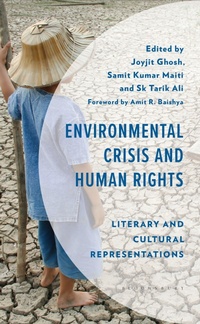
Environmental Crisis and Human Rights
Literary and Cultural Representations
1st Edition
Published on 8. January 2026
352 pages
979-8-216-25273-3 (ISBN)
Description

Environmental Crisis and Human Rights: Literary and Cultural Representations engages with the human rights implications of anthropogenic environmental crisis through a critical reading of a wide spectrum of literary and cultural texts from different parts of the world. The Introduction and the eighteen theoretically informed essays included in the collection highlight how race, caste, class, gender and ethnicity contribute to and complicate human experiences of environmental degradation. The essays address a broad range of issues involving environmental human rights such as climate migration, climate injustice, resource extraction, neo-colonial intervention, politics of development, dam-induced displacement and the violation of the indigenous usufruct rights to the environment. The volume illustrates that the Anthropocene is not a unitary concept, rather a fractured discourse; and environmental crisis, far from being monolithic in nature, is determined by socio-economic particularities and cultural specificities of different human communities across the globe.
More details
Series
Edition
1. Auflage
Language
English
Place of publication
New York
United States
Publishing group
Bloomsbury Publishing Plc
Target group
College/higher education
Illustrations
2 b/w
ISBN-13
979-8-216-25273-3 (9798216252733)
Copyright in bibliographic data and cover images is held by Nielsen Book Services Limited or by the publishers or by their respective licensors: all rights reserved.
Schweitzer Classification
Other editions
Additional editions
Joyjit Ghosh | Samit Kumar Maiti | Sk Tarik Ali
Environmental Crisis and Human Rights
Literary and Cultural Representations
Book
approx. 01/2026
Rowman & Littlefield Publishers
€159.80
Not yet published
Persons
Joyjit Ghosh is Professor in the Department of English Literature, Language and Cultural Studies at Vidyasagar University, Midnapore, West Bengal, India.
Samit Kumar Maiti is Assistant Professor in the Department of English, Seva Bharati Mahavidyalaya, Kapgari, Jhargram, West Bengal, India.
Sk Tarik Ali is Assistant Professor in the West Bengal Education Service, and teaches in the PG Department of English, Hooghly Mohsin College, Chinsurah, Hooghly, West Bengal, India.
Samit Kumar Maiti is Assistant Professor in the Department of English, Seva Bharati Mahavidyalaya, Kapgari, Jhargram, West Bengal, India.
Sk Tarik Ali is Assistant Professor in the West Bengal Education Service, and teaches in the PG Department of English, Hooghly Mohsin College, Chinsurah, Hooghly, West Bengal, India.
Content
Acknowledgements
List of Figures
Foreword
Amit R. Baishya
Introduction
Joyjit Ghosh, Samit Kumar Maiti and Sk Tarik Ali
Chapter 1: Depicting Crime in Climate Change: How Mystery Fiction Interrogates Rights and Culpability in the Climate Crisis
Matthew Munro
Chapter 2: Our Fragile Islands and Islanders: Re-engaging with Climate Change and Slow Violence in Pankaj Sekhsaria's The Last Wave and Islands in Flux
Abhra Paul and Amarjeet Nayak
Chapter 3: Climate Justice, Human Rights, and Tribal Poets of Jharkhand
Shreya Bhattacharji, Gunjan Kumar Jha and Hare Krishna Kuiry
Chapter 4: Picturing Injustice: Climate Change and Human Rights in Two Contemporary Graphic Narratives
Chitra V.R. and Devika Panikar
Chapter 5: Navigating the Mountains of the Mind: An Eco-psychological Reading of Ankush Saikia's The Forest Beneath the Mountains
Chandana Rajbanshi and Panchali Bhattacharya
Chapter 6: "God has cursed us with oil": Perto-colonial Extractivism, Ecocidal Violence and the "Pipeline People" in Select Oil Stories of Nnedi Okorafor and Uwem Akpan
Shankha Shubhra Mandal and Sk Tarik Ali
Chapter 7: Building Big Dams for "The Greater Common Good": Politics of Development, Environmental Degradation and Displacement
Jolly Das
Chapter 8: Climate Change Narrative and Hydro Crisis: Representation in Bollywood Film Jal
Shruti Das
Chapter 9: Violation of Rights of the Adivasis and Exploitation of Nature in Mahasweta Devi's Pterodactyl, Puran Sahay, and Pirtha: An Intersectional Analysis
Debdas Roy
Chapter 10: Towards a "Transformative Utopia": Locating Emancipation in Select Contemporary Australian Young Adult and Children's Fiction
Soumyadeep Chakraborty
Chapter 11: Cinematic Silence and Necropolitical Dynamics: Interrogating Coal Mining Realities in Bollywood Films
Debabrata Modak and Santi Sarkar
Chapter 12: A Far Cry from Sri Lanka: Reclaiming Human Rights for the Climate Refugees through Benjamin Dix and Lindsay Pollock's Graphic Narrative Vanni
Somsuvra Midya and Binod Mishra
Chapter 13: "Slow Violence" and Subaltern Resistance: A Reading of Imbolo Mbue's World in How Beautiful We Were
Indrajit Mukherjee
Chapter 14: Navigating the Anthropocene: Climate Resilience and the Plight of Eco-refugees in Amitav Ghosh's Gun Island
Amar Chakrabortty
Chapter 15: From Pandora to Jengaburu: Indigenous Rights, Resource Extraction and Subaltern Environmentalism in Avatar and The Jengaburu Curse
Mir Ahammad Ali
Chapter 16: Precarity of Life in the Himalayas: Environmental Hazards and Human Rights in Nuzhat Khan's Whistling Woods
Pabitra Kumar Rana
Chapter 17: Eco-Critical Perspectives and Cultural Politics of Indigenous Struggles: A Comparative Study of Literary Texts
Pushpa N. Parekh
Chapter 18: Who Pays the Price?: Conservation Pitted against Environmental Displacement in The Hungry Tide
Sourav Pal
About the Contributors
List of Figures
Foreword
Amit R. Baishya
Introduction
Joyjit Ghosh, Samit Kumar Maiti and Sk Tarik Ali
Chapter 1: Depicting Crime in Climate Change: How Mystery Fiction Interrogates Rights and Culpability in the Climate Crisis
Matthew Munro
Chapter 2: Our Fragile Islands and Islanders: Re-engaging with Climate Change and Slow Violence in Pankaj Sekhsaria's The Last Wave and Islands in Flux
Abhra Paul and Amarjeet Nayak
Chapter 3: Climate Justice, Human Rights, and Tribal Poets of Jharkhand
Shreya Bhattacharji, Gunjan Kumar Jha and Hare Krishna Kuiry
Chapter 4: Picturing Injustice: Climate Change and Human Rights in Two Contemporary Graphic Narratives
Chitra V.R. and Devika Panikar
Chapter 5: Navigating the Mountains of the Mind: An Eco-psychological Reading of Ankush Saikia's The Forest Beneath the Mountains
Chandana Rajbanshi and Panchali Bhattacharya
Chapter 6: "God has cursed us with oil": Perto-colonial Extractivism, Ecocidal Violence and the "Pipeline People" in Select Oil Stories of Nnedi Okorafor and Uwem Akpan
Shankha Shubhra Mandal and Sk Tarik Ali
Chapter 7: Building Big Dams for "The Greater Common Good": Politics of Development, Environmental Degradation and Displacement
Jolly Das
Chapter 8: Climate Change Narrative and Hydro Crisis: Representation in Bollywood Film Jal
Shruti Das
Chapter 9: Violation of Rights of the Adivasis and Exploitation of Nature in Mahasweta Devi's Pterodactyl, Puran Sahay, and Pirtha: An Intersectional Analysis
Debdas Roy
Chapter 10: Towards a "Transformative Utopia": Locating Emancipation in Select Contemporary Australian Young Adult and Children's Fiction
Soumyadeep Chakraborty
Chapter 11: Cinematic Silence and Necropolitical Dynamics: Interrogating Coal Mining Realities in Bollywood Films
Debabrata Modak and Santi Sarkar
Chapter 12: A Far Cry from Sri Lanka: Reclaiming Human Rights for the Climate Refugees through Benjamin Dix and Lindsay Pollock's Graphic Narrative Vanni
Somsuvra Midya and Binod Mishra
Chapter 13: "Slow Violence" and Subaltern Resistance: A Reading of Imbolo Mbue's World in How Beautiful We Were
Indrajit Mukherjee
Chapter 14: Navigating the Anthropocene: Climate Resilience and the Plight of Eco-refugees in Amitav Ghosh's Gun Island
Amar Chakrabortty
Chapter 15: From Pandora to Jengaburu: Indigenous Rights, Resource Extraction and Subaltern Environmentalism in Avatar and The Jengaburu Curse
Mir Ahammad Ali
Chapter 16: Precarity of Life in the Himalayas: Environmental Hazards and Human Rights in Nuzhat Khan's Whistling Woods
Pabitra Kumar Rana
Chapter 17: Eco-Critical Perspectives and Cultural Politics of Indigenous Struggles: A Comparative Study of Literary Texts
Pushpa N. Parekh
Chapter 18: Who Pays the Price?: Conservation Pitted against Environmental Displacement in The Hungry Tide
Sourav Pal
About the Contributors
