

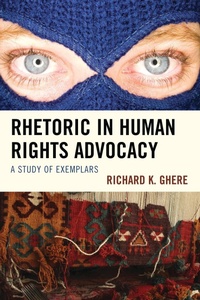
Rhetoric in Human Rights Advocacy
A Study of Exemplars
1st Edition
Published on 22. April 2015
248 pages
979-8-216-30172-1 (ISBN)
Description

This book examines the rhetoric of various "exemplars" who advocate for causes and actions pertaining to human rights in particular contexts. Although some of these exemplars champion human rights, others are human rights antagonists. Simply put, the argument here is that concern for how particular individuals advocate for human rights causes-as well as how antagonists obstruct such initiatives-adds significant value to understanding the successes and failures of human rights efforts in particular cultural and national contexts.
On one hand, we can grasp how specific international organizations and actors function to develop norms (for example, the rights of the child) and how rights are subsequently articulated in universal declarations and formal codes. But on the other, it becomes apparent that the actualmeaning of those rights mutate when "accepted" within particular cultures. A complementary facet of this argument relates to the centrality of rhetoric in observing how rights advocates function in practice; specifically, rhetoric focuses upon the art of argumentation and the various strategies and techniques enlisted therein. In that much of the "reality" surrounding human rights (from the standpoints of advocates and antagonists alike) is fundamentally interpretive, rhetorical (or argumentative) skill is of vital importance for advocates as competent pragma-dialecticians in presenting the case that a rights ideal can enhance life in a culture predisposed to reject that ideal.
This book includes case studies focusing on the rhetoric of the following individuals or groups as either human rights advocates or antagonists: Mary B. Anderson, Rwandan "hate radio" broadcasters, politicians and military officials connected with the Kent State University and Tiananmen Square student protest tragedies, Iqbal Masih, Pussy Riot, Lyndon Johnson, Julian Assange, Geert Wilders, Daniel Barenboim, Joe Arpaio, and Lucius Banda.
On one hand, we can grasp how specific international organizations and actors function to develop norms (for example, the rights of the child) and how rights are subsequently articulated in universal declarations and formal codes. But on the other, it becomes apparent that the actualmeaning of those rights mutate when "accepted" within particular cultures. A complementary facet of this argument relates to the centrality of rhetoric in observing how rights advocates function in practice; specifically, rhetoric focuses upon the art of argumentation and the various strategies and techniques enlisted therein. In that much of the "reality" surrounding human rights (from the standpoints of advocates and antagonists alike) is fundamentally interpretive, rhetorical (or argumentative) skill is of vital importance for advocates as competent pragma-dialecticians in presenting the case that a rights ideal can enhance life in a culture predisposed to reject that ideal.
This book includes case studies focusing on the rhetoric of the following individuals or groups as either human rights advocates or antagonists: Mary B. Anderson, Rwandan "hate radio" broadcasters, politicians and military officials connected with the Kent State University and Tiananmen Square student protest tragedies, Iqbal Masih, Pussy Riot, Lyndon Johnson, Julian Assange, Geert Wilders, Daniel Barenboim, Joe Arpaio, and Lucius Banda.
More details
Edition
1. Auflage
Language
English
Place of publication
United States
Publishing group
Bloomsbury Publishing Plc
Target group
Professional and scholarly
Illustrations
2 Charts, 8 Tables
ISBN-13
979-8-216-30172-1 (9798216301721)
Copyright in bibliographic data and cover images is held by Nielsen Book Services Limited or by the publishers or by their respective licensors: all rights reserved.
Schweitzer Classification
Other editions
Additional editions
Book
11/2016
Lexington Books
€68.60
Shipment within 15-20 days
Persons
Richard K. Ghere is associate professor at the University of Dayton where he is a researcher in the Human Rights Center.
Content
1 Introduction: Rhetoric and Human Rights Advocacy
2 Advocacy Rhetoric through Thick and Thin: A Conceptual Backdrop
3 Rhetoric in Moral Crises
4 Rhetoric in Moral Confrontations
5 Rhetoric in Moral Projects
6 Rhetoric in Moral Work
7 Dialectical Human Rights Advocacy
2 Advocacy Rhetoric through Thick and Thin: A Conceptual Backdrop
3 Rhetoric in Moral Crises
4 Rhetoric in Moral Confrontations
5 Rhetoric in Moral Projects
6 Rhetoric in Moral Work
7 Dialectical Human Rights Advocacy
