

Canon and Censorship in Islamic Intellectual History
Description
Alles über E-Books | Antworten auf Fragen rund um E-Books, Kopierschutz und Dateiformate finden Sie in unserem Info- & Hilfebereich.
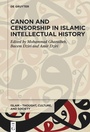
Since no religious institution has emerged from Islamic religious history that is the sole and binding determinant of legitimate faith, Muslim scholars had to legitimize their religious positions in a different way. Canonisation and censorship processes, this volume argues, played a decisive role in the formation and deconstruction of religious authority. This volume therefore examines how texts, positions and the people behind them gain or lose their authority, and which structural, contextual and institutional factors contribute to the establishment or suppression, but also to the maintenance of this claim. Case studies from different historical periods and regions of the Islamic world show how certain religious beliefs gain legitimacy and others lose legitimacy in a specific historical context.
More details
Other editions
Additional editions

Persons
System requirements
File format: ePUB
Copy protection: Watermark-DRM (Digital Rights Management)
System requirements:
- Computer (Windows; MacOS X; Linux): Use a reading software that can process the file format ePUB: e.g., Adobe Digital Editions or FBReader – both free (see eBook Help).
- Tablet/Smartphone (Android; iOS): Before downloading, install the free app Adobe Digital Editions (see eBook Help).
- E-reader: Bookeen, Kobo, Pocketbook, Sony, Tolino and many more (not Kindle).
The file format ePUB works well for novels and non-fiction books – i.e., „flowing” text without complex layout. On an e-reader or smartphone, line and page breaks automatically adjust to fit the small displays.
This eBook uses Watermark-DRM, a „soft” copy protection. This means that there are no technical restrictions to prevent illegal distribution. However, there is a personalised watermark embedded in the eBook that can be used to identify the purchaser of the eBook in the event of misuse and to provide evidence for legal purposes.
For more information, see our eBook Help page.