

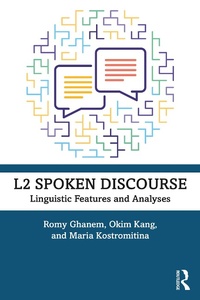
L2 Spoken Discourse
Linguistic Features and Analyses
1st Edition
Published on 22. December 2023
282 pages
978-0-429-64197-8 (ISBN)
Description

This book integrates theoretical and practical perspectives on computer-assisted analysis of spoken discourse, reflecting recent important developments in speech analysis for language teaching and assessment. Bringing together into one volume the methods and approaches for analysis of speech properties and spoken discourse, Ghanem, Kang, and Kostromitina illustrate the importance of adaptive learning technologies in analyzing speech.
The book offers a comprehensive go-to resource for the description of various features in second language (L2) spoken discourse as well as a guide for ways in which they can be extracted and analyzed. The text aims to accomplish its goal by providing an overview of linguistic features found in L2 acquisition, clarifying evidence-based constructs in L2 speech, and applying various analyses to suggestions for practice. This book brings together various strands of research and application with an emphasis on analysis of speech properties, which can be a gate-keeping function of speech. In particular, its innovative approach lies with the introduction of segmental, suprasegmental, lexico-grammatical, and pragmatic features in the analysis of L2 speech. This approach offers a more comprehensive view of L2 spoken discourse which can be extremely beneficial for L2 research and pedagogy.
Covering the speech of both native and non-native speakers, but with particular relevance for second language acquisition, this book is essential reading for graduate students, teachers, and researchers in applied linguistics, TESOL, and other speech-science related fields.
The book offers a comprehensive go-to resource for the description of various features in second language (L2) spoken discourse as well as a guide for ways in which they can be extracted and analyzed. The text aims to accomplish its goal by providing an overview of linguistic features found in L2 acquisition, clarifying evidence-based constructs in L2 speech, and applying various analyses to suggestions for practice. This book brings together various strands of research and application with an emphasis on analysis of speech properties, which can be a gate-keeping function of speech. In particular, its innovative approach lies with the introduction of segmental, suprasegmental, lexico-grammatical, and pragmatic features in the analysis of L2 speech. This approach offers a more comprehensive view of L2 spoken discourse which can be extremely beneficial for L2 research and pedagogy.
Covering the speech of both native and non-native speakers, but with particular relevance for second language acquisition, this book is essential reading for graduate students, teachers, and researchers in applied linguistics, TESOL, and other speech-science related fields.
More details
Edition
1. Auflage
Language
English
Place of publication
London
United Kingdom
Publishing group
Taylor & Francis Ltd
Target group
College/higher education
Illustrations
3 Tables, black and white; 13 Line drawings, black and white; 80 Halftones, black and white; 93 Illustrations, black and white
ISBN-13
978-0-429-64197-8 (9780429641978)
Copyright in bibliographic data and cover images is held by Nielsen Book Services Limited or by the publishers or by their respective licensors: all rights reserved.
Schweitzer Classification
Other editions
Additional editions
Book
12/2023
1st Edition
Routledge
€205.90
Shipment within 15-20 days
Book
12/2023
1st Edition
Routledge
€63.90
Shipment within 15-20 days
Persons
Romy Ghanem serves as the Senior Researcher and Curriculum Director of the International Interfaith Research Lab at Teachers College, Columbia University. Her research areas include second language (L2) pronunciation, linguistic and reverse linguistic stereotyping, language profiling, and L2 speaker accentedness.
Okim Kang is Professor of Applied Linguistics and Director of the Applied Linguistics Speech Lab at Northern Arizona University. Her research interests are speech perception/production, language social psychology/attitudes, L2 pronunciation/intelligibility, L2 oral assessment/testing, and automated scoring/speech recognition.
Maria (Masha) Kostromitina received her Ph.D. in Applied Linguistics from Northern Arizona University. Her research interests lie in the intersection of second language prosody and pragmatics. Specifically, Masha investigates the effectiveness of pragma-prosodic training in improving learners' use of prosody in speech acts and the role of cognitive individual differences in prosody acquisition.
Okim Kang is Professor of Applied Linguistics and Director of the Applied Linguistics Speech Lab at Northern Arizona University. Her research interests are speech perception/production, language social psychology/attitudes, L2 pronunciation/intelligibility, L2 oral assessment/testing, and automated scoring/speech recognition.
Maria (Masha) Kostromitina received her Ph.D. in Applied Linguistics from Northern Arizona University. Her research interests lie in the intersection of second language prosody and pragmatics. Specifically, Masha investigates the effectiveness of pragma-prosodic training in improving learners' use of prosody in speech acts and the role of cognitive individual differences in prosody acquisition.
Content
List of illustrations
Chapter 1Introdution
1.1 Why Spoken Language?
1.2 Spoken Language in the Fields of Linguistics and Applied Linguistics
1.3 L1 Spoken Discourse
1.4 L2 Spoken Discourse
1.5 Scope of the Book
References
Chapter 2
Considerations in the Dwescription and Analysis of L2 Spoken Discourse Section A: Considerations for Researchers
2.1 Introduction
2.2 Theoretical Considerations for the Analysis of L2 Spoken Discourse
2.3 Corpus Linguistics Methods of Analysis of L2 Spoken Discourse
2.4 Data Sources
2.5 Units of Analysis in L2 Spoken Discourse
2.6 Methods of Acoustic and Temporal Analyses of L2 Spoken Discourse
2.7 Challenges in Describing and Analyzing L2 Spoken Discourse
Section B: Considerations for Teachers
2.8 Historical Development of L2 Pronunciation in the Classroom
2.9 Representation of Speech-Related Features in the L2 Classroom
2.10 L2 Speech and Language Assessment
References
Chapter 3
Segmental Features
Section A: Definitions and Research Findings
3.1 Introduction
3.2 Consonant Features
3.3 Vowel Features
3.4 The English Syllable
Section B: Extraction and Analysis
3.5 Consonant Features
3.6 Vowel Features
3.7 Syllable Features
Section C: Pedagogical Applications
3.8 Consonant Features
3.9 Vowel Features
References
Chapter 4
Suprasegmental FeaturesSection A: Definitions and Research Findings
4.1 Introduction4.2 Phonological Processes and Connected Speech4.3 Rhythm4.4 Fluency4.5 Prosody
Section B: Extraction and Analysis
4.6 Phonological Processes and Connected Speech4.7 Rhythm4.8 Fluency4.9 Prosody
Section C: Pedagogical Applications
4.10 Syllables
4.11 Connected Speech and Phonological Processes
4.12 Prosody
References
Chapter 5
The Lexis and Grammar of Spoken Discourse
Section A: Definitions and Research Findings
5.1 Introduction
5.2 Lexical Features in Spoken Discourse
5.3 Grammatical Features in Spoken Discourse
5.4 Functional Correlates of Conversational Features
5.5 Grammatical Features in L2 Spoken Discourse
Section B: Extraction and Analysis
5.6 Part 1: Lexico-Grammatical Analyses in Collected Speech Files
5.7 Part 2: Lexico-Grammatical Analyses Using Online Corpora
Section C: Pedagogical Applications
References
Chapter 6
Pragmatic FeaturesSection A: Definitions and Research Findings
6.1 Introduction
6.2 Pragmatic Constructs and Features of Spoken Discourse
6.3 Pragmatic Functions Carried by Linguistic Features
Section B: Extraction and Analysis
6.4 Selection of Pragmatic Features of Interest
6.5 Analysis of Selected Pragmatic Features
6.6 Data for Pragmatic Analysis
6.7 Research Applications
Section C: Pedagogical Applications
References
Chapter 7
Spoken discourse in a global context and future directions
Section A: World/Global Englishes
7.1 Introduction
7.2 Kachru's Three Concentric Circles
7.3 New Englishes varieties
7.4 English as an International Language (EIL)
7.5 Pedagogical Implications
Section B: Recommendations and Future Directions
References
Index
Chapter 1Introdution
1.1 Why Spoken Language?
1.2 Spoken Language in the Fields of Linguistics and Applied Linguistics
1.3 L1 Spoken Discourse
1.4 L2 Spoken Discourse
1.5 Scope of the Book
References
Chapter 2
Considerations in the Dwescription and Analysis of L2 Spoken Discourse Section A: Considerations for Researchers
2.1 Introduction
2.2 Theoretical Considerations for the Analysis of L2 Spoken Discourse
2.3 Corpus Linguistics Methods of Analysis of L2 Spoken Discourse
2.4 Data Sources
2.5 Units of Analysis in L2 Spoken Discourse
2.6 Methods of Acoustic and Temporal Analyses of L2 Spoken Discourse
2.7 Challenges in Describing and Analyzing L2 Spoken Discourse
Section B: Considerations for Teachers
2.8 Historical Development of L2 Pronunciation in the Classroom
2.9 Representation of Speech-Related Features in the L2 Classroom
2.10 L2 Speech and Language Assessment
References
Chapter 3
Segmental Features
Section A: Definitions and Research Findings
3.1 Introduction
3.2 Consonant Features
3.3 Vowel Features
3.4 The English Syllable
Section B: Extraction and Analysis
3.5 Consonant Features
3.6 Vowel Features
3.7 Syllable Features
Section C: Pedagogical Applications
3.8 Consonant Features
3.9 Vowel Features
References
Chapter 4
Suprasegmental FeaturesSection A: Definitions and Research Findings
4.1 Introduction4.2 Phonological Processes and Connected Speech4.3 Rhythm4.4 Fluency4.5 Prosody
Section B: Extraction and Analysis
4.6 Phonological Processes and Connected Speech4.7 Rhythm4.8 Fluency4.9 Prosody
Section C: Pedagogical Applications
4.10 Syllables
4.11 Connected Speech and Phonological Processes
4.12 Prosody
References
Chapter 5
The Lexis and Grammar of Spoken Discourse
Section A: Definitions and Research Findings
5.1 Introduction
5.2 Lexical Features in Spoken Discourse
5.3 Grammatical Features in Spoken Discourse
5.4 Functional Correlates of Conversational Features
5.5 Grammatical Features in L2 Spoken Discourse
Section B: Extraction and Analysis
5.6 Part 1: Lexico-Grammatical Analyses in Collected Speech Files
5.7 Part 2: Lexico-Grammatical Analyses Using Online Corpora
Section C: Pedagogical Applications
References
Chapter 6
Pragmatic FeaturesSection A: Definitions and Research Findings
6.1 Introduction
6.2 Pragmatic Constructs and Features of Spoken Discourse
6.3 Pragmatic Functions Carried by Linguistic Features
Section B: Extraction and Analysis
6.4 Selection of Pragmatic Features of Interest
6.5 Analysis of Selected Pragmatic Features
6.6 Data for Pragmatic Analysis
6.7 Research Applications
Section C: Pedagogical Applications
References
Chapter 7
Spoken discourse in a global context and future directions
Section A: World/Global Englishes
7.1 Introduction
7.2 Kachru's Three Concentric Circles
7.3 New Englishes varieties
7.4 English as an International Language (EIL)
7.5 Pedagogical Implications
Section B: Recommendations and Future Directions
References
Index
