

Anonymization and Identifiability
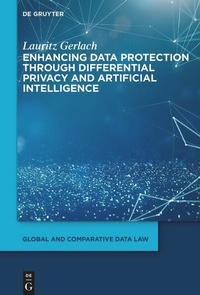
Enhancing Data Protection Through Differential Privacy and Artificial Intelligence
1st Edition
Published on 2. February 2026
XVI, 264 pages
978-3-11-222256-0 (ISBN)
Description

The author explores the nature of data anonymization under the GDPR, with a particular focus on means of differential privacy. First, he examines the requirement of "identified or identifiable" in Art. 4 GDPR. Building on this foundation, he describes and evaluates different methods for the anonymization of structured and unstructured data, especially text data. The author describes the role of machine learning and artificial intelligence with regard to anonymizing unstructured data and elaborates on the data protection implications of training and using AI/ML models (including federated learning setups) for this purpose.
More details
Other editions
Additional editions
Lauritz Gerlach
Anonymization and Identifiability
Enhancing Data Protection Through Differential Privacy and Artificial Intelligence
E-Book
02/2026
1st Edition
De Gruyter
€79.95
Available for download
Lauritz Gerlach
Anonymization and Identifiability
Enhancing Data Protection Through Differential Privacy and Artificial Intelligence
Book
01/2026
1st Edition
De Gruyter
€79.95
Available immediately
Person
Lauritz Gerlach, Hamburg.
