

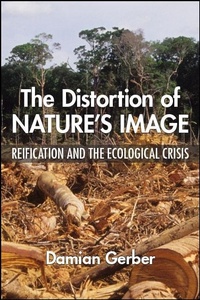
The Distortion of Nature's Image
Reification and the Ecological Crisis
1st Edition
Published on 25. March 2019
244 pages
978-1-4384-7356-7 (ISBN)
Description

Illustrates how the notion of an ecological society remains a decisively political question.
All prices
More details
Series
Language
English
Place of publication
Basel/Berlin/Boston
United States
Target group
Professional and scholarly
Edition type
Digital original
Product notice
Reflowable
Illustrations
Total Illustrations: 0
Total Illustrations: 0
ISBN-13
978-1-4384-7356-7 (9781438473567)
Schweitzer Classification
Other editions
Additional editions
Book
01/2020
State University of New York Press
€41.50
Shipment within 10-20 days
Book
04/2019
State University of New York Press
€96.00
Shipment within 10-20 days
Person
Damian Gerber is Lecturer at the University of Queensland and the Australian Catholic University.
Content
Preface
Acknowledgments
Introduction: Ecology and Critical Theory
On Some Limitations of Contemporary Nature Ontologies
Reification and the Historical Context of Nature Philosophy
The Dialectic of the Nature-Concept
The Concept of Dialectical Naturalism
1. Anti-Naturalism, the Bourgeois Enlightenment, and the Modern Origins of a Dialectical Naturalism
The Becoming of Nature
Epistemology and the Bourgeois Image of Nature
The Kantian "Block" and the Distancing of Reason from Nature
An Alternative Perspective on Kant: Schiller's Aesthetic Letters
Fichte's Nature-Concept as the Non-Ego
"The Struggle of Spirit with Itself "
Hegel's Critique of the Concept of Natural Law
The Representation of Nature as Reification
Hegel's Doctrine of the Notion
The Anti-Naturalism of "Spirit" and the Limits of Hegel's Idealism
Feuerbachian Interlude
2. Nature in Marx and Anarchism
Marx and the Historicization of Nature
The Younger Marx's Naturalism
The Concept of Nature in Marx's Middle Period and the Ethical Dimension of Marx's Anti-Naturalism
Beyond the Limits of Marx's Nineteenth Century
Post-Proudhonian Anarchism and the Persistence of Mythopoeic Naturalism
Nature Against Itself: The Contradictions of Bakunin's "Natural Human Society"
The Ambiguities of Kropotkin's Concept of "Anarchist Morality"
Digression: On the Historical Scars of Nature Philosophy
The Self-Contradictory Historicism of Kropotkin's "Mutual Aid" Thesis
Naturalism as Politics
The Determinate Negation of Kropotkin's Theory of Society
The Necessity of a Dialectical Naturalism
3. Recovering a Dialectical Naturalism
The Basis of a Dialectical Naturalism
Precursory Models of Dialectical Naturalism
Bloch's Notion of "Technological Contact"
Murray Bookchin's Social Ecology
The Nature-Concept and the Anthropology of Hierarchy
Toward a Communalist Image of Nature
Epilogue
Appendix
Theses on Communalism
Notes
Acknowledgments
Introduction: Ecology and Critical Theory
On Some Limitations of Contemporary Nature Ontologies
Reification and the Historical Context of Nature Philosophy
The Dialectic of the Nature-Concept
The Concept of Dialectical Naturalism
1. Anti-Naturalism, the Bourgeois Enlightenment, and the Modern Origins of a Dialectical Naturalism
The Becoming of Nature
Epistemology and the Bourgeois Image of Nature
The Kantian "Block" and the Distancing of Reason from Nature
An Alternative Perspective on Kant: Schiller's Aesthetic Letters
Fichte's Nature-Concept as the Non-Ego
"The Struggle of Spirit with Itself "
Hegel's Critique of the Concept of Natural Law
The Representation of Nature as Reification
Hegel's Doctrine of the Notion
The Anti-Naturalism of "Spirit" and the Limits of Hegel's Idealism
Feuerbachian Interlude
2. Nature in Marx and Anarchism
Marx and the Historicization of Nature
The Younger Marx's Naturalism
The Concept of Nature in Marx's Middle Period and the Ethical Dimension of Marx's Anti-Naturalism
Beyond the Limits of Marx's Nineteenth Century
Post-Proudhonian Anarchism and the Persistence of Mythopoeic Naturalism
Nature Against Itself: The Contradictions of Bakunin's "Natural Human Society"
The Ambiguities of Kropotkin's Concept of "Anarchist Morality"
Digression: On the Historical Scars of Nature Philosophy
The Self-Contradictory Historicism of Kropotkin's "Mutual Aid" Thesis
Naturalism as Politics
The Determinate Negation of Kropotkin's Theory of Society
The Necessity of a Dialectical Naturalism
3. Recovering a Dialectical Naturalism
The Basis of a Dialectical Naturalism
Precursory Models of Dialectical Naturalism
Bloch's Notion of "Technological Contact"
Murray Bookchin's Social Ecology
The Nature-Concept and the Anthropology of Hierarchy
Toward a Communalist Image of Nature
Epilogue
Appendix
Theses on Communalism
Notes
