

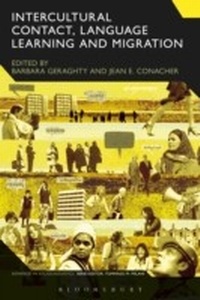
Intercultural Contact, Language Learning and Migration
1st Edition
Published on 25. September 2014
224 pages
978-1-4411-3569-8 (ISBN)
Description

At the heart of this volume lies an exploration of what actually happens to languages and their users when cultures come into contact. What actions do supra-national institutions, nation states, communities and individuals take in response to questions raised by the increasingly diverse forms of migration experienced in a globalized world?
The volume reveals the profound impact that decisions made at national and international level can have on the lives of the individual migrant, language student, or speech community. Equally, it evaluates the broader ramifications of actions taken by migrant communities and individual language learners around issues of language learning, language maintenance and intercultural contact. Reflecting Jan Blommaert's assertion that in a world shaped by globalization, what is needed is 'a theory of language in society... of changing language in a changing society', this volume argues that researchers must increasingly seek diverse methodological approaches if they are to do justice to the diversity of experience and response they encounter.
The volume reveals the profound impact that decisions made at national and international level can have on the lives of the individual migrant, language student, or speech community. Equally, it evaluates the broader ramifications of actions taken by migrant communities and individual language learners around issues of language learning, language maintenance and intercultural contact. Reflecting Jan Blommaert's assertion that in a world shaped by globalization, what is needed is 'a theory of language in society... of changing language in a changing society', this volume argues that researchers must increasingly seek diverse methodological approaches if they are to do justice to the diversity of experience and response they encounter.
Reviews / Votes
This book is an important addition to the literature on the complex interaction between migration, language and culture at societal, community and personal levels. Its diversity of themes, perspectives and research methods aptly reflects the multifarious realities we inhabit, and the editors' introductory and concluding commentaries do an excellent job of relating the concerns of individual chapters to the larger picture. This volume explores the diversity and tension caused by population movement and technological and social transformation. The book has been successful in advocating the advantages of being open to different influences, research cultures and methodologies in intercultural studies. * The Linguist List *More details
Series
Edition
1. Auflage
Language
English
Place of publication
New York
United States
Publishing group
Bloomsbury Publishing PLC (Digital)
Target group
Professional and scholarly
ISBN-13
978-1-4411-3569-8 (9781441135698)
Copyright in bibliographic data and cover images is held by Nielsen Book Services Limited or by the publishers or by their respective licensors: all rights reserved.
Schweitzer Classification
Other editions
Additional editions
Barbara Geraghty | Jean Conacher
Intercultural Contact, Language Learning and Migration
Book
01/2016
Bloomsbury Academic
€56.00
Shipment within 15-20 days
Barbara Geraghty | Jean Conacher
Intercultural Contact, Language Learning and Migration
Book
07/2014
Bloomsbury Academic USA
€222.40
Shipment within 15-20 days
Persons
Barbara Geraghty is Lecturer in Japanese at the School of Languages, Literature, Culture and Communication, University of Limerick, Ireland.
Jean E Conacher is Senior Lecturer in German, at the School of Languages, Literature, Culture and Communication, University of Limerick, Ireland.
Jean E Conacher is Senior Lecturer in German, at the School of Languages, Literature, Culture and Communication, University of Limerick, Ireland.
Content
Notes on Contributors
Acknowledgements
Introduction: Approaching migration, intercultural contact and language learning, Barbara Geraghty and Jean E Conacher
Part 1: Migration and language contact
1. Migration and language management: The Jewish experience, Bernard Spolsky
2. Linguistic vitality and the Polish community in France, Vera Regan and Eweline Debaene
3. Language planners' cultural positioning strategies in joint negotiation of meaning, Patrick Studer
Part 2: Language learning and cultural contact
4. Emergent new literacies and the mobile phone: Informal language learning, voice and identity in a South African township, Fie Velghe and Jan Blommaert
5. Attitudes towards and perceptions of English L2 acquisition among Polish migrants in Ireland, Agnieszka Skrzypek, Romana Kopeckova, Barbara Bidzinska and David Singleton
6. Face-to-face tandem language learning: A Zone of Proximal Development for intercultural competence?, Fionnuala Kennedy and Aine Furlong
7. E-portfolio self-assessment of intercultural communicative competence: Helping language learners to become autonomous intercultural speakers, Aleksandra Sudhershan
Part 3: Migration and contact: Community and individual experience
8. Heterglossic becomings: Listening to and learning from our multiple voices, Julie Choi and David Nunan
9. The Catalan Nova Canco: Resistance and identity through song, Nuria Borrull
10. Wandering words: Reflections on ambivalent cultural belonging and the creative potential of linguistic multiplicity, Irmina van Niele
Conclusion, Barbara Geraghty and Jean E Conacher
Index
Acknowledgements
Introduction: Approaching migration, intercultural contact and language learning, Barbara Geraghty and Jean E Conacher
Part 1: Migration and language contact
1. Migration and language management: The Jewish experience, Bernard Spolsky
2. Linguistic vitality and the Polish community in France, Vera Regan and Eweline Debaene
3. Language planners' cultural positioning strategies in joint negotiation of meaning, Patrick Studer
Part 2: Language learning and cultural contact
4. Emergent new literacies and the mobile phone: Informal language learning, voice and identity in a South African township, Fie Velghe and Jan Blommaert
5. Attitudes towards and perceptions of English L2 acquisition among Polish migrants in Ireland, Agnieszka Skrzypek, Romana Kopeckova, Barbara Bidzinska and David Singleton
6. Face-to-face tandem language learning: A Zone of Proximal Development for intercultural competence?, Fionnuala Kennedy and Aine Furlong
7. E-portfolio self-assessment of intercultural communicative competence: Helping language learners to become autonomous intercultural speakers, Aleksandra Sudhershan
Part 3: Migration and contact: Community and individual experience
8. Heterglossic becomings: Listening to and learning from our multiple voices, Julie Choi and David Nunan
9. The Catalan Nova Canco: Resistance and identity through song, Nuria Borrull
10. Wandering words: Reflections on ambivalent cultural belonging and the creative potential of linguistic multiplicity, Irmina van Niele
Conclusion, Barbara Geraghty and Jean E Conacher
Index
