

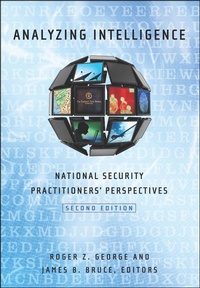
Analyzing Intelligence
Description

Analyzing Intelligence, now in a revised and extensively updated second edition, assesses the state of the profession of intelligence analysis from the practitioner's point of view. The contributors-most of whom have held senior positions in the US intelligence community-review the evolution of the field, the rise of new challenges, pitfalls in analysis, and the lessons from new training and techniques designed to deal with 21st century national security problems. This second edition updates this indispensable book with new chapters that highlight advances in applying more analytic rigor to analysis, along with expertise-building, training, and professional development. New chapters by practitioners broaden the original volume's discussion of the analyst-policymaker relationship by addressing analytic support to the military customer as well as by demonstrating how structured analysis can benefit military commanders on the battlefield.
Analyzing Intelligence is written for national security practitioners such as producers and users of intelligence, as well as for scholars and students seeking to understand the nature and role of intelligence analysis, its strengths and weaknesses, and steps that can improve it and lead it to a more recognizable profession.
The most comprehensive and up-to-date volume on professional intelligence analysis as practiced in the US Government, Analyzing Intelligence is essential reading for practitioners and users of intelligence analysis, as well as for students and scholars in security studies and related fields.
More details
Other editions
Additional editions
Persons
Roger Z. George is professor of national security strategy at the National War College and an adjunct professor at Georgetown University in the Security Studies Program. He was a career CIA intelligence analyst who served at the State and Defense departments and has been the national intelligence officer for Europe. He is coeditor of several volumes on intelligence and national security studies, most recently The National Security Enterprise: Navigating the Labyrinth.
James B. Bruce is a senior political scientist at the RAND Corporation. A retired career intelligence analyst, he served with CIA's Directorate of Intelligence and Directorate of Operations, and with the National Intelligence Council as deputy national intelligence officer for science and technology. An adjunct professor at Georgetown University, he has taught previously at the National War College, and as an adjunct at Columbia University and American University.
Content
Preface
1. Intelligence Analysis: What Is It?and What Does It Take?
James B. Bruce and Roger Z. George
Part I: The Analytic Tradition
2. The Evolution of Intelligence Analysis in the US Intelligence Community
John H. Hedley
3. The Track Record of CIA Analysis
Richard J. Kerr and Michael Warner
4. Is Intelligence Analysis a Discipline?
Rebecca Fisher, Rob Johnston, and Peter Clement
Part II: The Policymaker?Analyst Relationship
5. Serving the National Policymaker
John McLaughlin
6. The Policymaker's Perspective: Transparency and Partnership
James B. Steinberg
7. Serving the Senior Military Consumer: A National Agency Perspective
John Kringen
Part III: Diagnosis and Prescription
8. Why Bad Things Happen to Good Analysts
Jack Davis
9. Making Intelligence Analysis More Reliable: Why Epistemology Matters to Intelligence
James B. Bruce
10. The Missing Link: The Analyst?Collector Relationship
James B. Bruce
Part IV: Enduring Challenges
11. The Art of Intelligence and Strategy
Roger Z. George
12. Foreign Deception and Denial: Analytic Imperatives
James B. Bruce and Michael Bennett
13. Warning in an Age of Uncertainty
Roger Z. George and James J. Wirtz
Part V: Analysis for Twenty-First-Century Issues
14. Structured Analytic Techniques: A New Approach to Analysis
Randolph H. Pherson and Richards J. Heuer Jr.
15. New Analytic Techniques for Tactical Military Intelligence
Vincent Stewart, Drew E. Cukor, Joseph Larson III, and Matthew Pottinger
16. Domestic Intelligence Analysis
Maureen Baginski
Part VI: Leading Analytic Change
17. Building a Community of Analysts
Thomas Fingar
18. The Education and Training of Intelligence Analysts
Mark M. Lowenthal
19. Analytic Outreach: Pathway to Expertise Building and Professionalization
Susan H. Nelson
20. Conclusion: Professionalizing Intelligence Analysis in the Twenty-First Century
Roger Z. George and James B. Bruce
Glossary
Contributors
Index
