

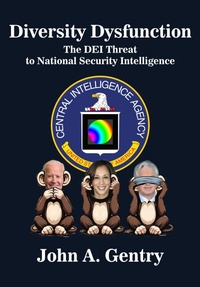
Diversity Dysfunction
Description

More details
Other editions
Additional editions
Person
Dr. John A. Gentry teaches at the School of Defense and Strategic Studies at Missouri State University. For twelve years, he was an intelligence analyst at the Central Intelligence Agency, where he mainly worked on economic issues associated with the Soviet Union and Warsaw Pact countries. For two of those years, he was senior analyst on the staff of the National Intelligence Officer for Warning. Dr. Gentry is a retired U.S. Army Reserve officer, with most assignments in special operations and intelligence arenas. Previously, he taught at Georgetown University, Columbia University, and the National Intelligence University. He writes regularly on intelligence and security issues. He is the author of Neutering the CIA: Why US Intelligence Versus Trump Has Long-Term Consequences (2023) and about 40 articles and book chapters on intelligence topics. He has an economics background and received his Ph.D. in political science from George Washington University. Follow him at @gentry_johna.
Content
- Diversity Dysfunction
- The DEI Threat to National Security Intelligence
- John A. Gentry
- Diversity Dysfunction
- The DEI Threat to National Security Intelligence
- John A. Gentry
- Academica PressWashington~London
- Library of Congress Cataloging-in-Publication Data
- Names: Gentry, John A. (author)Title: Diversity dysfunction : the dei threat to national security intelligence | Gentry, John A.Description: Washington : Academica Press, 2025. | Includes references.Identifiers: LCCN 2024946069 | ISBN 9781680535631 (hardcover) | 9781680535655 (paperback) | 9781680535648 (e-book)
- Copyright 2025 John A. Gentry
- Contents
- Preface ix
- Chapter 1Introduction 1
- Chapter 2The Intellectual and Policy Background 9
- Chapter 3DEI in the Intelligence Community 13
- Chapter 4DEI Policies in Action 19
- Presidential directives 19
- ODNI policies and guidance 29
- DEI policies at the intelligence agencies 39
- Hiring and promotion policies 55
- Resource allocations 62
- Diversity officers' activism 66
- Managers' diversity-related policies 71
- Operational implications 72
- Chapter 5Conclusion 95
- Index 99
- Preface
- The emergence of "diversity, equity, and inclusion" (DEI) policies in the U.S. federal government during Barack Obama's administration has been as controversial as similar concepts have been in American universities and businesses. Claims that DEI policies are ethically good and necessary to redress historical injustices largely reflect ideological beliefs with which people can agree or disagree. But now, claims that DEI policies improve the operational performance of institutions have been met
- My focus on this subject began after it became clear to me that DEI policies-and the ideological beliefs they reflect and material advantages they offer-were major causes of the eruption of overt politicization of the intelligence community (IC), especially the Central Intelligence Agency (CIA), in 2016 and thereafter in opposition to candidate and then President Donald J. Trump. I experienced politicization of a minor sort in the mid-1980s, when I was a CIA analyst. I studied the phenomenon in
- Hence, this subject is fraught with many varieties of politics, as well as emotion and sometimes harsh actions. But it is an important issue to understand fully. After a balanced inquiry-in the sense that I brought no predetermined conclusions to my investigation-I have become convinced that DEI policies are harming U.S. national security, and the security of allies whose governments also embrace them in various forms. This book is my dispassionate effort to describe why, hampered as I am by the
- This book is made possible by the willingness of many current and former intelligence officers to talk about a subject that is bureaucratically and politically dangerous to discuss, as I experienced myself. While there is some relevant material in the public domain, current and former intelligence officers really know what has happened and what continues to happen in their agencies. Many sources cited herein, including retired officers, were only willing to talk anonymously for fear of consequen
- I also am grateful to people who helped make this book a reality. Chuck Burgess introduced me to Dr. Paul du Quenoy of Academica Press, who appreciated my story and helped make it public. At Academica, Soumyadev Bose was a helpful project editor. Thanks to all.
- This book contains a few passages taken with permission and minor modifications from some of my previous publications, including the article and book mentioned above.
- As a former intelligence officer, I am required to submit my writings to government security reviewers before they are published. This book was reviewed by the CIA's Prepublication Classification Review Board (PCRB), which approved its text with minor changes. The PCRB requires the following statement:
- All statement of fact, opinion, or analysis expressed are those of the author and do not reflect the official positions or views of the Central Intelligence Agency (CIA) or any other U.S. Government agency. Nothing in the contents should be construed as asserting or implying U.S. Government authentication of information or CIA endorsement of the author's views. This material has been reviewed by the CIA to prevent the disclosure of classified information. This does not constitute an official rel
- Chapter 1 Introduction
- Variants of "diversity, equity, and inclusion" (DEI) policies have become popular in Western governments, educational institutions, and businesses in recent years. These have been touted primarily as ethically (and politically) desirable policies. But many adherents, following a series of prominent McKinsey & Company reports that have recently been called into question, have claimed that DEI policies in general are operationally effective in a wide variety of settings. McKinsey's assertions were
- Also commonly cited is a study by the late Professor Katherine Phillips of Columbia University's Business School, a black academic, and her colleagues. Phillips et al.'s study noted that "social diversity in a group can cause discomfort, rougher interactions, a lack of trust, greater perceived interpersonal conflict, lower communication, less cohesion, more concern about disrespect, and other problems." But still, the team asserted, diversity is good because racially diverse groups allegedly thi
- The attractive assertion-to DEI partisans-that demographic diversity improves performance was soon followed by similar claims by senior U.S. intelligence officers who reified Phillips's hypothesis into causal logic and extended it to foreign intelligence activities-thereby making Phillips's argument ostensibly relevant to the U.S. intelligence community (IC). Director of national intelligence (DNI) James Clapper (2010-2017) asserted that DEI policies cause improvement in the operational performa
- Former deputy chief of the Central Intelligence Agency's (CIA's) analysis directorate Carmen Medina, a Puerto Rican woman, borrowed extensively from Phillips's argument in claiming that demographic diversity in groups following the same intelligence issue makes people work harder to prepare their arguments, thereby allegedly making them perform better. Medina's argument that diversity encourages intelligence analysts to think harder is unpersuasive for several reasons beyond the weaknesses of Ph
- Hence, strikingly given long-standing U.S. intelligence norms and policy that require that evidence supports intelligence analyses to the extent possible, no U.S. intelligence officer has ever explained how domestically defined demographic, not intellectual, diversity improves the performance of U.S. intelligence agencies or the IC as a whole. They have not provided evidentiary support or even vaguely suggestive anecdotes to back this claim. Nobody has ever credibly attributed even one significa
- In 2021, I examined the DEI-related performance claims by Clapper and others, finding no evidence to support their assertions. The longstanding argument that the skills of individuals, not groups of any sort, make good intelligence officers remains valid. I suggested that a follow-on study examine a related question: do DEI policies affect the IC's operational performance in any way? Reaction to this study was strong. DEI advocates were outraged by my conclusions and, perhaps revealingly, even t
- Neither position has yet been well supported in published studies beyond small snippets of evidence and logic, however. But unlike the ethical argument, performance claims are at least potentially testable. A note on methodology therefore is important. This study identified and examined evidence related to the operational effects of DEI policies-positive and negative. The data include public sources as well as the author's extensive contacts with current and former intelligence officers, many of
- The cited sources tell stories very similar to those of 23 then-serving Federal Bureau of Investigation (FBI) employees who reported on DEI-related problems at their agency in 2023. This book focuses on foreign-oriented U.S. intelligence services, but DEI policies of successive presidents have pertained to the entire federal workforce. Hence, the experiences of FBI personnel in related law enforcement and counterintelligence work are relevant to, and nicely complement, this study.
- The findings of this study are important because, if critics of DEI policies are right, DEI has potentially significant and strategically negative ramifications for the national security of states that adopt such policies. It really is true that intelligence is the first line of national defense. Policymakers therefore need to know which perspective is more accurate. The security of Western states individually and collectively is at stake. DEI-like perspectives also have infiltrated other Wester
- In sum, this study finds appreciable evidence that DEI policies significantly damage the operational performance of U.S. intelligence and no evidence that DEI improves its performance. This effectively debunks the ideological nature of claims by Clapper, Medina, and others, and offers an explanation of why my work has been denied publication elsewhere and why some hold even my addressing the subject to be controversial. As has been the case in other national institutions (e.g. corporations, scho
- Chapter 2 The Intellectual and Policy Background
- The DEI perspective, as we now know it, is a relatively recent phenomenon. Its intellectual history is easily traced to Marxist "critical" theories produced by scholars of the Institut für Sozialforschung (Institute for Social Research) at the Goethe University in Frankfurt, Germany, an intellectual community commonly known as the "Frankfurt School," which dates to 1923. During the Nazi era, most members of the Frankfurt School relocated to the United States, where they began instructing generat
- All Marxist "critical" theories use similar terminology, cite similar historical antecedents, and were developed by people who have overtly expressed their commitments to Marxism. Other Marxists often hide their true intellectual loyalties in order to avoid offending nonbelievers, ensuring some faux outrage at this observation of fact. "Critical theory" has many spin-offs, including "critical legal studies" that attempt to use the law to advance political goals, "critical pedagogy" that instruct
- Critical theory's most recent incarnation, and popular use of the acronym DEI, is a creation of President Barack Obama, who promised to "transform" America just before he was elected in 2008. He spoke extensively about the importance of preferential treatment for politically favored domestic demographic "identity" groups, especially blacks, women, and LGBTQ+ people-member groups of what is often called the "Obama Coalition" of supporters of the Democratic Party. Obama made demographic diversity
- Obama and his followers appear to have ignored federal laws that ban discrimination in employment. The major federal law regarding workplace discrimination is the Civil Rights Act of 1964, which prohibits discriminatory employment decisions or actions based on a person's race, color, religion, sex, national origin, and other "protected characteristics," including, via a recent Supreme Court decision, sexual orientation (42 U.S.C. § 2000e-2). The U.S. Equal Employment Opportunity Commission is ch
- While some of the major DEI policy documents published by IC agencies give passing nods to the old virtues of functional diversity-of outlooks, foreign experiences, language expertise, and other skills related to the practice of intelligence by individuals-the new emphasis, following Obama, is demographic, group-oriented, and political in motivation. That is, it refers to characteristics of Americans, not the foreigners whom the foreign-focused intelligence agencies study. Contrary to some acade
- It is important to emphasize that this view strenuously opposes the IC's traditional concept of desirable diversity-intellectual diversity within individuals that reflects understanding NOT of the population of the United States, but of the world outside of the United States, where the mainly foreign-focused IC agencies operate and which they try to comprehend. By traditional reasoning, intellectual diversity helps intelligence organizations collectively think broadly and deeply, and thereby per
- U.S. intelligence has long recognized its need for some racial diversity in order to operate in a big world that "looks" substantially different than the population of the United States. When operating in Sri Lanka, for example, it makes sense for U.S. intelligence officers to "look like," and act like, they hail from Colombo, not Cleveland. To emphasize another important point, it has long been clear to U.S. intelligence agencies, and to reputable external observers, that persons from all signi
- The old IC concept of trying to find and deploy diversity of outlook, education, and experience in individuals as tools of effective performance has therefore been deemphasized, if not yet entirely gone. Evidence of this change now is abundant. Officials say so regularly, but usually implicitly, by emphasizing DEI as a variety of identity politics. Annual reports on the demographic diversity of the intelligence workforce contain no performance metrics or even any discussion of the desirability o
- Chapter 3 DEI in the Intelligence Community
- The issue of whether, and how, DEI policies affect the operational performance of the IC has remained unexplored despite a growing number of relevant anecdotes and improved understanding of how DEI-reengineered processes can cause intelligence dysfunction. Assessing the merits of this controversy is not easy. Government performance in general is notoriously hard to assess. Most government agencies perform public services without payment by "customers," whose reactions in other contexts measure q
- To argue convincingly that DEI policies effect performance, the first task is to specify a chain of causally linked events from policymaking through bureaucratic processes to outcomes that can be assessed, at least qualitatively. U.S. intelligence agencies vary in function and structure but most, and the CIA by law, focus on activities in foreign countries. The agencies collect information and turn it into intelligence through analysis. This process is well known in the intelligence studies lite
- First in the causal chain are DEI-related presidential policies, including executive orders (EOs), other formal and sometimes legally binding requirements, and verbal directives. Surely there is plenty of less formal guidance, but public records of it are scarce. Individual accounts typically are subjective, brief, and anecdotal, and may be self-serving. EOs in principle are binding on federal employees, although compliance appears to be spotty, driven by the political attitudes of the bureaucra
- Second, the Director of National Intelligence, the senior U.S. intelligence officer, and diversity offices employing delegated authority, issue policy guidance, informally or via formal orders including "intelligence community directives," or ICDs, applicable to the IC as a whole. Some ICDs are personal orders
- others are products of collective decision making by IC agencies that the DNI simply signs. DNIs communicate their views in a variety of other ways, including speeches and organized forum
- Third, agency heads, including the Director of the CIA (DCIA), convert presidential and ODNI policies and other guidances into their own policies that fit their specific missions, organizations, and, in many cases, their personal preferences, but normally in ways roughly consistent with more senior-level guidance. This is done via strategy documents, policy directives, and managerial decisions. The heads of the CIA's five directorates convert them into policies tailored to their distinctive orga
- Fourth, the policies influence human resources administration, including decisions in hiring, promotions, assignments, and awards. They also affect the nature and terms of the resolution of employees' complaints against management and other employees. During the Obama administration, these policies shifted from standing "equal employment opportunity" and "affirmative action" policies to explicit preferences for privileged demographic identity groups defined by DEI doctrine. Over time, the polici
- Fifth, DEI policies are implemented using resources allocated by formal budget processes, including those of the White House, the Office of Management and Budget, Congress, the IC as a whole as represented by the ODNI, and individual agencies such as the CIA. Some funds are devoted specifically to DEI-motivated purposes, while others support DEI-related aspects of usual operational activities. Managers then deploy their people and existing physical resources in ways consistent with DEI prioritie
- Sixth, diversity offices at each agency make DEI-related policies using powers delegated to them by agency heads and operationalize them by implementing actions, such as requiring employees to complete DEI-focused training. At the CIA, these actions are further refined by directorate-level diversity offices and newer diversity offices at the next level down in each directorate. In the Directorate of Operations (DO), these are called divisions
- in the Directorate of Analysis (DA), they are office
- Seventh, line managers implement policies encouraged or enforced by their own incentive structures through day-to-day operational decisions as well as in promotion, assignment, and award decisions. Usually, these are the immediate drivers of operational consequences of DEI-related policies. Managers also address some diversity-related complaints.
- Eighth, policies are acted upon-as in the processes of analysis or human intelligence collection, the CIA's two major operational performance arenas. Scholars of intelligence have only an incomplete understanding of ways in which DEI-related decisions influence actual operations. Independent of DEI concerns, leaders' decisions have operational implications in areas such as shaping the contents of published analytic papers, agents recruited or not, priority information needs collected or not, par
- Ideally, we should be able to track DEI-related policies from policy origination to operational outcome in ways that reveal causality. This offers analysis much like the "process tracing" technique employed in the social sciences. Nevertheless, the detailed understanding of intelligence needed for such tracing is rarely possible due to secrecy restrictions and the sheer complexity of the operations of large organizations that interact with other agencies of their own government as well as (often
- My effort takes a "next-best" approach, arguing, on the basis of a fairly detailed understanding of the structures and basic processes that CIA elements employ, that activities and decisions at each stage of the intelligence process both reflect higher-level policies and influence lower-level policies and activities. In this way, this study explains much of how and why DEI policies and DEI-related actions interact at each stage and ultimately influence operational outcomes without knowing the de
- Chapter 4 DEI Policies in Action
- Presidential directives
- President Barack Obama
- President Donald Trump
- President Joe Biden
- Intellectual history
- ODNI policies and guidance
- DNI James Clapper
- Trump's DNIs
- DNI Avril Haines
- DEI policies at the intelligence agencies
- DCIA John Brennan
- Trump's CIA directors
- Biden's agency heads
- Hiring and promotion policies
- GAO benchmarks
- The IC CAE program
- Disabilities valued
- Resource allocations
- Diversity officers' activism
- Managers' diversity-related policies
- Operational implications
- Damage to workforce competence and collegiality
- Implications for Operations
- Implications for analysis
- Political activism, including leaks
- Reputational consequences
- DEI policies move through many stages before they affect intelligence activities and national security. This chapter outlines these stages in detail and links them procedurally. While clearly similar in some respects, these activities differ appreciably from DEI-related effects in businesses, universities, and the military.
- The U.S. government, and therefore the intelligence agencies, long have embraced "affirmative action," a bipartisan 1960s-era presidential initiative to give modest preferences to racial minorities and women in federal hiring decisions. The motive was political, not functional. The CIA's leaders long ago also recognized that, given the global responsibilities presidents gave them after the agency's founding in 1947, it needed to recruit a wide variety of talent relevant to global missions, where
- Previous discrimination against women and minorities led to a bipartisan desire to give individuals from these groups modest advantages in hiring and promotions via affirmative action. President Bill Clinton (1993-2001) accelerated this effort somewhat, and President George W. Bush (2001-2009) maintained it. But while they emphasized hiring women and minorities, in the early years affirmative action policies did not state, or even suggest, that the preferences should trump merit or ability. "Equ
- President Barack Obama (2009-2017) went far further on "affirmative action" than any of his predecessors. On October 30, 2008, just before he won the presidential election, he said at a rally, "We are five days away from fundamentally transforming the United States of America." Obama's key transformative policy document relative to the federal workforce was Executive Order (EO) 13583 of August 18, 2011, "Establishing a Coordinated Government-Wide Initiative to Promote Diversity and Inclusion in
- Obama and his appointees said explicitly, and repeatedly, that the goal of his DEI program was to hire and promote more people from favored demographic groups-a strong variety of preferential identity politics. Federal employees as a whole should "look like America," said Obama, his appointees, and many of the people his policies advantaged. Members of Obama's favored identity groups thereby became privileged in the sense that they enjoyed, and still enjoy, a large number of administrative and p
- The U.S. Government Accountability Office (GAO) has two "benchmarks" that many parts of the government, including the IC, often use for comparative purposes in the context of DEI: groups' share of the federal workforce and of the civilian workforce. These measures were not always helpful to support Obama's diversity agenda in the IC, however, leading to a shifting set of comparisons over time by various IC leaders, who use(d) different standards (such as numbers for groups at higher pay grades a
- President Trump (2017-2021) did surprisingly little to alter Obama's DEI policies, especially given their role in generating partisan political activism in opposition to him beginning in 2016, discussed below. Trump said negative things about some of his intelligence critics, especially former CIA director John Brennan, and made periodic threats that he generally did not follow through with. For example, he pledged in his 2016 campaign to "drain the swamp" of bureaucrats in Washington but did es
- Trump made no direct DEI-related moves until September 22, 2020 - nearly the end of his presidency - when he abolished mandatory "unconscious bias" training for federal workers and federal contractors - a small part of the large complex of DEI-related policies and programs then in effect. Apparently, he and his team did not believe that DEI was a problem earlier, and indeed, discussion of it at that time was confined to a small number of conservative activists who ironically rose in prominence a
- President Biden (2021-2025) pledged to have the most demographically diverse administration in American history, and by many accounts did so. He often crowed about his achievement. He reenergized and expanded Obama-era personnel policies throughout the federal government by issuing a series of aggressive executive orders along with substantial command emphasis that pushed an expanded diversity agenda. On Biden's first day in office, he signed EO 13985, "Advancing Racial Equity and Support for Un
- Like Obama's EO 13585, Biden's order has sharp enforcement teeth. Biden's Office of Personnel Management (OPM), for example, soon issued guidance on how it intended to ensure that EO 14035 would be implemented, including timelines for implementation. First, agencies were to submit self-assessments of their current state of DEIA compliance to OPM. Then the government's detailed strategic plan would be issued, followed by agencies' strategic plans and then, on a continuing annual basis, agencies'
- Initially, Obama and his appointees championed DEI policies as ethically good-they purportedly helped redress discrimination in previous eras-a political line the Biden administration also follows. DEI is consistent with "our values," it was frequently said. But it soon became clear that partisan political and ideological motives, not merely ethical standards of fairness, were at work in ways consistent with the fact that DEI policies at heart spring from identity politics, which themselves refl
- DEI policies thus transparently were not only about providing material advantages for favored demographic groups-as groups, not as individuals-they were about empowering newly privileged groups politically. In the Obama years, this goal appeared tangibly in newly created "affinity groups"-which also are known as "employee resource groups"-at federal agencies. The role of these groups is to promote solidarity among their members and resist supposed "oppression" by white males within their agencie
- Government agencies' "affinity groups" of people of similar demographic identities have also helped ensure ideological orthodoxy of these "oppressed" groups. The groups were not intended to be merely social clubs, but "safe" places where employees are encouraged complain about their white, male, and heterosexual "oppressors." Some meetings reportedly resemble "struggle sessions" devoted to enforcing ideological conformity that foreign communist parties often require of their members. They also h
- While the intellectual origins of DEI spring from the Frankfurt School of German Marxists, who developed "critical theories" that were designed to identify, or help create, cultural divisions that Marxist ideology could exploit, theories and practices directly relevant to DEI are more recent. A large literature documents this intellectual history, much of which is not directly germane to a discussion of DEI policies or their effects.
- "Critical legal studies" emerged in the 1970s and 1980s in the thought of a small community of American and British law school professors, such as Derrick Bell and Kimberlé Crenshaw, who argued that social conditions they disliked-especially the alleged oppression of black people-were inextricably linked to prevailing legal structures. They argued that the law should be used as a tool of praxis to facilitate achievement of their political objectives.
- "Critical race theory," today best exemplified by the work of Ibram X. Kendi (born Henry Rogers) and Robin DiAngelo, holds that all whites - including children and babies - are inherently racist and asserts that society must change to bring "equity" in all measurable ways to black people. This is the origin of the "E," for "Equity," in DEI, which sounds vaguely like "Equality," a foundational American concept to which hardly anyone would object. It is, CRT advocates opine, not merely appropriate
- To ensure that such ideas spread, Marxists in the 1980s developed "critical pedagogy," or a doctrine of how to instruct teachers to indoctrinate their students with Marxist ideas, an approach that now dominates schools of education at American universities. Critical pedagogy reflects the pioneering work of Brazilian Marxist Paulo Freire, who aimed to develop a doctrine of how to "educate" people by playing to their grievances and aspirations in order to instill Marxist perspectives. The overtly
- This indoctrination, now widespread at American universities but encountering significant pushback, helped prepare younger IC employees to respond positively to DEI-related initiatives in the Obama years and beyond. Government DEI training programs appear to feature content consistent with principles of critical pedagogy, a development that has been noted in studies of the military service academies and even in the K-12 education taught at Defense Department of Defense-run schools for the childr
- Obama was well aware of these intellectual trends. By many accounts, he was mentored influentially as a teenager and young man by Frank Marshall Davis, a black member of the Communist Party of the USA. Better known is that while Obama was a "community organizer" in Chicago before entering electoral politics, he befriended Bill Ayers and Bernadine Dohrn, founders of the Weather Underground group of radical terrorists of the late 1960s and early 1970s. He also interacted with the controversial Rev
- Biden, of course, was Obama's vice president. The Biden White House has many veterans of Obama's White House staff. Biden's own vice president, Kamala Harris, who replaced him as the Democratic presidential candidate in 2024, was chosen to be his running mate specifically because she is a black woman.
- The emphasis on identity groups rather than individuals enabled the Obama and Biden administrations to alter the political complexion of the federal workforce without violating the Civil Service Reform Act of 1978, which prohibits agencies from asking employees or applicants about their political views. Relying on polling data about the political views of narrowly defined demographic groups and the law of large numbers, Obama's administrators changed the political orientation of the workforce by
- Unsurprisingly, critics soon began to claim that efforts designed to help allegedly "disadvantaged" or "underserved" groups were in fact another form of discrimination that not only was ethically unfair, but was harmful to the performance of government in general, and the IC in particular, by hiring, promoting, and assigning persons less qualified than healthy, heterosexual men of European origin. This in turn soon produced the counter-claims expressed commonly by Obama administration officials
- DNIs, the senior U.S. intelligence officers since 2004, implement presidential guidance regarding many topics, including DEI. Some of them have developed and worked strenuously to embed IC-specific DEI policies first in the ODNI, then more broadly throughout the IC. What are now chief diversity officers at the ODNI gradually changed titles and roles and accumulated progressively more administrative power. Given DNIs' lack of significant executive power over the agencies, as specified by the inte
- Development of the power of chief diversity officers and their offices occurred over a relatively short period of time. In early 2006, the first DNI, John Negroponte, appointed the first Chief of Equal Employment Opportunity (EEO) for the IC and soon thereafter merged this office with the IC Diversity Strategies Division (formerly in the IC Chief Human Capital Office) to integrate EEO and diversity functions and leverage resources. The Office of IC EEO and Diversity (EEOD) and its renamed succes
- In July 2009, Obama's first DNI, retired Admiral Dennis Blair (2009-2010), issued Intelligence Community Directive 110, "Equal Employment Opportunity and Diversity," which introduced the new concept of demographic rather than intellectual diversity to the IC and anticipated Obama's EO 13583 of 2011. This ICD seems to mark the end of the EEO era in the IC
- the term rarely appears in ODNI documents published thereafter. Blair said nothing about how DEI policies would affect the IC's performance, b
- Blair was forced out in May 2010 after losing a power struggle with Panetta over control of CIA's field operatives. Obama's DEI effort in the IC accelerated under his second and final DNI, retired Air Force Lieutenant General James Clapper (2010-2017). Clapper made many changes in policies and took implementing actions to push DEI, first within the ODNI and then more broadly in the IC. Clapper formed two diversity offices in the ODNI. One addresses DEI issues within the ODNI alone. The other, mo
- Among his important DEI-related policy initiatives, in 2014 Clapper sought to engineer politically relevant changes to the organizational cultures of IC agencies by issuing a seven-part "Principles of Professional Ethics," with which he expected all IC employees to comply. One of the principles was and remains:
- DIVERSITY. We embrace the diversity of our nation, promote diversity and inclusion in our workforce, and encourage diversity in our thinking.
- Note that diversity of "thinking," which once was a priority because it is operationally useful, appears after demographic diversity-an ordering few experienced intelligence officers will miss given the preferred IC writing convention known as BLUF-Bottom Line Up Front. That is, key points in intelligence documents are to be put at the beginning of messages. In recent years, the principle increasingly might be seen as encouraging DEI orthodoxy per Obama in employees' thinking. Hence, there are n
- The DEI policy priority, and IC "principle," entered later ODNI policy documents in the Obama years and remains in them. For example, Clapper added diversity to National Intelligence Strategy documents, which are modestly binding on IC agencies. Beginning with its 2014 iteration, the Strategy documents include Obama's "diversity and inclusion" mantra. Clapper's Principles of Professional Ethics are prominently included in each Strategy, which ostensibly requires all intelligence officers to embr
- Clapper strongly supported and advocated for LGBTQ+ employees. After supporting gays earlier as director of the Defense Intelligence Agency (DIA) (1992-1995) and the National Geospatial-Intelligence Agency (2001-2006)-as DNI he spoke at government-funded conferences of what were then called "LGBT" people and wrote that he was "proud" that gays had established an interagency "fly team" to help other LGBTQ+ people employed by IC agencies come out. Clapper called Obama's 2015 decision to allow gays
- In 2016, Clapper declared that he was unhappy with the results of his diversity promotion campaign. Despite his efforts, he proclaimed, the IC's proportions of women and minorities were below those of the rest of the federal workforce-his quantitative standard of comparison. He therefore directed the ODNI's IC-oriented diversity chief, Rita Sampson, to publish the IC's diversity numbers in an unclassified format, in order to "hold us-and more importantly, future leaders-accountable for our short
- In contrast, President Trump's DNIs paid little attention to DEI issues. Clapper's policies remained in effect. According to journalist Bob Woodward, DNI Dan Coats (2017-2019) was initially overwhelmed by the workload and chose to focus on dealing with the president, Congress, and other external matters as a "Mr. Outside," leaving day-to-day management of the internal workings of the IC to "Mrs. Inside," Principal Deputy DNI Sue Gordon (2017-2019). Gordon had thrived bureaucratically as a CIA of
- DNI Haines arguably was herself a DEI hire. A lawyer and veteran of the Obama White House staff, she was deputy DCIA to John Brennan for about a year and a half in 2013-2015-her only previous intelligence experience. In May 2023, Haines issued ICD 125, "Gender Identity and Inclusivity in the Intelligence Community." This ICD makes the ODNI's DEIA officer responsible for implementing the policy and requires all IC personnel to take training on transgender issues annually in addition to the divers
- According to its website, the ODNI diversity officer is now active in furthering Biden's DEIA agenda. In mid-2024, the incumbent was Stephanie La Rue, a lawyer, former CIA officer, and career human resources specialist. An ODNI journal called The Dive, initiated in 2023 on La Rue's watch, provides DEIA-focused guidance on thoughts, actions, and use of language to the IC as a whole-from senior managers to junior employees. Published initially at the For Official Use Only-level, one issue was decl
- Employees surely see this as a source of ideological orthodoxy to be imitated. Most intelligence people are bright, and they know how to divine meaning from hints and tones of communicated messages of various sorts, meaning not much nuance is required to pass such messages. Indeed, discerning nuances in the words and actions of foreign actors is a key professional skill for many intelligence officers, who also are keenly sensitive even to subtle messages emanating from their own senior official
- The Dive issue affects these processes by telling IC personnel how to address DEI-related issues. Articles in The Dive are not subtle. The lead article presents, in essence, DEIA orthodoxy on use of language. Arguing that "words have power," it lists words to avoid. For example, it labels terms such as "blacklisted," "brown bag," "cakewalk," "grandfathered," and "sanity check" as offensive to privileged identity groups. The Dive pointedly seeks to banish words and concepts allegedly offensive to
- Other articles variously state favored and prohibited concepts, and articles serially cover privileged demographic identity groups to be sure to embrace, or at least to avoid alienating. These stories play to the parochial concerns of the confederation of DEIA interest groups.
- An anonymous male employee discussed his experiences as an occasional crossdresser in an article titled "My Gender Identity and Expression Make Me a Better Intelligence Officer." He writes, "I think my experiences as someone who crossdresses have sharpened the skills I use as an intelligence officer, particularly critical thinking and perspective-taking." It helps, this fellow says, to know how uncomfortable women are when they wear high heels. Like Clapper's verbiage, this standard argument of
- In another article, a deaf employee writes approvingly of the help he or she received while on a deployment to Camp Lemonnier, Djibouti. Given long working hours there on a six-month tour, the IC also deployed two sign-language interpreters to enable this person to communicate more easily with colleagues. The IC thus provided one intelligence officer for the price of three. Praising the IC's efforts to ensure accessibility, the article does not address the issue of cost-effectiveness or resource
- Another article discusses the Sixth Annual Leadership Summit of the African American Affinity Network (AAAN) and the Latino Intelligence Network (LINK), two of the IC agencies' dozen or so "affinity groups" that focus on the interests of their specific racial/ethnic/gender group. The meeting, held on September 6-7, 2023, at the ODNI's Bethesda, Maryland, campus, featured an ODNI DEIA presentation on the alleged "underrepresentation" of black and Hispanic personnel in the IC. In fact, as noted, b
- In other initiatives, the ODNI's "Small Steps" program bolsters DEI. This effort aims to encourage employees to accept some behavioral aspects of privileged groups' desires. These are small steps toward inclusiveness, it is argued. This program is administered throughout the IC. Much of the rest of government has similar programs. According to an informed government employee, the State Department-wide version of the program, including in its intelligence bureau, the Bureau of Intelligence and Re
- The "Small Steps" program resembles the Chinese Communist Party's (CCP's) "social credit system," created coincidentally in 2014, when Obama's resocialization efforts in the federal workforce were underway. The social credit system effectively groups Chinese citizens into three categories based on their compliance with CCP behavioral orthodoxies (and their interpretations by local authorities) in their daily lives. Individuals who are especially ideologically diligent in their social lives get s
- Agency heads variously implement, and in some cases enhance, presidential and DNI diversity policies. Obama's first DCIA, Leon Panetta (2009-2011), told the CIA workforce in an unclassified internal memo in July 2009 that he would increase the presence of minorities in the CIA's staff from 22 percent at the time of the memo to 30 percent by 2012, a rapid increase given the agency's lengthy hiring process and low turnover rate. This effort would help make the CIA "look like" America, Panetta aver
- Per Obama's EO 13583, "diversity offices" in each federal agency establish and enforce accountability standards under which agencies and employees are punished for failure to comply with the order. Among intelligence agency directors, Brennan implemented the EO especially aggressively at the CIA. Brennan recounted in his memoirs that he long had been dissatisfied with certain aspects of CIA culture. As he progressed in rank, he wrote, he took opportunities to change it. For example, as head of a
- Brennan changed policies and structures, and thereby organizational incentives, in order to alter the CIA's organizational culture in ways that would be politically significant, operationally important, and enduring. In December 2013, he commissioned a study, eventually published in 2015 as Director's Diversity in Leadership Study, citing Obama's EO 13583 as the authority for his decision. Prepared by a group chaired by civil rights activist and longtime Democratic adviser Vernon Jordan, the Stu
- Brennan's diversity strategy for 2016-2019 contained a "roadmap" for boosting diversity. Another formal "roadmap" plan still in effect in 2019 listed diversity and inclusion as one of its five goals.
- Brennan had a reputation for partisanship even before he became a political appointee. Former CIA operations officer Sam Faddis wrote, "John Brennan, CIA Director under President Obama, was technically an analyst, although his real profession for most of his career was being a Democratic political hack." A retired CIA analyst less caustically reported that in the early 2000s Brennan had a reputation in parts of CIA for expressing outspokenly partisan, pro-Democratic Party views. According to ano
- These partisan political traits were evident in the DEI arena. Brennan actively participated in events within the CIA that celebrated Obama's privileged identity groups-minorities, LGBTQ+ individuals, and women. Disabled people were not yet a major priority. After Brennan spoke to a group of black intelligence personnel at the National Security Executives and Professionals Association's Third Annual National Security and Intelligence Career Development and Leadership Summit on May 21, 2016, the
- Brennan clearly understood that creation of incentives-positive and negative-is often the best way to motivate and shape bureaucratic behavior. As noted, CIA officers are typically savvy in the political sense that they accurately read even modest bureaucratic signals as de facto instructions. Brennan's DEI-related incentives permeated the agency. Citing the Director's Diversity in Leadership Study, he made clear that he would hold managers personally accountable for increasing "diversity," defi
- Brennan used his position to influence the CIA's culture in even superficial ways-such as wearing a rainbow lanyard (which holds employees' identification documents) in deference to LGBTQ+ employees-which by many accounts was soon mimicked by his immediate subordinates, and then theirs. Previously, employees wore plain lanyards or chains or lanyards that expressed support for favorite sports teams, but never lanyards that expressed politically sensitive messages. Another unsubtle indicator of co
- By many accounts, Brennan successfully used DEI-related policies and incentives to alter the organizational cultures of the CIA in politically relevant ways. The evidence also strongly suggests that this social and demographic engineering contributed to the unprecedented outburst of political activism from current and former intelligence officers directed at candidate and then President Donald J. Trump, which surfaced only when Trump appeared to become a viable threat to Obama's DEI policies in
- Brennan explicitly encouraged such activism after Trump was elected-while he was DCIA-using DEI policies as a prod. Soon after Trump's election, Brennan reported in his memoir, "a significant number" of female, Muslim, black, and LGBTQ+ employees expressed to him their concerns that Trump's comments portended a possible retreat from the agency's diversity and inclusion regime. In response, he and deputy DCIA David Cohen held two meetings with employees in the agency's auditorium. Brennan recalle
- Brennan thereby encouraged CIA employees to emulate and support his activist political agenda, focusing especially on DEI policies. Soon thereafter, he told a reporter that he met with the CIA workforce several times before his departure from office to tell them that while the agency's progress on diversity and inclusion over the years had been significant, it was their responsibility to keep it moving forward. The reporter recounted Brennan's claim to have said: "It's up to you to make sure it'
- In other words Brennan, like Clapper at the ODNI, told CIA personnel to participate overtly in political activities, internally or externally, in ways that were ideologically motivated and designed to thwart the freedom of action of his duly appointed successors. He came even closer than Clapper to explicitly calling for insubordination against Trump while still a government official. Later, as a retiree no longer subject to the Hatch Act of 1939, which prohibits government employees from partic
- It was a radically different approach from that any other DCIA or director of central intelligence had taken before him. It also was inappropriate given the normative prohibition on overt communication of political views both inside and outside CIA by serving intelligence officers. But given that many employees evidently agreed with his philosophy and policies, and that evolving societal norms permitted freer expression of personal political opinions, Brennan's last words as DCIA probably gave a
- Cindy Otis, a manager of analysts during Brennan's years as director, confirmed his influence. Otis wrote a strident op-ed against President Trump in 2018, claiming that she acted in accordance with Brennan's regular advice to CIA personnel to speak "truth to power" in defense of policies he favored. In the context of Trump's then-controversial but eventually unfulfilled threat to revoke Brennan's security clearance, Otis wrote:
- In John Brennan's last address to employees as CIA director, he told us he planned to slip quietly into civilian life when he left. He also repeated two things that were always key points of all his talks with employees: that the work CIA employees do is critical to protecting the country, and that officers have a responsibility to speak the truth.
- Trump's retaliation against Brennan is sadly not unexpected given the president's almost daily insults against perceived opponents over Twitter, the war he continues to wage against our constitutional rights to a free press and free speech, and his disdain for the intelligence community. It is more important than ever before that national security professionals speak truth to power, as Brennan has long advocated.
- Brennan told the Wall Street Journal in January 2017, just before leaving office, that he hoped he would be remembered most for the "way he fought to nurture a workforce that reflected America's diversity." This is a strong statement of his determination to impose a new domestic politics-oriented regime on the CIA. In sharp contrast, soon-to-be-former intelligence leaders after nearly four years on the job usually cite major accomplishments in the operational performance of their organizations.
- Brennan successfully institutionalized Obama's "diversity and inclusion" agenda in a major IC agency. As former CIA manager Nicholas Dujmovic noted, Brennan created at the CIA what many analysts called a form of ideology-driven "soft totalitarianism"-as opposed to the "hard" totalitarianism of the Soviet Union and China-enforced by the diversity offices, which focused on advancing "progress" in the social arenas, especially guided by DEI. He also left an action plan and a staff at the CIA to con
- In the Obama years, among IC agency heads only the CIA's Brennan strenuously pushed Obama's DEI agenda. Other heads maintained largely traditional policies while adopting some of Obama's agenda as embedded in EO 13583. That would change dramatically in the Biden years, following the intervening administration of Donald J. Trump.
- Just as Trump's DNIs did nothing to reverse Obama-era DEI policies, his CIA directors also did nothing, and in one way modestly expanded Obama's program. DCIA Mike Pompeo (2017-2018) was director for 15 months. By many accounts he changed little
- he was still learning the job. But he was immediately chastised by employees for not displaying Brennan's enthusiasm for DEI. For example, after his first address to the CIA workforce in the agency's auditorium, employees repeatedly asked Pompeo about h
- A practicing Christian, Pompeo received much overt criticism from LGBTQ+ employees because he did not embrace them the way Brennan had. Price, for example, criticized Pompeo for allegedly trying to "impose his worldview on a workforce that values diversity as a strength." As evidence, Price cited Pompeo's frustration with questions about diversity at the all-hands meeting described above, his alteration of and failure to attend the CIA's 2017 Pride Month ceremonies, and his consultation with the
- Trump's second and final DCIA, Gina Haspel (2018-2021), also did not rock the DEI boat. A more traditional CIA careerist than Brennan, she was strongly inclined to go with the flow of existing CIA policies and practices, which by her time as director was the entrenched DEI regime. She made headlines by naming women to most of CIA's senior positions soon after she became director, creating what some pundits called a "sisterhood of spies." Like Sue Gordon, Haspel had thrived bureaucratically in th
- The ODNI and the agencies balkanized their workforces in the name of equity by creating what are variously known as "employee resource groups" or "affinity groups." In 2019, NSA had specified and given code names to eleven demographically defined "employee resource groups:"
- AA (African-American)
- AAPI (Asian-American/Pacific Islander)
- AIAN (American Indian/Alaska Native)
- AV (American Veteran)
- ESL (English as a Second Language)
- HLAT (Hispanic/Latino)
- IC (Islamic Culture)
- NG (Next Gen)
- PRIDE (Lesbian, Gay, Bisexual, Transgender & Allies)
- PWD (People with Disabilities)
- W (Women)
- Eligibility for membership in these groups is based solely on demographic group identity, but others can volunteer to be "allies" of affinity groups-defined as "friends" or "supporters" of the group's members. Even some applicants for government jobs are now asked about group(s) with which they plan "to ally"-arguably a violation of the Civil Service Reform Act of 1978, which prohibits government workers from asking applicants about their political preferences. Composed of demographic groups oth
- Affinity groups are designed to push their own interests and to avoid compromise. Teresa Horne, a black woman who in 2024 was director of the Office of Diversity and Equal Opportunity at the Defense Counterintelligence and Security Agency, an intelligence-related organization that is not an IC member agency, made the point clearly in a recorded presentation of the Intelligence and National Security Alliance (INSA). Horne said her goal was to hire more black people-period-and that black employees
- Blacks in Government (BIG), a self-described political advocacy organization and support group for African-Americans founded in 1975, was active in the IC in the Obama years and was especially prominent at DIA. Within the CIA, black-only groups also included the "Black Executive Board" and the "Board Room."
- In my time at National Intelligence University (NIU) (2011-2015), virtually all decisions made by committees, as opposed to executive decisions, such as hiring decisions, had to have a person of sub-Saharan African descent on the committee. This pointed effort to inject race into even mundane administrative decision-making was a requirement of the DIA, which then was NIU's executive agent.
- As Biden's CIA director, William Burns (2021-present) is a firm supporter of Biden's DEIA policies. He regularly extols their virtues and continues Brennan-era hiring, promotion, award, and assignment policies. CIA's updated DEIA strategy for 2024-2027 contains introductory messages by him and CIA's Chief Diversity and Inclusion Officer Jerry Laurienti, who urge "each Directorate and Mission Center to adopt tailored implementation plans that allow our officers to enable mission with a DEIA focus
- Unlike in the Obama and Trump years, under Biden IC agencies other than the CIA showed clear signs of institutionalizing DEIA within their organizational cultures. Biden administration officials pushed DEIA harder than Obama's team did. The most obvious cases are those of the FBI under director Christopher Wray (2017-present), who was held over from the Trump administration, and the State Department under Antony Blinken (2021-present), an unabashed proponent of DEIA policies.
- The FBI's diversity office was established in 2013 but was not very active in the Obama or Trump years. Wray named the bureau's first chief diversity officer in 2021, after Biden became president. As Wray is quoted on the FBI's diversity website, "The diversity and inclusion of our workforce is something I care deeply about . because the success of our efforts impacts our operations, our culture, and our future." For the FBI, unlike for the foreign-focused IC agencies, "looking like" America mak
- Blinken appears to be even more enthusiastic. In February 2021, almost immediately after taking office, he announced the creation of a "Diversity and Inclusion Office" whose chief diversity and inclusion officer would report directly to him. The Office soon produced a "Diversity and Inclusion Strategic Plan" to guide the work of a "D&I Leadership Council." Blinken said he would require each of the State Department's regional bureaus to designate a deputy assistant secretary to focus on creating
- In the Biden years, DEIA policies spread throughout the IC, generating both support and opposition. DEIA generated significant opposition among current and former FBI officials. The FBI acted unusually aggressively against "whistleblowers," firing some and putting others on leave without pay status for extended periods of time, a hardship that may be purposefully inflicted to prevent dissidents from working (and earning) elsewhere without resigning. DEI-related controversies at the FBI also gene
- An explicit purpose of DEI policies is to hire more, and differentially promote, people from privileged demographic identity groups, especially blacks, women, LGBTQ+ individuals and, since 2021, people with disabilities. These policies have generated many charges that the IC is hiring less qualified people over heterosexual, healthy men of European origin. This section examines hiring policies and data and then addresses the critiques. This assessment is aided markedly by the publication of annu
- The IC uses the two GAO benchmarks-comparable civilian work force and federal government employment data-to assess the political acceptability of its demographic statistics unless other comparisons seem more useful to rationalize DEI preferences. The use of government- and economy-wide statistical standards applicable to all identity groups are used for comparison across all federal agencies, making clear that the performance of groups or individuals, defined in any way, is not a concern. Becaus
- CIA director John Brennan promulgated in 2013 all of the recommendations of a panel formed by his predecessor, David Petraeus (2011-2012), and headed by former Secretary of State Madeleine Albright, to hire more women. The goal was explicitly political, not performance-based. The number of women working at the CIA, their share of senior positions, and promotion rates were judged politically unacceptable, despite the fact that the study found no discrimination against women and attributed the gen
- The U.S. government for years has sought to hire more black people despite the fact that the federal government as a whole employs far more blacks than OPM benchmarks-another reflection of favored minority status. The IC has followed suit. In the Obama years, the effort accelerated, but the intelligence agencies found it hard to increase numbers of black recruits for two reasons identified by CIA recruiters: (1) the pool of candidates who can meet tough IC hiring standards (educational attainmen
- The GAO rarely investigates IC agencies or programs, but in 2019 it investigated one diversity-focused program, the IC Centers of Academic Excellence (IC CAE) program, finding it seriously deficient in important respects. The program, which Congress created in 2005 and which the DIA administered from 2011 until it transitioned to the ODNI in fiscal year 2020, provided some $69 million in 46 grants through fiscal year 2021 to 29 colleges and universities with many minority students, especially hi
- Perhaps unsurprisingly, the GAO found that the DIA's management of the IC CAE program was seriously deficient and that no measures of effectiveness or return on investment had even been designed, let alone measured accurately. An academic study of IC CAE published in 2020 did not discuss performance in any meaningful way. The GAO reported that the CIA, after initially working closely with 16 IC CAE schools, in 2014 reduced its involvement with the program, dealing with only six major universitie
- A former CIA officer who does not want to be identified for fear of being called a racist confirmed, consistent with the GAO's cryptic observation, that the CIA's experience with IC CAE has not been favorable. According to the officer, CIA personnel who visited HBCU schools were disappointed with their visits, and recruits from these schools experienced greater than average performance problems at the CIA. Another former intelligence officer, who had considerable experience working with IC CAE m
- On May 12-14, 2021, the IC CAE sponsored an online conference entitled "Workshop on Teaching Intelligence," which featured several prominent intelligence studies scholars and teachers. At the conference's conclusion, IC CAE director Michael Bennett made summary comments and asked attendees to send to him evidence that IC CAE had improved the performance of the IC. He said he was personally confident that it had, but he needed evidence to help justify IC CAE. In essence, Bennett confirmed the GAO
- DCIA Burns regularly extols the agency's efforts to hire more women and minorities. He continues the hiring and promotion preferences Brennan implemented in 2013-raising CIA's DEIA-juiced numbers further above OPM's benchmark figures. Women in 2024 comprise slightly over half of CIA's employees, far more than women's share of the federal or national workforces. Burns has repeatedly expressed satisfaction with CIA progress in strengthening the Obama-era cultural changes that contributed to the ou
- In the Biden years, the IC has, like the rest of the federal government, made a strong effort to hire persons with disabilities, now claiming incongruously that "disabled" people also improve operational performance. DIA for many years hired veterans with significant war wounds as part of its perceived obligation to disabled servicemen, but before the rise of DEI ideology did not claim they improved DIA's operational performance. This discussion has an Orwellian aspect. In the new logic, these p
- Increased public attention to "neurodiversity" makes the point that in a few areas of work-particularly in tasks associated with the computer industry-autistic people can perform well. But autistic workers reportedly perform well in relatively few job categories, typically require special handling by managers, and do not always fit effectively into standard workplace environments. The IC does not talk about these limitations, for they are not ideologically useful.
- Diversity offices and programs consume considerable resources in many ways. The ODNI and the individual agencies do not publish many budget numbers or costs of specific activities. But the ODNI does publish a "top line" spending figure for the IC as a whole, which was $99.6 billion in fiscal year 2023. We can, however, use other information sources to identify types and rough levels of efforts to enhance DEI-related political goals. These impose what economists call opportunity costs-in this cas
- The first and most obvious opportunity costs are the diversity officers themselves. While these individuals perform human resources (HR) functions, they are not part of HR departments per se. Hence, there is some duplication of effort. Each agency has at least one diversity office. The ODNI has two
- as noted, one monitors the DEIA activities of the IC as a whole. The other administers DEIA policies within the ODNI only. The CIA has a main diversity office and one in each of its five directorates
- Chief diversity officers and their principal staffers are senior officials, meaning they are well paid. Zakiya Carr Johnson, the State Department's current diversity and inclusion chief, is reportedly paid $180,000 per year, nearly three times the average American salary in 2024. It is unknown exactly how many people in the IC focus exclusively on diversity issues, but many universities report spending tens of millions of dollars annually on DEI programs and staff. The University of Virginia, fo
- The "A," for "Accessibility," in Biden's DEIA acronym, entails significant costs to provide facilities for the disabled. These include sign reader/translators for deaf people, specialized information technology systems for the blind, ramps and elevators for the physically disabled, and undoubtedly other varieties of support. The IC in Biden's years has substantially increased the number of people who are variously disabled. The IC's demographic report for fiscal year 2022 indicated that 8.7% of
- The Dive issue noted above features an article by a deaf officer temporarily assigned abroad who required two sign interpreters. The foreign posting thus acquired one intelligence officer for the price of three professionals. We do not know the degree of severity of handicaps in the IC as a whole, but accommodations like the one described in the Dive suggest appreciable costs to help ensure "accessibility."
- Training requirements impose time-related opportunity costs in addition to the financial costs of producing and administering the training programs, many of which are outsourced to external "diversity consultants" or similar contractors. "Diversity consultants," whose credentials often amount to little more than cursory certification courses administered by loosely regulated professional associations (and sometimes not even that), can charge thousands of dollars per hour for their services. They
- The government sponsors associations of privileged demographic groups, such as the National Security Executives and Professionals Association mentioned above, pays for meetings such as periodic BIG conferences, provides travel funds for government employees to attend such meetings, and gives employees paid time off time to attend them. These costs seem to have risen substantially in the Obama years, evidently remain high, and will almost certainly increase if IC priorities remain as they are. On
- The Marxist purpose of diversity policies is to create and enhance divisions between groups of people-the deceptive platitudes of Marxists and people who naively believe their slogans notwithstanding. DEI has successfully created social conflicts, sometimes expressed in formal grievances, which need to be adjudicated, adding more layers of costs. Managers handle some grievances informally, but diversity offices duplicate the functions of both human resources departments and inspectors general, h
- In addition to the costs described above, there are also celebrations of the various special interests of the DEIA confederation, most of which are a month long in the federal government. In June 2024, in celebration of Pride Month, the ODNI invited all IC personnel to come during work hours to get their nails painted in rainbow colors or learn how to crochet a Pride flag-all on government time and at government expense.
- The categories listed herein suggest that DEIA spending may amount to as much as a few percentage points of the IC's total budget. If the many varieties of diversity-related costs are only two percent of total IC spending, spending on DEIA programs at the current level would be in the range of $2 billion per year-a sum that could otherwise buy a lot of intelligence collection, analysis, and field operations. The full opportunity costs are unknowable.
- Diversity offices and diversity-related polices affect the day-to-day conduct of intelligence activities in many ways in addition to their significant resource costs. As more diversity offices sprout across the IC, their activism and effects are also growing.
- Fred Fleitz, a former CIA analyst and member of the House intelligence committee staff, argued in 2016 that DCIA Brennan's diversity strategy was misguided and destructive in practice. Noting that Brennan claimed that increasing demographic diversity improved the CIA's ability to accomplish its missions, Fleitz argued that Brennan had instead created "diversity quotas" for hiring and promotion that deemphasized "competence and achievement:"
- Brennan has mandated "diversity and inclusion performance objectives for all CIA managers and supervisors and ultimately the entire workforce," so that CIA personnel must weigh diversity and gender figures in making key assignments and senior-level promotions. Brennan's plan also includes agency-wide "unconscious bias" training.
- As Fleitz argued, Brennan advanced President Obama's agenda at the expense of national security. "The CIA's mission is too serious to be distracted by Obama's social-engineering efforts," he wrote, adding:
- It is not unjust to hire a white male with a Ph.D. from Harvard and a background in nuclear science to analyze the Iranian nuclear program over someone with weaker credentials who is a member of a racial or gender minority. Altering the rules so the latter candidate will win a competition for such a job is not in our national interest. Adding such considerations to CIA promotion rules will further complicate the agency's management, which is already suffering from politicization and political co
- Scott C. Uehlinger, who retired as a CIA operations officer in 2014, wrote in 2017 from a slightly different perspective:
- The twin serpents of politicization and political correctness-a Soviet term, by the way-walk hand in hand throughout the intelligence community, as well as every other government agency. The PC mindset that now dominates every college campus is also positioned firmly throughout our government-particularly within the intelligence community, which saw its greatest personnel influx ever in the post-9/11 environment. Today's intelligence community, the average age of which I would estimate at 32, wa
- A CIA officer recounted in 2023 one way in which CIA diversity offices affect operations-consistent with, but beyond, those noted by Fleitz and Uehlinger. According to this officer, it has become common for employees of favored demographic identity groups to complain to a diversity office if they receive criticism from managers about their daily work or in their annual performance appraisals. Reportedly, diversity officials frequently side with complainers, levying punishments on managers who, i
- Fleitz, Uehlinger, and the CIA officer cited above all raise an important issue we can flag but not quantify. Leadership is important. Leaders help units perform better in many ways, but largely because they inspire better performance from their subordinates. If good natural leaders are opting to avoid formal leadership positions because they perceive DEI policies to be malevolently intolerant or immoral, or because they do not wish to become vulnerable to unwarranted complaints, collective perf
- The anecdotal evidence is supported from a different perspective by Barry Zulauf, who was then the Intelligence Community Analytic Ombudsman, a senior ODNI position. Zulauf observed in October 2020:
- I have seen in the comments brought to my attention as Analytic Ombudsman where analysts confuse editing or constructive criticism as politicization. I am afraid we have a whole generation now in the workforce who have never had a harsh word spoken to them or never had any criticism expressed to them in college as they express their "feelings" on issues. Such snowflake treatment does not prepare them well for the kind of give-and-take needed to make for rigorous analysis.
- But then, one of main purposes of DEI is to provide "snowflake treatment" to privileged identity groups, continuing the "snowflake treatment" many students now receive as a matter of policy at many American universities. As Zulauf rightly noted, it was precisely the rigorous, and sometimes tough, conversations of the review process that improved agencies' corporate analytic products by trying to eradicate biases of all sorts. This process cannot work if ideology trumps competence and employees a
- Such an activist approach is no longer limited to the CIA and ODNI. As noted, numerous FBI personnel have reported similar problems at their agency in the Biden years. An employee of the NSA recounted in 2023 that an NSA person wrote an unclassified story for one of that agency's internal publications that contained a reference to a person with a mobility problem. The diversity office insisted on appreciable revisions to language in the draft article and delayed its publication for several month
- While we cannot directly tie other dysfunctions of the IC workforce causally to DEI policies, ongoing social change and the politicization of students of all ages suggest strong linkages. The characteristics noted below seem likely to have facilitated to some extent acceptance of DEI policies by many employees, and been reinforced by them. Scholars with intelligence backgrounds have begun to write about such associations. For example, Margaret Marangione, a former CIA analyst, cited surveys indi
- Some observers point to more distant linkages, especially to long-term influence operations by the Soviet Union. Former Assistant Director of Central Intelligence for Administration James Simon pointed to the influence of activist groups and the disinformation programs of Russia and other countries as causes of some of the evolution in the IC's cultures. Some FBI personnel agree. Still other analysts have postulated broad social influences observable in the politicization of American universitie
- Leaders make decisions based on the guidance they receive from above-from senior managers and the diversity offices-including overt instructions and implicit incentives regarding DEI. They set specific policies for their organizations and establish credible incentives applicable to decisions about staffers' careers and operations. Some are wise, some are not. These include DEI-influenced promotion and assignment decisions. People who do what senior managers want get promoted, especially given th
- To summarize findings thus far, we can list major DEI-related policies. We know institutional incentives are designed to encourage employees to accept DEI policies and act in accordance with them. We also know that managerial decisions and actions have operational consequences. Brennan, especially, and others have told employees to be politically active in support of DEI policies and more generally in support of the political agendas of the Obama and Biden administrations. We can track resource
- DEI-related policies have had numerous immediate and indirect operational implications. We can divide these effects into several varieties. The first group damages the quality of the workforce and the ability of intelligence officers to work together collegially. This complex of factors affects the major CIA missions of collection and analysis. And, not insignificantly, the overt politicization of 2016-2021 generated by purposeful, DEI-motivated alterations of CIA's organizational culture in the
- A large body of reporting indicates that DEI logic and politics have led to the hiring and promotion of many people who are not as able as competitors from non-favored demographic groups, especially white males. Unfortunately, the agencies refuse to provide hard data useful for quantifying such claims and counterclaims, and their published demographic reports do little to address this issue.
- Easier to document and assess are assertions that DEI policy and related managerial decisions and organizational cultural changes have balkanized the workforce and generated tensions and distrust-just as the Marxist designers of DEI intended. The heavy-handed orthodoxy of DEI is causing massive self-censorship by people across society who do not support the DEI agenda. Many Americans now self-censor for political reasons. A now-retired senior CIA manager of analysts wrote while he was still work
- The immediate consequence of such divisions is that teamwork is damaged. Employees do not trust each other in the way they once did. A State Department official noted that employees are now divided in a new way-people who accept Biden's DEIA agenda including its Small Steps program and those who do not. People "look over their shoulders" and worry about perceptions of "compliance with ideological dictates." An analyst at a major IC agency described himself as a "coward" for not speaking out agai
- According to a retired senior female CIA operations officer, preferential treatment for women is controversial and divisive within the CIA. While some women favor it, men feel discriminated against and many senior women who succeeded in traditional ways, such as the officer in question, feel their legitimate accomplishments and reputations are diminished. There are chronic hints, she said, that people wonder whether senior female officers actually earned their promotions, as opposed to receiving
- Similarly, a retired senior manager of analysts who retains close ties to many CIA officers reported that white men feel institutionally discriminated against. He estimated in 2019 that human resources office staffs were about 80% female. Indeed, at most IC organizations, and elsewhere, diversity and personnel offices are staffed overwhelmingly by women and minorities, many of whom are candid about their personal gender- and race-oriented political agendas. By comparison, a 2024 study of the "to
- Even former CIA operations officer Marc Polymeropoulos, who achieved considerable infamy for co-writing the open letter, signed by 51 former intelligence officers, that deceptively insinuated in October 2020 that the contents of Hunter Biden's abandoned laptop computer, which contained emails suggesting that he and his father had engaged in political corruption, was Russian disinformation, sees a problem. Polymeropoulos lamented in early 2024 that cultural changes in new operations officers gene
- As a longtime, currently serving intelligence analyst at an agency other than the CIA summarized with understatement in 2024, "DEI policies have been a distraction from our core mission." Another, senior officer at an agency other than the CIA assessed the operational implications of DEIA policies, concluding "it negatively affects our mission."
- DEI policies affect CIA operations and analysis negatively, but in different ways depending on who is affected. Anecdotes in the next section are lightly edited for clarity and to obscure the identity of their authors and relevant protagonists.
- Data regarding DEI influences on operations in the field are few, but those available illustrate implications of the policies noted above. As a former CIA case officer recounted DEI-influenced field policies and activities:
- A female minority was assigned as COS [Chief of Station]. She was an unfit leader and was allowed to "retire early" to save face while being removed early from this last field assignment. Her background . she was one of two females previously put out in the field of her division as the division's first women COSes when diversity and inclusion initiatives were on a roll. She underperformed in that field assignment and regularly had her decisions countermanded by Headquarters (not rumor, she even
- A CIA case officer described how DEI issues affected operations in his/her first overseas assignment:
- The COB [Chief of Base] was a minority man who had flamed out at his previous post as a manager within a large station. (All accounts indicated that he was unfit for leadership and faced a rebellion of his entire staff.). He was removed from his previous post and decided to file a lawsuit, claiming he was being removed for reasons of racial discrimination. As the story goes, during the legal proceedings, an opposing lawyer made a note about him that used a term that could be construed as a racia
- A fairly senior former case officer reported this anecdote:
- I was sitting on a panel doing annual performance appraisals of employees, [and] had to assess a young case officer who was both an ethnic minority and identified as LGBTQ. Her underperformance was very carefully and well documented. She was described by her station management as disruptive because she would charge discrimination anytime she was challenged about her performance. According to her rater, who was a station branch chief, she had been like this since her first day on the streets afte
- In the Biden years, a male case officer in the middle of a good overseas tour, having multiple recruits to his credit, had spent months cultivating another potentially valuable asset. When he told his chief of station that recruitment seemed imminent, the COS asked the man if he would transfer credit for the upcoming recruitment to a female case officer who had not thus far in her tour recruited anyone. The woman had no role in this recruitment effort. Disturbed, the case officer asked for advic
- An operations officer described life at headquarters:
- I was in Headquarters [at Langley, Virginia] in a division that was between chiefs. The deputy, a white man, was the favored candidate to move up. He was very competent and was well-liked by all. A contender, a minority female who had a track record of not being liked by subordinates because of her caustic personality, filed a lawsuit, charging discrimination when she was not selected. We went without a division chief for something like a half year as this all played out. Long story short, she w
- A former CIA operations officer recounted:
- In one station, we had a position for a single officer located about 1-2 hours away that required a seasoned operations officer who could operate on their own. We brought in a female case officer whose paperwork implied that she was the best candidate. We found out later that her home division had been passing her off to other divisions for years and kept her PARs [Performance Appraisal Reports] decent looking to prevent lawsuits (she was very litigious). We saw issues, and began documenting, wi
- Perhaps the most prominent potential implication of DEI policies involved the death of seven CIA personnel in a suicide bombing at Camp Chapman near Khost, Afghanistan, on December 30, 2009. One of the deadliest incidents in CIA history, it was unsurprisingly much discussed internally and provoked significant public commentary. While the episode remains controversial, one relevant aspect of the tragedy here is that a member of the CIA's team at Khost, and one of the victims, was Jennifer Matthew
- Matthews's friends recognized the danger, and at least one told her not to take the job. But she had plenty of self-confidence and wanted a promotion. Critics charge that she did not do enough to vet the individual who carried out the suicide bombing and let too many agency people get too close to him when he came to the base, increasing the bomb's toll. As a former CIA officer recounted:
- Regarding Khost, I worked in CTC [Counterterrorism Center] after that happened. There were many times when I encountered conversations from veteran CTC officers about Matthews's lack of qualifications for the job-a common quip being that she went from being a reports officer in Europe to a paramilitary base in a war zone in the Middle East. (At the same time, there was a strong effort by CTC management to quash any such talk). I never heard her assignment spoken of in terms of favoritism, but I
- DEI affects operations in other parts of CIA as well. During the Brennan years in the Directorate of Support-the administrative support arm of CIA-a young black man was assigned to lead a relatively small unit working on logistics issues. According to a person with direct knowledge of the unit, he was inept to the point that he did literally no work. Two white subordinates on their own initiative divided his duties among themselves, meaning the unit as a whole performed adequately. The two white
- These anecdotes illustrate an important point: many senior managers are well aware of the problems that DEI policies have created and continue to produce. They sometimes have taken or permitted some remedial actions, often very carefully and with political sensitivity. But at many other times managers knowingly let DEI-generated ineptitude prosper
- the tried and true ethic of meritocracy has clearly been seriously damaged. The evidence presented herein contains no evidence that managers have add
- DEI-related managerial problems of the sort afflicting CIA operations also affect the analysis directorate, and did so even in the era of "affirmative action." A former CIA officer recounted an experience in the analysis directorate in the 1990s as a newly hired officer:
- My office was all Caucasian, except for a few Asians. We took on a young new hire who was black. The boss, a white woman, literally told me that he was a diversity hire (for her, in our office) and that he would improve our chances in the annual office picnic football game. He did not do well and ended up leaving after a few years (left the Agency all together to go into business). He was very personable, and well liked. His reason for being in the office was not a secret (I don't know if anyone
- Even before the increased emphasis on hiring blacks, a retired CIA analyst recounted that in the mid-1980s the unit of the analysis directorate (then called the Directorate of Intelligence) that published the President's Daily Brief (PDB) employed a young black man as a quality control analyst. His job was to check the facts of draft submissions for consideration for publication in the PDB (and also the other current intelligence product of the day, the National Intelligence Daily). According to
- More importantly, it is well established in the intelligence literature that biases of all sorts generate closed minds and analytic errors. Such biases sometimes generate major intelligence failures. For example, Luke Benjamin Wells has shown how British and American intelligence officers, working from virtually identical raw data, reached very different conclusions in the 1950s about the size and purpose of Soviet strategic bombing forces based in their collective assumptions about Soviet inten
- But times change and things do not always improve. Important biases in analysis appeared in the Obama years. As noted, Michael Hayden wrote that the failure to warn of Russian meddling in the 2016 U.S. presidential election stemmed from line analysts' biased effort to help make Obama's "reset" policy regarding Russia work-a variety of purposeful bias in analysis that the review process is designed to prevent. While the CIA history staff has been very good about recounting analytic successes and
- Hence, we have few publicly detailed accounts of how Obama-era politicization influenced actual IC analyses. David G. Muller Jr., a retired naval intelligence officer who worked at the National Counterterrorism Center (NCTC) in 2009-2014, has provided a useful case study of how President Obama's views of Islam-a DEI focus still-altered the way the IC in general viewed, and may continue to view, Islamist terrorism and demographic diversity in the IC. Appreciable American attention to the connecti
- The IC's views of terrorism changed appreciably, however, when Obama took office in 2009. Obama was much less concerned than Bush about terrorism, and he called Islam-motivated terrorism "violent extremism," effectively denying the obvious fact that Islam motivated groups such as al-Qaeda. Even DNI Clapper, who bought Obama's diversity and inclusion agenda wholeheartedly, wrote that Obama refused to use the term "radical Islam." Muller recounted an episode in which several CIA analysts talked to
- Muller said that at about the same time as the CIA briefing, Javed A. was appointed to manage the NCTC office charged with overseeing and coordinating the counterterrorism intelligence training programs of all federal agencies. A practicing Muslim, Javed expressed pleasure about how he had excised Islam from training courses at the FBI, where he previously worked, and he said he planned to do the same in the ODNI and in the IC generally. Javed went to Obama's National Security Council (NSC) staf
- Muller noted the incongruity of Obama's and Javed's views of the Islamic world. Much of global terrorism was then (and remains) motivated by and/or justified by interpretations of the Koran. There would not have been an NCTC-which was created by the intelligence reform act of 2004, itself a product of the September 2001 attacks-if not for Islamist terrorism. Muller argued that removing Islam as an analytic variable in terrorism analyses was akin to discussing World War II and the Holocaust witho
- Muller concluded that what he called Obama's Islamophilia eventually was largely accepted in the IC, creating a worldview-driven bias in analysis of an issue of national and global importance. In his last years in office, Obama proposed that the Census Bureau create a new minority group called MENA-for Middle East and North Africa-that would include people from the mainly Muslim countries from Morocco to Iran. This move, not completed before he left office and then stopped by the Trump administr
- Obama's view of Islam affected organizational cultures as well as analysis
- it both arose from and contributed to the associated idea that "diversity is a good thing," which played a major role in the IC outbursts in early 2017 against Trump's one-time proposal to restrict immigration from several predominantly Muslim countries. This occurred even though the countries were hotbeds of terrorist activity and Islamist radical groups were then well known to use refugee flows to infiltrate fighters i
- Over the last couple years, we really tried to make a real effort to have the Muslims within the CIA workforce feel that they were as special and as valued and important as everyone else. Too often, there has been unfortunate rhetoric that has been the equivalent of Muslim-bashing. A lot of employees took that rather personally.
- This bias seems likely to have affected analysis and organizational culture over what has become an extended period of time. It seems to remain a factor, given that the ODNI, as evidenced by The Dive issue noted above, continues to tell intelligence officers generally to give kid glove treatment to Islam and to Muslims.
- DEI is an ideology-based political agenda. Marxist orthodoxy calls for theory to be linked to practice. Obama and Biden, and their subordinates, have practiced critical race theory by employing DEI dogma to reshape the federal bureaucracy and instilled political activism in federal employees along with commitment to DEI principles. These, too, have had significant implications internally and on popular respect for the institutions of intelligence. Most obviously, DEI policies were a major cause
- This politicization took time to build. Nicholas Dujmovic observed that political discussions within the CIA during his later years there focused on core issues addressed by DEI policies. Dujmovic, who retired in 2016, wrote:
- When I started at CIA in 1990, the organizational culture was such that one simply didn't express oneself politically, but I saw that gradually change over the decades to where it is both commonplace and, reflecting general trends in American society, decidedly left-liberal in nature, particularly on social issues dealing with sex, gender, and marriage.
- "Sex, gender, and marriage" are some of the arenas that DEI aims to influence. Combining Brennan's exhortation to employees actively to defend the DEI "progress" he engineered, comments of former employees such as Ned Price and Cindy Otis, information from leakers, and subtler information in many places, the evidence is strong that DEI policies and associated management emphasis played a major role in the outburst of activism against Trump, who DEI partisans legitimately feared might reverse the
- Another dysfunction that almost certainly occurred was that CIA analysts' "liberal biases" pushed publication of intelligence products on subjects President Trump was sensitive about, especially Russian meddling in American elections and assertions that only Russian meddling enabled his win in 2016." Like all presidents, Trump had his biases and blind spots. But malevolently pushing this material amounted to political activism, not merely analytic bias. The CIA's intermittently used "truth to po
- In a September 2020 leak, nine current and former CIA analysts complained to Politico that DCIA Haspel had cracked down on the volume of intelligence products on Russia going to the White House. Although it is not uncommon for CIA and ODNI managers to shape the flow of intelligence products to the White House and NSC staff based on stated consumer preferences, and President Trump had made clear that he was sensitive about, and angered by, repetitive intelligence on Russian interference with Amer
- Perhaps relatedly, just before Trump left office in January 2021, the IC's analytic ombudsman, Barry Zulauf, wrote an unclassified report to the Senate Intelligence Committee in response to its questions about Russian and Chinese efforts to influence the 2020 U.S. elections. Noting differences in views among unnamed IC analysts and ODNI officials on the issue, Zulauf said some China analysts "appeared reluctant to have their analyses on China brought forward because they tended to disagree with
- Former CIA counterintelligence chief Mark Kelton observed that widespread worry within the CIA in 2015, when Brennan was director, about the "fraying professional discipline" of the workforce turned into a "tsunami" of leaks in the Trump years. Brennan encouraged CIA employee activism, but currently employed intelligence officers cannot go on MSNBC or write op-eds in the Washington Post, like activist former intelligence officers did, leaving leaks their major avenue of activism. We know a bit a
- Anecdotal evidence also points to a much higher volume of leaks. Michael Hayden's "journalist friends" told him in 2017 that "a lot of [intelligence] folks are certainly more willing to talk to them." Former Deputy Director of Central Intelligence John McLaughlin told a television audience "so many people are coming out of the woodwork." He incongruously added that he doubted many of them were intelligence people. In 2017, Clapper denied, wholly without credibility, that any intelligence people
- Intelligence officers' political activism and their tendency to throw Russia stories at Trump clearly annoyed the president, and surely has led many Republicans, especially, to be skeptical of CIA judgments. A large number of articles and books have been published on the subject of the CIA "Deep State" and its alleged role in a purported coup plot against Trump. Many of these were written by people who once respected the IC. Committees of the House of Representatives are at this writing still in
- The activism has generated polling that shows that Americans think increasingly poorly of intelligence, especially of the political activism of intelligence officers. While surely the IC's main clients, or "customers" in current parlance, are senior government decision-makers, the intelligence agencies rely on taxpayer funding and serve the public by improving national security-related decision making. Hence, the agencies have long sought both to inform citizens in general terms about a clandest
- This result is sharply inconsistent with the stated goals of many of the anti-Trump activist former intelligence officers of 2016-2021. Many of them rationalized their activism as an unfortunate necessity in response to Trump's purported "assault on intelligence." They claimed they were only trying to defend the function and institutions they cared for deeply. But like many of their claims, hopes, and actions, this one has been both wrong and counterproductive.
- This study also has further demonstrated that U.S. government partners of both the CIA and the FBI have also shown diminished confidence in their abilities due in significant part to DEI policies. The "National Alliance" of former FBI personnel cites details of a significant deterioration in the quality of special agents due to lower quality recruits and flawed personnel management, lower managerial expectations of recruits and agents, and management dishonesty about the nature of the problem. A
- Chapter 5 Conclusion
- The evidence presented here strongly suggests that DEI policies have harmed national security. We can clearly observe and describe damage to processes and organizational cultures vital to national decision making and defense. The DEI policies of Presidents Obama and Biden, and many senior intelligence officials appointed by them, established practices designed to interfere with highly functional intelligence processes in ways that clearly cause procedural dysfunctions and sub-optimal operational
- The damage done to the IC by the Obama and Biden administrations has been significant. Trump's error was largely one of omission, not the purposeful politicization of the Obama and Biden administrations, but the damage worsened on his watch because DEI became increasingly institutionalized without significant challenge and was also radicalized by the fact of his election. Trump and his advisors in 2024 seem to have realized that they made a mistake and reportedly have formulated plans to reform
- While we can be confident that significant damage has occurred, we do not yet know what the eventual consequences of the damage will be. We do not yet know how badly senior decisionmakers have been misled by flawed data collection or DEI-colored analyses. Enemies have not yet attempted to exploit U.S. intelligence-related weaknesses and vulnerabilities in war or in other strategically significant ways. But perceptive adversaries surely have noticed at least some of the troubles identified herein
- We do not yet know enough about the damage because the agencies and their presidential masters have refused to examine the issue. More research on this subject is clearly warranted and has been highly productive in other areas of public life, especially including education and business. In the temporary absence of another major intelligence failure, Congressional oversight committees are probably the best immediate possibilities for meaningful investigations into the consequences for the agencie
- But awaiting needed details does not mean that addressing the issue should idle. To the contrary, DEI-related problems have been long in the making and will take much time to reverse. Time is of the essence.
- President Biden and his intelligence appointees seem firmly committed to the ideology of DEI, as does his designated successor Kamala Harris, a minority woman who was chosen to be Biden's vice president on the basis of DEI gender and racial preferences. DEI principles form a core belief of their political party and command the allegiance of those who benefit from it holding office. Hence, it is unreasonable to hope that a Democratic administration will "see the light" and reverse policy, even if
- Such a reform will face many challenges. Executive orders can be issued or changed easily, but some DEI-related policies have been institutionalized in laws that will have to be revised or reversed. Personnel management will be more difficult. At this writing, the intelligence agencies have been subjected to ideology-motivated institutional engineering for nearly 15 years, half a bureaucrat's working career. They are insular organizations. There are few political appointees at these agencies, me
- Intelligence people, especially CIA officers, are adept at opposing would-be reformers who threaten their interests. As Trump's administration showed even without attempting a comprehensive reform, they will certainly resist through leaks and disinformation. Future reformers can expect similar vilification and outright lies about them and their work. The only DCI who seriously attempted to reform the CIA, James Schlesinger for a few months in 1973 before President Richard Nixon made him Secretar
- Index
- Blinken, Antony, 53, 54, 72,
- A
- Borene, Andrew, 60
- Abercrombie-Winstanley, Gina, 54
- Brennan, John, 21, 22, 25, 33, 34, 35, 39, 40, 41, 42, 43, 44, 45, 46, 47, 48, 49, 50, 52, 56, 61, 66, 67, 70, 72, 81, 86, 87, 89, 91
- affinity groups,
- CIA and, ix, xi, 3, 7, 11, 13, 14, 15, 16, 17, 19, 21, 22, 23, 30, 31, 32, 33, 34, 35, 37, 39, 40, 41, 42, 43, 44, 45, 46, 47, 48, 49, 50, 52, 53, 54, 56, 57, 58, 59, 60, 61, 62, 66, 67, 68, 69, 70, 71, 72, 73, 74, 75, 76, 78, 79, 80, 81, 82, 83, 84, 85, 86, 87, 88, 89, 91, 92, 93, 94, 97, 98, 99
- Director's Diversity in Leadership Study of, 40, 42
- "roadmap" strategies of, 41
- "soft totalitarianism" of, 47
- Burns, William, 52, 53, 60, 61, 72
- Bush, George W., 20, 44, 68, 85, 86
- NSA and, 41, 50, 51, 69, 70
- C
- ODNI and, 4, 11, 14, 15, 29, 30, 31, 32, 33, 34, 35, 38, 43, 45, 47, 50, 54, 58, 60, 62, 63, 66, 69, 86, 88, 89, 90, 91
- Camp Chapman, Khost, Afghanistan, 80, 81
- Carr Johnson, Zakiya, 54, 63
- Central Intelligence Agency (CIA),
- affirmative action, 15, 19, 20, 21, 57, 84
- Counterterrorism Center (CTC) of, 81
- Albright, Madeleine, 56
- Directorate of Analysis (DA) of, 16, 62
- Al-Qaeda, 85, 86
- Ayers, Bill, 28,
- Directorate of Operations (DO) of,
- Directorate of Support (DS) of, 43
- B
- diversity offices of, 14, 16, 31, 34, 39, 47, 62, 63, 65, 66, 68, 71
- Bell, Derrick, 26
- Bennett, Michael, 60
- Family Advisory Board of, 49
- Biden, Joseph, 23, 24, 25, 28, 29, 34, 35, 39, 48, 52, 53, 54, 55, 61, 63, 66, 69, 72, 73, 75, 78, 88, 95, 96, 97
- mission centers of, 16,
- Muslim employees of, 36
- Performance Appraisal Reports (PARs) of, 68, 72, 77, 79, 82
- DEIA agenda of, 23, 24, 35, 36, 37, 38, 39, 52, 53, 54, 55, 61, 62, 63, 66, 73, 75, 76
- Russia House of, 90
- Chinese Communist Party (CCP), 38, 39
- Black Executive Board, 52
- "social credit system" of, 38, 39
- Blacks in Government (BIG), 52, 65
- Civil Service Reform Act of 1978, 28, 51
- Blair, Dennis, 30
- E
- Clapper, James, 2, 3, 5, 7, 25, 29, 30, 31, 32, 33, 34, 35, 37, 40, 44, 45, 55, 64, 70, 86, 92
- Elwood, Courtney, 90
- employee resource groups (see affinity groups), 25, 26, 38, 50, 51, 87
- Principles of Professional Ethics of, 31, 32
- Clinton, Bill, 20, 37, 44
- Equal Opportunity Employment Commission, 24, 51
- Coats, Dan, 34, 47
- Cohen, David, 44
- Executive Order 13583, 20, 30, 39, 40, 48
- Comey, James, 44
- Communist Party of the USA, 28, 38, 68
- Executive Order 13985, 23
- Executive Order 14035, 23, 24
- Congress, 4, 15, 34, 58, 97
- Senate Homeland Security and Governmental Affairs Committee of, 91
- F
- Family Research Council, 49
- Federal Bureau of Investigation (FBI), 6, 16, 18, 44, 45, 53, 55, 69, 71, 82, 86, 91, 94
- Crenshaw, Kimberlé, 26
- Critical theory, 9, 71,
- D
- DEI policies of, ix, x, 1, 3, 5, 6, 7, 12, 13, 14, 15, 16, 18, 19, 22, 24, 26, 29, 30, 34, 39, 43, 44, 45, 48, 49, 53, 55, 69, 70, 71, 72, 75, 78, 80, 82, 85, 88, 89, 94, 95, 96, 97
- Davis, Frank Marshal, 28
- Defense Counterintelligence and Security Agency, 51
- Defense Intelligence Agency (DIA), 32, 52, 58, 59, 61
- whistleblowers of, 17, 55, 64
- Fleitz, Fred, 66, 67, 68
- Democratic Party, 10, 41
- Frankfurt School, 9, 25
- Department of Defense, 27
- Freire, Paulo, 27
- Department of Justice,
- Department of Labor, 56
- G
- Department of State,
- Gannon, John, 84
- Bureau of Intelligence and Research (INR) of, 38
- Gawthrop, William, 86
- Gordon, Sue, 34, 47, 50
- Small Steps program and, 38, 73
- Government Accountability Office (GAO), 21
- DiAngelo, Robin, 26
- The Dive (publication), 35, 36, 64
- IC CAE study of, 58, 59, 60, 64
- diversity, demographic, ix, 2, 3, 4, 10, 12, 23, 29, 31, 40, 56, 58, 66, 85
- Gramsci, Antonio, 27
- Grenell, Richard, 35
- diversity, intellectual, 4, 11, 30, 56
- diversity offices, 14, 16, 31, 34, 39, 47, 62, 63, 65, 66, 68, 71
- H
- Dixon, Stacey, 38
- Haines, Avril, 34, 35, 64
- Dohrn, Bernadine, 28
- Harris, Kamala, 28, 97
- Dujmovic, Nicholas, 43, 47, 88
- Harvard University, 67, 82
- Haspel, Gina, 49, 50, 56, 62, 89, 90
- King, Reginald, 42
- DEI policies of, ix, x, 1, 3, 5, 6, 7, 12, 13, 14, 15, 16, 18, 19, 22, 24, 26, 29, 30, 34, 39, 43, 44, 45, 48, 49, 53, 55, 69, 70, 71, 72, 75, 78, 80, 82, 85, 88, 89, 94, 95, 96, 97
- L
- La Rue, Stephanie, 35
- Laurienti, Jerry, 52
- "sisterhood of spies" and, 50
- "Lavender Scare," 37
- Hatch Act of 1939, 45
- London, Douglas, 42
- Hayden, Michael, 41, 44, 57, 84, 92
- M
- Heuer, Richards, 84
- historically black colleges and universities (HBCU), 58, 59, 83
- Maguire, Joseph, 35
- Marangione, Margaret, 70
- Horne, Teresa, 51, 52
- Marxism, 9, 96
- terminology of, 9
- I
- Matthews, Jennifer, 8, 81
- INR, see Department of State, 38, 63
- McKinsey & Company, 1, 2
- Institut für Sozialforschung (Institute for Social Research) (see Frankfurt School), 9
- McLaughlin, John, 92
- Medina, Carmen, 3, 4, 7
- Muller, David G., Jr., 85, 86, 87
- Intelligence community (IC), ix, 2, 13, 46, 67, 68, 69, 98
- N
- Intelligence Community Centers of Academic Excellence (IC CAE) program, 58, 59, 60, 64
- National Alliance of Retired and Active-Duty FBI Special Agents and Analysts, 6 fn.
- Intelligence Community Directive (ICD) 110, 30
- National Counterterrorism Center (NCTC), 85, 86
- Intelligence Community Directive (ICD) 125, 35, 64
- National Geospatial-Intelligence Agency (NGA), 32
- Intelligence Community Directive (ICD) 203, 91
- National Intelligence Strategy, 32, 35
- National Security Agency (NSA), 41
- Intelligence and National Security Alliance (INSA), 51
- National Security Executives and Professionals Association, 42, 65
- Intelligence Reform and Terrorism Prevention Act of 2004 (IRTPA), 14, 91
- Negroponte, John, 30
- O
- Islam, 36, 50, 85, 86, 87, 88
- Obama, Barack, ix, 9, 10, 15, 20, 21, 22, 23, 24, 25, 27, 28, 29, 30, 31, 32, 33, 35, 39, 40, 41, 42, 43, 44, 47, 48, 52, 53, 54, 57, 61, 65, 67, 68, 70, 72, 84, 85, 86, 87, 88, 92, 95, 96
- J
- Johnson, Ron, 91
- Johnson, Zakiya Carr, 54
- K
- Joint Comprehensive Plan of Action (JCPOA) of, 41
- Kelton, Mark, 91
- Kendi, Ibram X., 26
- views of terrorism of, 85
- Kent, Sherman, 11, 42
- Office of the Director of National Intelligence (ODNI), 4, 11, 14, 15, 29, 30, 31, 32, 33, 34, 35, 38, 43, 45, 47, 50, 54, 58, 60, 62, 63, 66, 69, 86, 88, 89, 90, 91
- U
- Uehlinger, Scott C., 67, 68
- Analytic Integrity and Standards, office of, 4
- University of Virginia, 63
- V
- Intelligence Community analytic ombudsman of, 69, 90
- Vickers, Robert, 84
- Pride Month of, 49, 66
- Office of Management and Budget, 15, 24
- W
- Wall Street Journal, 47
- Office of Personnel Management, 24, 94, 97
- Weather Underground, 28
- Wells, Luke Benjamin, 84
- O'Sullivan, Stephanie, 33
- White House, 15, 21, 28, 30, 35, 41, 48, 84, 86, 89
- Otis, Cindy, 46, 89
- P
- Wilder, Ursula, 70
- Woodward, Bob, 34
- Panetta, Leon, 30, 39
- Wray, Christopher, 53
- Petraeus, David, 56
- Wright, Jeremiah, 28
- Phillips, Katherine, 2, 3
- Politico (publication), 41, 89
- Z
- Polymeropoulos, Marc, 75
- Zulauf, Barry, 69, 90, 91
- Pompeo, Mike, 48, 49
- Pompeo, Susan, 49
- President's Daily Brief (publication), 83, 90
- Price, Edward (Ned), 48, 49, 89
- process tracing, 17
- R
- Rasmussen polls, 93, 95
- Ratcliffe, John, 35, 91
- S
- Sessions, Jeff, 91
- Simon, James, 71
- T
- Terrorism, 14, 20, 44, 85, 86
- Thompson, Terence, 70
- Trump, Donald, ix, x, 20, 22, 23, 25, 34, 35, 43, 44, 45, 46, 47, 48, 49, 53, 61, 87, 88, 89, 90, 91, 92, 93, 94, 95, 96, 97
