


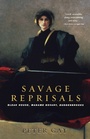
Savage Reprisals
Bleak House, Madame Bovary, Buddenbrooks
Published on 6. May 2013
192 pages
978-0-393-34763-0 (ISBN)
Description

A revelatory work that examines the intricate relationship between history and literature, truth and fiction—with some surprising conclusions.
Focusing on three literary masterpieces—Charles Dickens's Bleak House (1853), Gustave Flaubert's Madame Bovary (1857), and Thomas Mann's Buddenbrooks (1901)—Peter Gay, a leading cultural historian, demonstrates that there is more than one way to read a novel. Typically, readers believe that fiction, especially the Realist novels that dominated Western culture for most of the nineteenth century and beyond, is based on historical truth and that great novels possess a documentary value. That trust, Gay brilliantly shows, is misplaced; novels take their own path to reality. Using Dickens, Flaubert, and Mann as his examples, Gay explores their world, their craftsmanship, and their minds. In the process, he discovers that all three share one overriding quality: a resentment and rage against the society that sustains the novel itself. Using their stylish writing as a form of revenge, they deal out savage reprisals, which have become part of our Western literary canon. A New York Times Notable Book and a Best Book of 2002.More details
Other editions
Additional editions
Book
01/2004
WW Norton & Co
€16.50
Article not available at the moment
Person
Peter Gay (1923?2015) was the author of more than twenty-five books, including the National Book Award winner The Enlightenment, the best-selling Weimar Culture, and the widely translated Freud: A Life for Our Time.
Content
- Intro
- Title Page
- Dedication
- Epigraph
- Contents
- List of Illustrations
- Prologue: Beyond the Reality Principle
- ONE The Angry Anarchist: Charles Dickens in Bleak House
- TWO The Phobic Anatomist: Gustave Flaubert in Madame Bovary
- THREE The Mutinous Patrician: Thomas Mann in Buddenbrooks
- Epilogue: Truths of Fictions
- Notes
- Bibliographical Notes
- Acknowledgments
- Index
- Copyright
- Other Books in the Norton Lecture Series
- Other Books by Peter Gay
