

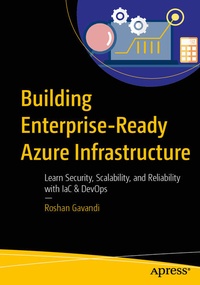
Building Enterprise-Ready Azure Infrastructure
Description

Cloud infrastructure is the backbone of modern enterprises, and Azure is at the forefront of delivering secure, scalable, and resilient cloud solutions. However, building enterprise-grade Azure infrastructure goes beyond provisioning virtual machines and storage it requires a deep understanding of architecture best practices, security frameworks, automation, and cost optimization. This book provides a technical deep dive into designing, automating, and securing Azure environments, making it an essential guide for cloud architects, DevOps engineers, and enterprise IT professionals.
Through real-world insights, hands-on coding examples, and best practices, readers will learn to automate infrastructure with Terraform and Bicep, secure workloads with Zero Trust principles, design highly available multi-region architectures, and optimize costs with Azure Monitor. The book also covers networking, disaster recovery, Kubernetes (AKS), CI/CD pipelines, and compliance frameworks, ensuring a comprehensive approach to Azure infrastructure management. Packed with real-world case studies from industries like finance, healthcare, and SaaS, this guide bridges the gap between theory and practical implementation, empowering professionals to build, secure, and optimize Azure environments at an enterprise scale.
You Will:
- Design robust, high-availability architectures using Availability Zones, Traffic Manager, and geo-redundant strategies for disaster recovery
-
Seamlessly integrate Azure Kubernetes Service (AKS), container registries, and CI/CD pipelines with Azure DevOps for streamlined deployment
. - Implement strong governance, proactive monitoring, and cost optimization using Azure Policy, Azure Monitor, and Log Analytics
This book is for : Cloud architects, DevOps engineers, and enterprise IT professionals.
More details
Other editions
Additional editions
Person
Roshan Gavandi is a seasoned Azure Solutions Architect and Enterprise Cloud Strategist with over 14 years of experience in designing, deploying, and securing large-scale cloud infrastructure. Specializing in Azure infrastructure, DevOps, and security, he has led enterprise cloud transformations for global financial institutions, Fortune 500 companies, and tech startups, ensuring scalability, reliability, and cost optimization. With deep expertise in Infrastructure as Code (IaC), Kubernetes (AKS), Azure DevOps, and hybrid cloud architectures, he has helped organizations modernize legacy systems, implement Zero Trust security models, and optimize cloud performance. His knowledge spans Azure networking, high-availability designs, disaster recovery, and governance frameworks. An active thought leader, conference speaker, and mentor, he has contributed to open-source projects, published technical articles on cloud computing, and authored books on Azure best practices. His passion for automation, security-first architectures, and hands-on learning drives his commitment to empowering DevOps engineers, cloud architects, and IT professionals with the knowledge to build enterprise-ready Azure solutions. When not architecting cloud environments, he enjoys mentoring aspiring engineers, writing about emerging cloud trends, and exploring innovations in distributed systems.
Content
Chapter 1: Azure Infrastructure.- Chapter 2: Infrastructure as Code (IaC) in Azure.- Chapter 3: Azure Networking & Security.- Chapter 4: High Availability & Disaster Recovery.- Chapter 5: Azure Kubernetes Service (AKS) for Enterprise Workloads.- Chapter 6: Observability, Cost Optimization & Compliance.- Chapter 7: Real-World Case Studies & Future Trends.
