

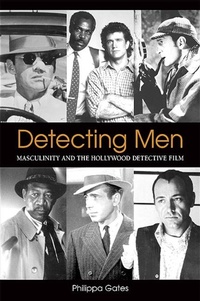
Detecting Men
Description

Detecting Men examines the history of the Hollywood detective genre and the ways that detective films have negotiated changing social attitudes toward masculinity, heroism, law enforcement, and justice. Genre film can be a site for the expression and resolution of problematic social issues, but while there have been many studies of such other male genres as war films, gangster films, and Westerns, relatively little attention has been paid to detective films beyond film noir. In this volume, Philippa Gates examines classical films of the thirties and forties as well as recent examples of the genre, including Die Hard, the Lethal Weapon films, The Usual Suspects, Seven, Devil in a Blue Dress, and Murder by Numbers, in order to explore social anxieties about masculinity and crime and Hollywood's conceptions of gender. Up until the early 1990s, Gates argues, the primary focus of the detective genre was the masculinity of the hero. However, from the mid-1990s onward, the genre has shifted to more technical portrayals of crime scene investigation, forensic science, and criminal profiling, offering a reassuring image of law enforcement in the face of violent crime. By investigating the evolution of the detective film, Gates suggests, perhaps we can detect the male.
Philippa Gates is Associate Professor of Film Studies at Wilfrid Laurier University, Ontario, and is the coeditor (with Stacy Gillis) of The Devil Himself: Villainy in Detective Fiction and Film.
More details
Other editions
Additional editions
Person
Philippa Gates is Associate Professor of Film Studies at Wilfrid Laurier University, Ontario, and is the coeditor (with Stacy Gillis) of The Devil Himself: Villainy in Detective Fiction and Film.
Content
List of Illustrations
Acknowledgments
PART I
The Crime Lab-Theorizing Masculinity and the Detective Genre
1. Introduction: The Case
2. The Myths of Masculinity
Part II
Investigating Masculinity-The 1940s and the 1980s
3. Investigating National Heroes: British Sleuths and American Dicks
4. Investigating Crisis: Neo-Noir Heroes and Femmes Fatales
5. Investigating Crisis: The Spectacle of "Musculinity"
Part III
Investigating the Crime Scene-The 1990s and 2000s
6. Investigating the Hero: The Criminalist
7. Investigating the "Other": Race and the Detective
8. Investigating the "Other": Women and Youth
9. Investigating the "Other": The Cult of Villainy
10. End of the Investigation: Case Closed
Notes
Filmography
Works Cited
Index
