

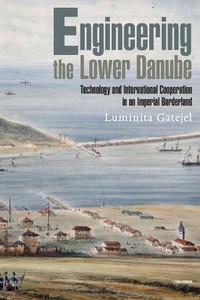
Engineering the Lower Danube
Technology and Territoriality in an Imperial Borderland, Late Eighteenth and Nineteenth Centuries
1st Edition
Published on 20. December 2022
350 pages
978-963-386-580-4 (ISBN)
Description

The Lower Danube-the stretch of Europe's second longest river between the Romanian-Serbian border and the confluence to the Black Sea-was effectively transformed during the late eighteenth and nineteenth centuries. In describing this lengthy undertaking, Luminita Gatejel proposes that remaking two key stretches-the Iron Gates and the delta-not only physically altered the river but also redefined it in a legal and political sense.
Since the late eighteenth century, military conflicts and peace treaties changed the nature of sovereignty over the area, as the expansionist tendencies of the Habsburg and British Empires encountered rival Ottoman and Russian imperial plans. The inconvenience that the river's physical shape obstructed free navigation and the growth of commercial traffic, was an increasing concern to all parties. This book shows that alongside imperial aspirations, transnational actors like engineers, commissioners and entrepreneurs were the driving force behind the river regulation. In this highly original, deeply researched, and carefully crafted study, Gatejel explores the formation of international cooperation, the emergence of technical expertise and the emergence of engineering as a profession. This constellation turned the Lower Danube into a laboratory for experimenting with new forms of international cooperation, economic integration, and nature transformation.
Since the late eighteenth century, military conflicts and peace treaties changed the nature of sovereignty over the area, as the expansionist tendencies of the Habsburg and British Empires encountered rival Ottoman and Russian imperial plans. The inconvenience that the river's physical shape obstructed free navigation and the growth of commercial traffic, was an increasing concern to all parties. This book shows that alongside imperial aspirations, transnational actors like engineers, commissioners and entrepreneurs were the driving force behind the river regulation. In this highly original, deeply researched, and carefully crafted study, Gatejel explores the formation of international cooperation, the emergence of technical expertise and the emergence of engineering as a profession. This constellation turned the Lower Danube into a laboratory for experimenting with new forms of international cooperation, economic integration, and nature transformation.
More details
Series
Language
English
Place of publication
Budapest
Hungary
Target group
Professional and scholarly
File size
4,91 MB
ISBN-13
978-963-386-580-4 (9789633865804)
Copyright in bibliographic data and cover images is held by Nielsen Book Services Limited or by the publishers or by their respective licensors: all rights reserved.
Schweitzer Classification
Other editions
Additional editions
Luminita Gatejel
Engineering the Lower Danube
Technology and Territoriality in an Imperial Borderland, Late Eighteenth and Nineteenth Centuries
Book
01/2023
Central European University Press
€95.50
Available (delivery time upon request)
Content
Acknowledgements
List of Figures
List of Acronyms and Abbreviations
Introduction
Engineering International Cooperation on the Lower Danube
Building Infrastructure along the Lower Danube
Sources and Outline
Chapter 1. Exploring the Danube
Knowledge and the Imperial Appropriation of the Lower Danube
Luigi Marsigli and Austrian Expansionism on the Lower Danube
The First Habsburg Economic Enterprises on the Lower Danube
State Support and Renewed Attempts to Upgrade the Danube Route
New Habsburg Assessments at the Turn of the Century
Why Did the Shipping Connection on the Danube Fail?
Russia's Steady Advance to the Lower Danube
Russia's "Enlightened" Projects Along the Lower Danube
Conclusion
Chapter 2. Connecting the Danube with the Sea
Physical and Symbolic Boundaries at the Iron Gates
Military Surveys at the Iron Gates
Technical Assessments of the Iron Gates
Negotiating the Passage to the Lower Danube
First Engineering Breakthrough at the Iron Gates
Traveling through the Iron Gates
Delays and Damage to the Sulina Channel
Circumventing the Danube Delta
Conclusion
3. From Confrontation to Cooperation: the Crimean War and Its Aftermath
War as an opportunity at the Iron Gates
The Danube Delta During the Crimean War
The Failed Riverine Commission
Engineering Breakthrough at the Mouth of the Danube
Hartley's Provisional Project at the Sulina Bar
The Inauguration of Hartley's Piers
Conclusion
4. The Danube Delta: A Success in International Ruling
Provisional Regulations for the Delta
The Public Act on Navigation
Budget Constraints
On the Way to Permanency
Consolidation Works at Sulina
Straightening the Sulina Channel
Conclusion
5. The Iron Gates Torn Between Imperial, International and National Interests
The Engineer Versus the Entrepreneur
The Limited Influence of the International Commission
A New
List of Figures
List of Acronyms and Abbreviations
Introduction
Engineering International Cooperation on the Lower Danube
Building Infrastructure along the Lower Danube
Sources and Outline
Chapter 1. Exploring the Danube
Knowledge and the Imperial Appropriation of the Lower Danube
Luigi Marsigli and Austrian Expansionism on the Lower Danube
The First Habsburg Economic Enterprises on the Lower Danube
State Support and Renewed Attempts to Upgrade the Danube Route
New Habsburg Assessments at the Turn of the Century
Why Did the Shipping Connection on the Danube Fail?
Russia's Steady Advance to the Lower Danube
Russia's "Enlightened" Projects Along the Lower Danube
Conclusion
Chapter 2. Connecting the Danube with the Sea
Physical and Symbolic Boundaries at the Iron Gates
Military Surveys at the Iron Gates
Technical Assessments of the Iron Gates
Negotiating the Passage to the Lower Danube
First Engineering Breakthrough at the Iron Gates
Traveling through the Iron Gates
Delays and Damage to the Sulina Channel
Circumventing the Danube Delta
Conclusion
3. From Confrontation to Cooperation: the Crimean War and Its Aftermath
War as an opportunity at the Iron Gates
The Danube Delta During the Crimean War
The Failed Riverine Commission
Engineering Breakthrough at the Mouth of the Danube
Hartley's Provisional Project at the Sulina Bar
The Inauguration of Hartley's Piers
Conclusion
4. The Danube Delta: A Success in International Ruling
Provisional Regulations for the Delta
The Public Act on Navigation
Budget Constraints
On the Way to Permanency
Consolidation Works at Sulina
Straightening the Sulina Channel
Conclusion
5. The Iron Gates Torn Between Imperial, International and National Interests
The Engineer Versus the Entrepreneur
The Limited Influence of the International Commission
A New
