

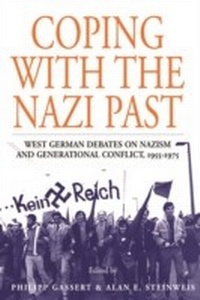
Coping with the Nazi Past
West German Debates on Nazism and Generational Conflict, 1955-1975
1st Edition
Published on 1. October 2006
348 pages
978-0-85745-706-6 (ISBN)
Description

Published in Association with the German Historical Institute, Washington, D.C.
Based on careful, intensive research in primary sources, many of these essays break new ground in our understanding of a crucial and tumultuous period. The contributors, drawn from both sides of the Atlantic, offer an in-depth analysis of how the collective memory of Nazism and the Holocaust influenced, and was influenced by, politics and culture in West Germany in the 1960s. The contributions address a wide variety of issues, including prosecution for war crimes, restitution, immigration policy, health policy, reform of the police, German relations with Israel and the United States, nuclear non-proliferation, and, of course, student politics and the New Left protest movement.
Based on careful, intensive research in primary sources, many of these essays break new ground in our understanding of a crucial and tumultuous period. The contributors, drawn from both sides of the Atlantic, offer an in-depth analysis of how the collective memory of Nazism and the Holocaust influenced, and was influenced by, politics and culture in West Germany in the 1960s. The contributions address a wide variety of issues, including prosecution for war crimes, restitution, immigration policy, health policy, reform of the police, German relations with Israel and the United States, nuclear non-proliferation, and, of course, student politics and the New Left protest movement.
Reviews / Votes
"The authors have taken great pains to identify the neuralgic points of 1968. The book is carefully edited, and all of the essays are solidly researched and immensely readable. The collection provides a good introduction on current German historiography in a concise form for an Anglo-American readership." ? Journal of Cold War Studies"As well as offering an immensely rich analysis of this particular period in post-war German history and its social, political, cultural, intellectual and moral facets, the volume provides material for further questions... In provoking these stimulating questions, this book should be considered as required reading for anyone interested in the dis/continuity of the Nazi past in German history." ? European History Quarterly
All prices
More details
Series
Edition
1. Auflage
Language
English
Place of publication
Oxford
United Kingdom
Target group
Professional and scholarly
File size
0,86 MB
ISBN-13
978-0-85745-706-6 (9780857457066)
DOI
10.3167/9781845450861
Copyright in bibliographic data and cover images is held by Nielsen Book Services Limited or by the publishers or by their respective licensors: all rights reserved.
Schweitzer Classification
Other editions
Additional editions
Philipp Gassert | Alan E. Steinweis
Coping with the Nazi Past
West German Debates on Nazism and Generational Conflict, 1955-1975
Book
09/2007
1st Edition
Berghahn Books
€42.30
Shipment within 3-4 weeks
Philipp Gassert | Alan E. Steinweis
Coping with the Nazi Past
West German Debates on Nazism and Generational Conflict, 1955-1975
Book
10/2006
1st Edition
Berghahn Books
€136.50
Shipment within 3-4 weeks
Persons
Philipp Gassert teaches Modern History at the University of Heidelberg in Germany and is DAAD Visiting Associate Professor of History at the University of Pennsylvania in Philadelphia.
Content
Preface
Introduction
Philipp Gassert and Alan E. Steinweiss
Chapter 1. Critical Memory and Civil Society: The Impact of the 1960s on German Debates about the Past
Konrad H. Jarausch
Chapter 2. The Return of Images: Photographs of Nazi Crimes and the West German Public in the "Long 1960s"
Habbo Knoch
Chapter 3. Explanation, Dissociation, Apologia: The Debate over the Criminal Prosecution of Nazi Crimes in the 1960s
Marc von Miquel
Chapter 4. The "Comprehensive Investigative Proceedings - France": West German Judicial Inquiries in Nazi Crimes
Bernhard Brunner
Chapter 5. West Germany and Compensation for National Socialist Expropriation: The Restitution of Jewish Property, 1947-1964
Juergen Lillteicher
Chapter 6. The Modernization of West German Police: Between the Nazi Past and Weimar Tradition
Klaus Weinhauer
Chapter 7. West German Society and Foreigners in the 1960s
Karen Schoenwaelder
Chapter 8. The West German Public Health System and the Legacy of Nazism
Sigrid Stoeckel
Chapter 9. Don't Look Back in Anger: Youth, Pop Culture, and the Nazi Past
Detlef Siegfried
Chapter 10. The Sexual Revolution and the Legacies of the Nazi Past
Dagmar Herzog
Chapter 11. The German New Left and National Socialism
Michael Schmidtke
Chapter 12. Public Demonstrations of the 1960s: Participatory Democracy or Leftist Fascism?
Elizabeth L. B. Peifer
Chapter 13. New Leftists and West Germany: Fascism, Violence, and the Public Sphere, 1967-1974
Belinda Davis
Chapter 14. Conservative Intellectuals and the Debate over National Socialism and the Holocaust in the 1960s
Joachim Scholtyseck
Chapter 15. Catholic Student Fraternities, the National Socialist Past, and the Student Movement
Michael Hochgeschwender
Chapter 16. Turning Away from the Past: West Germany and Israel, 1965-1967
Carole Fink
Chapter 17. Germany's PR Man: Julius Klein and the Making of Transatlantic Memory
S. Jonathan Wiesen
Chapter 18. Auschwitz and the Nuclear Sonderweg: Nuclear Weapons and the Shadow of the Nazi Past
Susanna Schrafstetter
Notes on Contributors
Select Bibliography
Index
Introduction
Philipp Gassert and Alan E. Steinweiss
Chapter 1. Critical Memory and Civil Society: The Impact of the 1960s on German Debates about the Past
Konrad H. Jarausch
Chapter 2. The Return of Images: Photographs of Nazi Crimes and the West German Public in the "Long 1960s"
Habbo Knoch
Chapter 3. Explanation, Dissociation, Apologia: The Debate over the Criminal Prosecution of Nazi Crimes in the 1960s
Marc von Miquel
Chapter 4. The "Comprehensive Investigative Proceedings - France": West German Judicial Inquiries in Nazi Crimes
Bernhard Brunner
Chapter 5. West Germany and Compensation for National Socialist Expropriation: The Restitution of Jewish Property, 1947-1964
Juergen Lillteicher
Chapter 6. The Modernization of West German Police: Between the Nazi Past and Weimar Tradition
Klaus Weinhauer
Chapter 7. West German Society and Foreigners in the 1960s
Karen Schoenwaelder
Chapter 8. The West German Public Health System and the Legacy of Nazism
Sigrid Stoeckel
Chapter 9. Don't Look Back in Anger: Youth, Pop Culture, and the Nazi Past
Detlef Siegfried
Chapter 10. The Sexual Revolution and the Legacies of the Nazi Past
Dagmar Herzog
Chapter 11. The German New Left and National Socialism
Michael Schmidtke
Chapter 12. Public Demonstrations of the 1960s: Participatory Democracy or Leftist Fascism?
Elizabeth L. B. Peifer
Chapter 13. New Leftists and West Germany: Fascism, Violence, and the Public Sphere, 1967-1974
Belinda Davis
Chapter 14. Conservative Intellectuals and the Debate over National Socialism and the Holocaust in the 1960s
Joachim Scholtyseck
Chapter 15. Catholic Student Fraternities, the National Socialist Past, and the Student Movement
Michael Hochgeschwender
Chapter 16. Turning Away from the Past: West Germany and Israel, 1965-1967
Carole Fink
Chapter 17. Germany's PR Man: Julius Klein and the Making of Transatlantic Memory
S. Jonathan Wiesen
Chapter 18. Auschwitz and the Nuclear Sonderweg: Nuclear Weapons and the Shadow of the Nazi Past
Susanna Schrafstetter
Notes on Contributors
Select Bibliography
Index
