

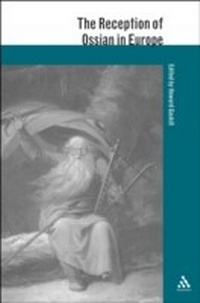
The Reception of Ossian in Europe
1st Edition
Published on 1. December 2004
520 pages
978-1-84714-301-3 (ISBN)
Description

James Macpherson's Poems of Ossian, said to be translations from the Gaelic of a third-century bard, caused a sensation on their first appearance in the early 1760s. Contrary to the impression often conveyed in literary histories, enthusiasm for the poetry of the 'Homer of the North' cannot be dismissed as a short-lived fad, for its appeal lasted a century or more, both at home and abroad. There is hardly a major Romantic poet on whom it failed to make a significant impact. In the words of Sir Walter Scott, it succeeded in "giving a new tone ot poetry throughout all Europe" and its influence was ubiquitous, from Poland to Portugal, from Paris to Prague. The essays brought together here consider the reception of Ossian in England, Scotland, Wales and Ireland, as well as in a wide range of European countries. In some the focus is on individual writers (for instance, Goethe, Schiller, Chateaubriand, Espronceda), in others there is a broader sweep and a survey of reception in a national literary culture is offered (for instance, Hungary, Russia, Sweden). One of the two essays on Ossian in Italy at last gives Macpherson's influential epigone, John Smith, his due. Consideration is also given to Ossian's significance for the rise of historicism, and to non-literary forms of reception in music and art.
Series Editor: Dr Elinor Shaffer FBA, Institute of Germanic & Romance Studies, School of Advanced Study, University of London
Contributors:
Howard Gaskill, University of Edinburgh
Reception of Ossian in Europe Review
Reception of Ossian in Europe Review 2
Series Editor: Dr Elinor Shaffer FBA, Institute of Germanic & Romance Studies, School of Advanced Study, University of London
Contributors:
Howard Gaskill, University of Edinburgh
Dafydd Moore, University of Plymouth
Donald Meek, University of Edinburgh
Mary-Ann Constantine, University of Wales
Mícheál Mac Craith, University of Galway
Joep Leerssen, University of Amsterdam
Colin Smethurst, University of Glasgow
Sandro Jung, University of Wales, Lampeter
Caitríona Ó Dochartaigh, Dublin Institute for Advanced Studies
Wolf Gerhard Schmidt, University of Saarbrücken
Peter Graves, University of Sweden
James Porter, University of Aberdeen
Gabriella Hartvig, University of Pécs
Nina Taylor-Terlecka, Oxford, UK
Peter France, University of Edinburgh
Enrico Mattioda
Francesca Broggi-Wüthrich
Andrew Ginger
Gerald Bär, Aberta University
Christopher Smith, Norwich, UK
Murdo MacDonald, University of Dundee
Reception of Ossian in Europe Review
Reception of Ossian in Europe Review 2
More details
Series
Language
English
Place of publication
London
United Kingdom
Publishing group
Bloomsbury Publishing PLC
Target group
Professional and scholarly
ISBN-13
978-1-84714-301-3 (9781847143013)
Copyright in bibliographic data and cover images is held by Nielsen Book Services Limited or by the publishers or by their respective licensors: all rights reserved.
Schweitzer Classification
Other editions
Additional editions
Howard Gaskill
The Reception of Ossian in Europe
Book
12/2008
Continuum Collections, an imprint of Continuum International Publishing Ltd
€57.70
Shipment within 3-4 weeks
Content
Series Editor's Preface
Acknowledgements
List of Contributors
Abbreviations: Primary Ossianic Texts
Timeline of Ossian's European Reception
Introduction: 'Genuine poetry...like gold', Howard Gaskill (University of Edinburgh)
1. The Reception of The Poems of Ossian in England and Scotland, Dafydd Moore (University of Plymouth)
2. The Sublime Gael: The Impact of Macpherson's Ossian on Literary Creativity and Cultural Perception in Gaelic Scotland, Donald Meek (University of Edinburgh)
3. Ossian in Wales and Brittany, Mary-Ann Constantine (University of Wales)
4. 'We know all these poems': the Irish Response to Ossian, Mícheál Mac Craith (University of Galway)
5. Ossian and the Rise of Literary Historicism, Joep Leerssen (University of Amsterdam)
6. Chateaubriand's Ossian, Colin Smethurst (University of Glasgow)
7. The Reception and Reworking of Ossian in Klopstock's Hermanns Schlacht, Sandro Jung (University of Wales, Lampeter)
8. Goethe's Translation from the Gaelic Ossian, Caitríona Ó Dochartaigh (University College Cork)
9. 'Menschlichschön' and 'kolossalisch': The Discursive Function of Ossian in Schiller's Poetry and Aesthetics, Wolf Gerhard Schmidt (University of Saarbrücken)
10. Ossian in Sweden and Swedish-speaking Finland, Peter Graves (University of Edinburgh)
11. Literary, Artistic and Political Resonances of Ossian in the Czech National Revival, James Porter (UCLA)
12. Ossian in Hungary, Gabriella Hartvig (University of Pécs)
13. Ossian in Poland, Nina Taylor-Terlecka (University of Oxford)
14. Fingal in Russia, Peter France (University of Edinburgh)
15. Ossian in Italy: From Cesarotti to the Theatre, Enrico Mattioda (University of Turin)
16. From Smith's Antiquities to Leoni's Nuovi Canti: The Making of the Ossianic Tradition Revisited, Francesca Broggi-Wüthrich (University of Zurich)
17. The Suggestiveness of Ossian in Romantic Spain: The Case of Espronceda and García Gutiérrez, Andrew Ginger (University of Edinburgh)
18. Ossian in Portugal, Gerald Bär (Aberta University)
19. Ossian in Music, Christopher Smith (University of East Anglia)
20. Ossian and Art: Scotland into Europe via Rome, Murdo MacDonald (University of Dundee)
Bibliography
Index
Acknowledgements
List of Contributors
Abbreviations: Primary Ossianic Texts
Timeline of Ossian's European Reception
Introduction: 'Genuine poetry...like gold', Howard Gaskill (University of Edinburgh)
1. The Reception of The Poems of Ossian in England and Scotland, Dafydd Moore (University of Plymouth)
2. The Sublime Gael: The Impact of Macpherson's Ossian on Literary Creativity and Cultural Perception in Gaelic Scotland, Donald Meek (University of Edinburgh)
3. Ossian in Wales and Brittany, Mary-Ann Constantine (University of Wales)
4. 'We know all these poems': the Irish Response to Ossian, Mícheál Mac Craith (University of Galway)
5. Ossian and the Rise of Literary Historicism, Joep Leerssen (University of Amsterdam)
6. Chateaubriand's Ossian, Colin Smethurst (University of Glasgow)
7. The Reception and Reworking of Ossian in Klopstock's Hermanns Schlacht, Sandro Jung (University of Wales, Lampeter)
8. Goethe's Translation from the Gaelic Ossian, Caitríona Ó Dochartaigh (University College Cork)
9. 'Menschlichschön' and 'kolossalisch': The Discursive Function of Ossian in Schiller's Poetry and Aesthetics, Wolf Gerhard Schmidt (University of Saarbrücken)
10. Ossian in Sweden and Swedish-speaking Finland, Peter Graves (University of Edinburgh)
11. Literary, Artistic and Political Resonances of Ossian in the Czech National Revival, James Porter (UCLA)
12. Ossian in Hungary, Gabriella Hartvig (University of Pécs)
13. Ossian in Poland, Nina Taylor-Terlecka (University of Oxford)
14. Fingal in Russia, Peter France (University of Edinburgh)
15. Ossian in Italy: From Cesarotti to the Theatre, Enrico Mattioda (University of Turin)
16. From Smith's Antiquities to Leoni's Nuovi Canti: The Making of the Ossianic Tradition Revisited, Francesca Broggi-Wüthrich (University of Zurich)
17. The Suggestiveness of Ossian in Romantic Spain: The Case of Espronceda and García Gutiérrez, Andrew Ginger (University of Edinburgh)
18. Ossian in Portugal, Gerald Bär (Aberta University)
19. Ossian in Music, Christopher Smith (University of East Anglia)
20. Ossian and Art: Scotland into Europe via Rome, Murdo MacDonald (University of Dundee)
Bibliography
Index
