

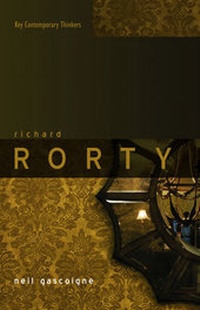
Richard Rorty
Published on 22. April 2013
272 pages
978-0-7456-7347-9 (ISBN)
Description

Neil Gascoigne provides the first comprehensive introductionRichard Rorty's work. He demonstrates to the general readerand to the student of philosophy alike how the radical views ontruth, objectivity and rationality expressed in Rorty'swidely-read essays on contemporary culture and politics derive fromhis earliest work in the philosophy of mind and language. He avoidsthe partisanship that characterizes much discussion ofRorty's work whilst providing a critical account of some ofthe dominant concerns of contemporary thought.
Beginning with Rorty's early work on concept-change in thephilosophy of mind, the book traces his increasing hostility to theidea that philosophy is cognitively privileged with respect toother disciplines. After the publication of Philosophy and theMirror of Nature, this led to a new emphasis on preserving themoral and political inheritance of the enlightenment by detachingit from the traditional search for rational foundations. Thisemerging project led Rorty to champion 'ironic'thinkers like Foucault and Derrida, and to his attempt to updatethe liberalism of J. S. Mill by offering a non-universalisticaccount of the individual's need to balance their own privateinterests against their commitments to others.
By returning him to his philosophical roots, Gascoigne shows whyRorty's pragmatism is of continuing relevance to anyoneinterested in ongoing debates about the nature and limits ofphilosophy, and the implications these debates have for ourunderstanding of what role the intellectual might play incontemporary life. This book serves as both an excellentintroduction to Rorty's work and an innovative critique whichcontributes to ongoing debates in the field.
Beginning with Rorty's early work on concept-change in thephilosophy of mind, the book traces his increasing hostility to theidea that philosophy is cognitively privileged with respect toother disciplines. After the publication of Philosophy and theMirror of Nature, this led to a new emphasis on preserving themoral and political inheritance of the enlightenment by detachingit from the traditional search for rational foundations. Thisemerging project led Rorty to champion 'ironic'thinkers like Foucault and Derrida, and to his attempt to updatethe liberalism of J. S. Mill by offering a non-universalisticaccount of the individual's need to balance their own privateinterests against their commitments to others.
By returning him to his philosophical roots, Gascoigne shows whyRorty's pragmatism is of continuing relevance to anyoneinterested in ongoing debates about the nature and limits ofphilosophy, and the implications these debates have for ourunderstanding of what role the intellectual might play incontemporary life. This book serves as both an excellentintroduction to Rorty's work and an innovative critique whichcontributes to ongoing debates in the field.
More details
Other editions
Additional editions
Book
11/2008
Polity Press
€67.50
Shipment within 15-20 days
Person
Neil Gascoigne is Senior Lecturer in Philosophy at Royal Holloway University of London.
Content
ACKNOWLEDGEMENTS.
INTRODUCTION: NO SINGLE VISION.
1. PHILOSOPHY AND POLITICS.
2. ACTOR AND MARTYR.
3. FAR, FAR AWAY....
CHAPTER 1: OUT OF MIND.
1. OUR RORTIAN ANCESTORS.
2. MATERIALISM AND THE MIND-BODY PROBLEM.
3. EXPLICATION, ELIMINATION, AND CONCEPTUAL CHANGE.
CHAPTER 2: WHAT IS ELIMINATIVE MATERIALISM?.
1. INTRODUCTION.
2. ANALYSIS, EXPLICATION AND ELIMINATION.
3. ELIMINATIVE MATERIALISM.
4. INCORRIGIBILIY.
5. TROUBLES WITH ELIMINATISM.
6. FAR, FAR AWAY, LIES....
CHAPTER 3: RORTY'S KEHRE.
1. INTRODUCTION.
2. REALISM AND REFERENCE.
3. SCEPTICISM, RELATIVISM, TRUTH.
CHAPTER 4: OVERCOMING PHILOSOPHY.
1. AFTER PHILOSOPHY?.
2. THE LINGUISTIC TURN.
3. THE FUTURE OF PHILOSOPHY.
4. WHITHER EPISTEMOLOGY?.
5. THE REAPPEARING 'WE'.
6. IN CONVERSATION.
CHAPTER 5: NEW SELVES FOR OLD.
1. FROM EPISTEMOLOGY TO POLITICS.
2. DEWEY'S REDESCRIPTION.
3. CONTINGENCY, IRONY AND SOLIDARITY.
4. METAPHORLOSOPHY.
5. TWO CONCEPTS OF FREEDOM.
6. LIBERALISM AND THE LIMITS OF PHILOSOPHY.
7. THE LAST IRONIST.
CHAPTER 6: THE WHOLE TRUTH.
1. THE AUTHORITY OF NORMS.
2. THE VIEW FROM NOWHERE.
3. RELATIVISM REDUX.
4. TRIANGULATION.
CONCLUSION: THE ENDS OF PHILOSOPHY.
1. DOUBLE VISION.
2. NOTHING BUT THE TRUTH.
3. THE ENDS OF PHILOSOPHY.
BIBLIOGRAPHY
INTRODUCTION: NO SINGLE VISION.
1. PHILOSOPHY AND POLITICS.
2. ACTOR AND MARTYR.
3. FAR, FAR AWAY....
CHAPTER 1: OUT OF MIND.
1. OUR RORTIAN ANCESTORS.
2. MATERIALISM AND THE MIND-BODY PROBLEM.
3. EXPLICATION, ELIMINATION, AND CONCEPTUAL CHANGE.
CHAPTER 2: WHAT IS ELIMINATIVE MATERIALISM?.
1. INTRODUCTION.
2. ANALYSIS, EXPLICATION AND ELIMINATION.
3. ELIMINATIVE MATERIALISM.
4. INCORRIGIBILIY.
5. TROUBLES WITH ELIMINATISM.
6. FAR, FAR AWAY, LIES....
CHAPTER 3: RORTY'S KEHRE.
1. INTRODUCTION.
2. REALISM AND REFERENCE.
3. SCEPTICISM, RELATIVISM, TRUTH.
CHAPTER 4: OVERCOMING PHILOSOPHY.
1. AFTER PHILOSOPHY?.
2. THE LINGUISTIC TURN.
3. THE FUTURE OF PHILOSOPHY.
4. WHITHER EPISTEMOLOGY?.
5. THE REAPPEARING 'WE'.
6. IN CONVERSATION.
CHAPTER 5: NEW SELVES FOR OLD.
1. FROM EPISTEMOLOGY TO POLITICS.
2. DEWEY'S REDESCRIPTION.
3. CONTINGENCY, IRONY AND SOLIDARITY.
4. METAPHORLOSOPHY.
5. TWO CONCEPTS OF FREEDOM.
6. LIBERALISM AND THE LIMITS OF PHILOSOPHY.
7. THE LAST IRONIST.
CHAPTER 6: THE WHOLE TRUTH.
1. THE AUTHORITY OF NORMS.
2. THE VIEW FROM NOWHERE.
3. RELATIVISM REDUX.
4. TRIANGULATION.
CONCLUSION: THE ENDS OF PHILOSOPHY.
1. DOUBLE VISION.
2. NOTHING BUT THE TRUTH.
3. THE ENDS OF PHILOSOPHY.
BIBLIOGRAPHY
