

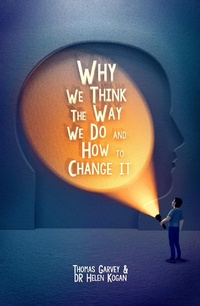
Why We Think The Way We Do And How To Change It
Description

Do you know what you're thinking? It's easy to assume you do. However, the truth can be far less comforting. The mind has visible functions and less visible functions. The mind's visible functions are its visible thinking. This helps us navigate through life; to recognise bus numbers, consider dishes on a menu and notice our friend's mood, etc. The unseen workings of the mind are everything else; this is our invisible thinking... all our thoughts, feelings, experiences, memories, everything! This amounts to all our conditioning and life experiences and it is constantly making decisions which affect the course our lives. Our visible mind then actuates these unseen, already-made decisions using points of reference we don't see, likely don't know exist, and therefore have no opportunity to understand, let alone change. Why We Think The Way We Do And How To Change It reveals the thoughts that are directing the course of your life, and helps you change the ones which have been taking you to places you don't want to go. Now are you ready to find out what you're really thinking? Thomas Garvey and Dr Helen Kogan untangle the roots of human thinking in a uniquely straight-talking, no holds barred approach. They provide the reader with user-friendly terms, tools, exercises and multiple real life examples, which taken altogether, could entirely change your life.
More details
Other editions
Additional editions
Persons
Content
- Intro
- Title Page
- Contents
- Abbreviations
- List of Illustrations
- Preface
- Introduction: The Mind Erosion
- PART 1: WHY WE THINK THE WAY WE DO
- Chapter One: Awareness
- Chapter Two: Complexes
- Chapter Three: Events
- Chapter Four: Purposes
- Chapter Five: The Formation of Consciousness
- Chapter Six: Mindprint
- Chapter Seven: Actions
- PART 2: AND HOW TO CHANGE IT
- Chapter Eight: Finishing-off Thinking
- Chapter Nine: FoffTing Questions and Tools
- Conclusion: Final Guiding Words
- Appendix One: List of Purposes and their Definitions
- Appendix Two: List of Actions
- Glossary
- Workshops
- About the Author
- Copyright
