

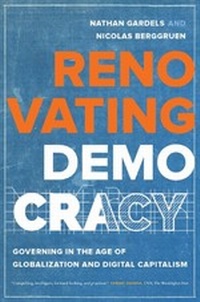
Renovating Democracy
Governing in the Age of Globalization and Digital Capitalism
1st Edition
Published on 30. April 2019
256 pages
978-0-520-97276-6 (ISBN)
Description

The rise of populism in the West and the rise of China in the East have stirred a rethinking of how democratic systems work-and how they fail. The impact of globalism and digital capitalism is forcing worldwide attention to the starker divide between the "haves" and the "have-nots," challenging how we think about the social contract.
With fierce clarity and conviction, Renovating Democracy tears down our basic structures and challenges us to conceive of an alternative framework for governance. To truly renovate our global systems, the authors argue for empowering participation without populism by integrating social networks and direct democracy into the system with new mediating institutions that complement representative government. They outline steps to reconfigure the social contract to protect workers instead of jobs, shifting from a "redistribution" after wealth to "pre-distribution" with the aim to enhance the skills and assets of those less well-off. Lastly, they argue for harnessing globalization through "positive nationalism" at home while advocating for global cooperation-specifically with a partnership with China-to create a viable rules-based world order.
Thought provoking and persuasive, Renovating Democracy serves as a point of departure that deepens and expands the discourse for positive change in governance.
With fierce clarity and conviction, Renovating Democracy tears down our basic structures and challenges us to conceive of an alternative framework for governance. To truly renovate our global systems, the authors argue for empowering participation without populism by integrating social networks and direct democracy into the system with new mediating institutions that complement representative government. They outline steps to reconfigure the social contract to protect workers instead of jobs, shifting from a "redistribution" after wealth to "pre-distribution" with the aim to enhance the skills and assets of those less well-off. Lastly, they argue for harnessing globalization through "positive nationalism" at home while advocating for global cooperation-specifically with a partnership with China-to create a viable rules-based world order.
Thought provoking and persuasive, Renovating Democracy serves as a point of departure that deepens and expands the discourse for positive change in governance.
More details
Other editions
Additional editions
Nathan Gardels | Nicolas Berggruen
Renovating Democracy
Governing in the Age of Globalization and Digital Capitalism
Book
04/2019
1st Edition
University of California Press
€26.50
Shipment within 10-20 days
Persons
GardelsNathan:
Nathan Gardels is Cofounder of the Berggruen Institute and Editor-in-Chief of The WorldPost, a partnership with the Washington Post. He is the coauthor of Intelligent Governance for the 21st Century: A Middle Way between East and West, a Financial Times best book of 2012. His previous books include American Idol after Iraq, The Changing Global Order and At Century's End.
Nicolas Berggruen is Founder and Chairman of the Berggruen Institute. He is coauthor of Intelligent Governance for the 21st Century: A Middle Way between West and East and is copublisher of The WorldPost. He is also Chairman of Berggruen Holdings.
Nathan Gardels is Cofounder of the Berggruen Institute and Editor-in-Chief of The WorldPost, a partnership with the Washington Post. He is the coauthor of Intelligent Governance for the 21st Century: A Middle Way between East and West, a Financial Times best book of 2012. His previous books include American Idol after Iraq, The Changing Global Order and At Century's End.
Nicolas Berggruen is Founder and Chairman of the Berggruen Institute. He is coauthor of Intelligent Governance for the 21st Century: A Middle Way between West and East and is copublisher of The WorldPost. He is also Chairman of Berggruen Holdings.
Content
Preface: There Is Something Wrong with the System
Acknowledgments
Introduction: Rethinking Democracy,
the Social Contract, and Globalization
The Paradoxes of Governance in the Digital Age
Where China Comes In
Taking Back Control
The Politics of Renovation
1. Behind the Populist Surge
Peril Resides within Promise
Disruption, Insecurity, and Identity
Luther's 95 Theses and Twitter's 280 Characters
What about Us?
God and Computers
2. Rethinking Democracy
Representative Government in Crisis
The Participatory Power of Social Media
Thinking outside the Ballot Box
Back to the Drawing Board of Constitutional Design
The American Founders: A Republic, Not a Democracy
The Progressives: Direct Democracy and Smart Government
The Third Turn: Participation without Populism
California as a Laboratory of Democracy
Fundamental Redesign of State Government
3. Redrawing the Social Contract
Job Loss and Inequality in the Digital Age
The Transformation of Capital by Knowledge
The Parallel Sharing Economy
The Future of Work
How Tax Dollars Are Spent
An Equity Share for All Citizens: Universal Basic Capital
Universal Basic Income as a Floor
A Postcapitalist Scenario
4. Harnessing Globalization
The China Challenge
Positive Nationalism
Open Societies' Need for Defined Borders
One World, Many Systems
Epilogue: Our Image of the Future
Shapes the Present
Notes
Index
Acknowledgments
Introduction: Rethinking Democracy,
the Social Contract, and Globalization
The Paradoxes of Governance in the Digital Age
Where China Comes In
Taking Back Control
The Politics of Renovation
1. Behind the Populist Surge
Peril Resides within Promise
Disruption, Insecurity, and Identity
Luther's 95 Theses and Twitter's 280 Characters
What about Us?
God and Computers
2. Rethinking Democracy
Representative Government in Crisis
The Participatory Power of Social Media
Thinking outside the Ballot Box
Back to the Drawing Board of Constitutional Design
The American Founders: A Republic, Not a Democracy
The Progressives: Direct Democracy and Smart Government
The Third Turn: Participation without Populism
California as a Laboratory of Democracy
Fundamental Redesign of State Government
3. Redrawing the Social Contract
Job Loss and Inequality in the Digital Age
The Transformation of Capital by Knowledge
The Parallel Sharing Economy
The Future of Work
How Tax Dollars Are Spent
An Equity Share for All Citizens: Universal Basic Capital
Universal Basic Income as a Floor
A Postcapitalist Scenario
4. Harnessing Globalization
The China Challenge
Positive Nationalism
Open Societies' Need for Defined Borders
One World, Many Systems
Epilogue: Our Image of the Future
Shapes the Present
Notes
Index
