

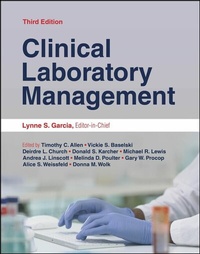
Clinical Laboratory Management
3rd Edition
Published on 7. March 2024
816 pages
978-1-68367-392-7 (ISBN)
Description

Clinical Laboratory Management
Apply the principles of management in a clinical setting with this vital guide
Clinical Laboratory Management, Third Edition, edited by an esteemed team of professionals under the guidance of editor-in-chief Lynne S. Garcia, is a comprehensive and essential reference for managing the complexities of the modern clinical laboratory. This newly updated and reorganized edition addresses the fast-changing landscape of laboratory management, presenting both foundational insights and innovative strategies.
Topics covered include:
* an introduction to the basics of clinical laboratory management, the regulatory landscape, and evolving practices in the modern healthcare environment
* the essence of managerial leadership, with insights into employee needs and motivation, effective communication, and personnel management, including the lack of qualified position applicants, burnout, and more
* financial management, budgeting, and strategic planning, including outreach
* up-to-date resources for laboratory coding, reimbursement, and compliance, reflecting current requirements, standards, and challenges
* benchmarking methods to define and measure success
* the importance of test utilization and clinical relevance
* future trends in pathology and laboratory science, including developments in test systems, human resources and workforce development, and future directions in laboratory instrumentation and information technology
* an entirely new section devoted to pandemic planning, collaboration, and response, lessons learned from COVID-19, and a look towards the future of laboratory preparedness
This indispensable edition of Clinical Laboratory Management not only meets the needs of today's clinical laboratories but anticipates the future, making it a must-have resource for laboratory professionals, managers, and students. Get your copy today, and equip yourself with the tools, strategies, and insights to excel in the complex and ever-changing world of the clinical laboratory.
Apply the principles of management in a clinical setting with this vital guide
Clinical Laboratory Management, Third Edition, edited by an esteemed team of professionals under the guidance of editor-in-chief Lynne S. Garcia, is a comprehensive and essential reference for managing the complexities of the modern clinical laboratory. This newly updated and reorganized edition addresses the fast-changing landscape of laboratory management, presenting both foundational insights and innovative strategies.
Topics covered include:
* an introduction to the basics of clinical laboratory management, the regulatory landscape, and evolving practices in the modern healthcare environment
* the essence of managerial leadership, with insights into employee needs and motivation, effective communication, and personnel management, including the lack of qualified position applicants, burnout, and more
* financial management, budgeting, and strategic planning, including outreach
* up-to-date resources for laboratory coding, reimbursement, and compliance, reflecting current requirements, standards, and challenges
* benchmarking methods to define and measure success
* the importance of test utilization and clinical relevance
* future trends in pathology and laboratory science, including developments in test systems, human resources and workforce development, and future directions in laboratory instrumentation and information technology
* an entirely new section devoted to pandemic planning, collaboration, and response, lessons learned from COVID-19, and a look towards the future of laboratory preparedness
This indispensable edition of Clinical Laboratory Management not only meets the needs of today's clinical laboratories but anticipates the future, making it a must-have resource for laboratory professionals, managers, and students. Get your copy today, and equip yourself with the tools, strategies, and insights to excel in the complex and ever-changing world of the clinical laboratory.
More details
Other editions
Additional editions
Lynne Shore Garcia
Clinical Laboratory Management
Book
04/2024
3rd Edition
Wiley-VCH
€225.50
Shipment within 3-4 weeks
Persons
Lynne S. Garcia, L&G Asssociates, Santa Monica, California
Timothy C. Allen, Corewell Health, Royal Oak, Michigan
Vickie S. Baselski, University of Tennessee Health Science Center, Memphis, Tennessee
Deirdre L. Church, University of Calgary, Calgary, Alberta, Canada
Donald S. Karcher, George Washington University, Washington, DC
Michael R. Lewis, Banner MD Anderson Cancer Center, Gilbert, Arizona
Andrea J. Linscott, Ochsner Medical Center, New Orleans, Louisiana
Melinda D. Poulter, University of Virginia, Charlottesville, Virginia
Gary W. Procop, American Board of Pathology, Tampa, Florida
Alice S. Weissfeld, Microbiology Specialists, Inc., Houston, Texas
Donna M. Wolk, Geisinger, Diagnostic Medicine Institute, Department of Laboratory Medicine, Danville, Pennsylvania
Timothy C. Allen, Corewell Health, Royal Oak, Michigan
Vickie S. Baselski, University of Tennessee Health Science Center, Memphis, Tennessee
Deirdre L. Church, University of Calgary, Calgary, Alberta, Canada
Donald S. Karcher, George Washington University, Washington, DC
Michael R. Lewis, Banner MD Anderson Cancer Center, Gilbert, Arizona
Andrea J. Linscott, Ochsner Medical Center, New Orleans, Louisiana
Melinda D. Poulter, University of Virginia, Charlottesville, Virginia
Gary W. Procop, American Board of Pathology, Tampa, Florida
Alice S. Weissfeld, Microbiology Specialists, Inc., Houston, Texas
Donna M. Wolk, Geisinger, Diagnostic Medicine Institute, Department of Laboratory Medicine, Danville, Pennsylvania
Content
- Cover
- Title Page
- Copyright Page
- Contents
- Contributors
- Preface
- Acknowledgments
- Section I Basic Concepts and the Current Healthcare Environment (section editor: Donald S. Karcher)
- Chapter 1 Clinical Laboratory Management: Basic Principles and Practices
- Management, Leadership, and Administration
- A Brief History of Management Concepts
- Classical Theory
- Behavioral Theory
- Quantitative Theory
- Operations Management and the Integrated Theory
- Decision Making and Problem Solving
- What Is Decision Making?
- Types of Decisions
- Individual versus Group Decision Making
- The Problem-Solving/Decision-Making Process
- Management Functions
- Planning
- Organizing
- Directing
- Controlling
- Summary
- The Evolving Models of Clinical Laboratories
- Centralized Testing
- Decentralized Testing
- The Basics of Financial Management
- Costs
- Revenue
- Gross versus Net Revenue
- Medicare
- Managed Care
- Budgeting
- Operating Budget
- Capital Budget
- Revenue Cycle: Billing and Collecting
- A Brief History of Clinical Laboratory Finances
- Management Ethics
- SUMMARY
- KEY POINTS
- GLOSSARY
- ACKNOWLEDGMENTS
- REFERENCES
- APPENDIX
- Appendix 1.1 Laboratory Strategic Plan
- Appendix 1.2 Laboratory Organizational Chart
- Chapter 2 Regulatory Issues in Laboratory Medicine
- Introduction
- Brief History of Regulation of the Clinical Laboratory
- Department of Health and Human Services and CLIA
- FDA and Medical Devices
- Overview of the Current Clinical Laboratory Regulatory Environment
- CLIA and the Regulation of Quality
- CLIA Framework
- Quality Control
- Accreditation and Licensure
- Laboratory Inspection and Accreditation
- Personnel Certification and Licensure
- FDA Regulation of In Vitro Diagnostic Tests
- Current Overview
- Laboratory-Developed Tests
- Regulations Affecting Transfusion Medicine
- Introduction
- Framework of FDA Regulations
- Blood Collection and Component Production
- Transfusion Services
- Reporting Requirements
- Cellular Therapies
- Current and Future Regulatory Challenges
- Clinical Laboratory Workplace Safety
- Risk Assessments
- Chemical Hazards
- Biological Hazards
- Other Infectious Hazards
- Transportation of Clinical Specimens
- Physical Hazards
- Additional Safety Regulatory Resources
- Overview of Laboratory Reimbursement Regulation
- U.S. Healthcare
- Medicare
- Pathology and Laboratory Services in Medicare
- Claims Processing
- Reimbursement for Physician Services
- Laboratory Test Reimbursement
- Patient Privacy: HIPAA and Related Regulations
- HIPAA Introduction
- Protected Health Information
- Patient Informed Rights
- Consent and Authorization
- Privacy Rule
- Security Rule
- HITECH and Omnibus Rule
- Breach Notification Rule
- Enforcement Rule
- Current Topics in HIPAA Compliance
- Summary of Laboratory Responsibilities
- SUMMARY
- KEY POINTS
- GLOSSARY
- ACKNOWLEDGMENTS
- REFERENCES
- Chapter 3 The Changing Practice of Medicine
- Introduction
- Staffing Shortages
- Pathology Pipeline
- Consolidation of Hospital Systems, Hospitals, and Physician Practices
- Health Disparities
- The Impact of Technology
- Electronic Health Records
- Patient Access to Information: Recent Changes to the HIPAA Rules
- Molecular Testing
- Stewardship of Limited Resources
- Supply Chain Instability
- Laboratory Utilization
- Blood Products
- Medicolegal Issues
- Malpractice Pre-COVID-19
- Malpractice in the Age of COVID-19
- Public Readiness and Emergency Preparedness Act
- Climate of Medical Training
- Trainee and Physician Well-Being
- SUMMARY
- KEY POINTS
- GLOSSARY
- ACKNOWLEDGMENTS
- REFERENCES
- Chapter 4 The Changing Healthcare Environment
- Introduction
- Changing Provider Payment Models
- Overview of Reimbursement Methods
- Types of Managed Care Organizations
- Managed Care and the Clinical Laboratory
- Impact of Healthcare Reform
- Patient Protection and Affordable Care Act
- Payment Reform and Provider Reimbursement Strategies
- Medicare Shared Savings Program
- Value-Based Purchasing (VBP)
- Other Payment Reforms
- Hospitals and Laboratories: Concerns in Healthcare Reform
- The Changing Legal Environment
- HIPAA
- False Claims Act
- Technological Advances
- Changing Testing Modalities
- Pathology Informatics
- Meaningful and Relevant Information
- Impact of Bioinformatics on Pathology
- Direct Consumer Access
- Direct Access Testing
- Direct-to-Consumer Testing
- Consolidation in the Healthcare Industry
- Consolidation of Practices
- Integrated Delivery Systems
- Internal Consolidation in Hospital Laboratories
- Regional Integrated Laboratory Networks
- STRATEGIES FOR FUTURE SUCCESS
- Strategic Redesign
- Supply Chain
- Laboratory Design
- Developing System-Wide Thinking and a Common Culture
- Training Adequate, High-Quality Laboratory Professionals for the Future Workforce
- Pathologist Shortage
- Moving from Top-Down Management to Bottom-Up Customer Focus
- Evidence-Based Medicine
- SUMMARY
- KEY POINTS
- GLOSSARY
- REFERENCES
- Section II Managerial Leadership (section editor: Deirdre L. Church)
- Chapter 5 The Foundations of Leadership
- Introduction
- Distinguishing Management from Leadership
- What Is "Leadership" and How Do You Become a Leader?
- Management
- Leadership
- The First Foundational Factor Is Integrity
- The Definition of Integrity
- Honoring Your Word
- The Pitfalls in Honoring Your Word
- What Is Your Word?
- What Is the Current State of Your Word?
- Trust and Its Relationship to Honoring Your Word
- Preparation for Making a Commitment or Giving Your Word
- The Second Foundational Factor Is Authenticity
- The Definition of Authentic
- Knowing Yourself
- How Do You Respond in Various Situations?
- The Importance of Context
- The Path to Authenticity
- The Third Foundational Factor Is Commitment to Something Bigger than Yourself
- Succeeding as a Leader
- What Happens Next?
- SUMMARY
- KEY POINTS
- ACKNOWLEDGMENTS
- REFERENCES
- APPENDIX
- APPENDIX 5.1 Resources
- APPENDIX 5.2 Further Information
- Chapter 6 Employee Needs
- Introduction
- Definitions and Background
- Special Challenges from the Pandemic
- Strategies for Assessing and Reducing Burnout
- Additional Trends and Needs of Laboratory Employees
- The Role of Generational Differences
- SUMMARY
- KEY POINTS
- GLOSSARY
- ACKNOWLEDGMENTS
- REFERENCES
- Chapter 7 Motivating through Intelligent Leadership
- What Is Motivation?
- Leadership as a Conduit of Motivation
- Knowledge of Self
- Creating the Vision
- Humility
- Work-Life Balance and Basic Needs
- Knowing What Others See in You
- Factors of Motivation
- The Right People Need the Right Leader
- Actually Fix the Problems
- Knowing the Emotions of Leading
- Emotional Intelligence
- The Need for Purpose
- Human Motivation Theory
- SUMMARY
- KEY POINTS
- GLOSSARY
- REFERENCES
- Chapter 8 Effective Communication
- Introduction
- Channels of Communication
- Formal Channels of Communication
- Informal Channels of Communication
- Types of Communication
- Oral Communication
- Telephone Communication
- Written Communication
- Online Presentations
- Electronic Communication
- Visual Communication
- Body Language and Other Nonverbal Communication
- Barriers to Effective Communication
- Physical Barriers
- Nonverbal Barriers
- Verbal Barriers
- Psychological Barriers
- The Importance of Listening
- Effective Listening
- Ineffective Listening
- Stages of Listening
- Types of Listening
- Elements of Effective Face-to-Face Communication
- Skills for Effective Face-to-Face Communication
- Organizational Climate
- Using Body Language
- Using Positive Language
- Leadership Essentials for Improving Communication
- The Interaction Process
- Adapting Communication Styles
- SUMMARY
- KEY POINTS
- GLOSSARY
- ACKNOWLEDGMENT
- REFERENCES
- Chapter 9 Effective Meetings
- Introduction
- Things To Do before a Meeting
- Determine If There Is a Need for a Meeting
- Determine What Type of Meeting Is Needed
- Develop the Agenda
- Use of the Consent Agenda
- Determine Whom To Invite to the Meeting
- Determine the Venue of the Meeting
- Determine the Technology/Equipment Required for the Success of the Meeting
- Things To Do during a Meeting
- Things To Do after a Meeting
- Calculating the Cost of a Meeting
- Recurrent Meetings
- How To Be an Effective Participant in a Meeting
- SUMMARY
- KEY POINTS
- GLOSSARY
- REFERENCES
- Chapter 10 Conflict Management
- Conflict Is Natural and Inevitable
- Origins of Conflict
- Conflict Resolution Styles
- Conflict Management
- Equity, Diversity, and Inclusion Considerations
- When Conflict Resolution Fails
- What the Organization Can Do
- SUMMARY
- KEY POINTS
- REFERENCES
- Chapter 11 Leading People Through Change in Pathology and Laboratory Medicine
- Introduction
- The Case for Change Management
- Definition of Change
- The Psychology of Change
- Why Change Management Is Important
- Sources of Change
- The Need for Change
- Models of Change Management
- The Kotter Model
- The ADKAR Model
- Supporting Laboratory Staff Through Change
- Actions Leading to Successful Change
- Managing Resistance
- Auditing and Reinforcing the Change
- SUMMARY
- KEY POINTS
- GLOSSARY
- REFERENCES
- APPENDIX
- APPENDIX 11.1 Case Study
- The Problem That Drove the Change
- The Actions Taken
- Results
- Section III Personnel Management (section editor: Melinda D. Poulter)
- Chapter 12 Employee Selection
- Introduction
- Diversity, Equity, and Inclusion (DEI) in the Workplace
- Criteria-Based Job Descriptions (CBJD)
- Basic CBJD Requirements
- Criteria-Based Job Description Review
- Minimal Personnel Requirements
- Search Process
- Search Committee
- Advertising
- Interview Process
- Screening Résumés
- Interview Formats
- Interview Questions
- Interview "Do's and Don'ts"
- Hiring Process
- Candidate Selection
- Orientation and Onboarding
- Documentation
- Separation from Service
- Retention
- Losing an Employee
- Progressive Discipline
- Termination
- SUMMARY
- KEY POINTS
- GLOSSARY
- REFERENCES
- Chapter 13 Performance Appraisals and Competency Assessment
- Introduction
- Performance Appraisals
- Definition and History of Performance Appraisals
- Purpose of Performance Appraisals
- Advantages of Performance Appraisals
- Trends Beyond the Traditional Performance Appraisal
- Appraisal Types: Formal and Informal Appraisals
- Responsibility for Developing a Performance Appraisal Program
- Legal Aspects of a Performance Appraisal Program
- Elements of a Meaningful Formal Performance Appraisal
- Competency-Based Appraisals
- Rating Methods
- Other Types of Performance Appraisals
- Who Should Perform the Appraisal?
- Preappraisal Preparation
- Steps to a Successful Performance Appraisal Interview
- Benefits of Becoming a Mentor
- Salary Adjustments
- Strategies To Reinforce Appropriate Behaviors
- Guidelines for Appraising Poor Performers
- Dealing with Emotional Outbursts during Performance Appraisals
- Completed Performance Appraisal Documents
- Improvement Plan
- Web-Based Software Products and Websites
- Competency Assessment
- Regulatory Foundation for Competency Assessment
- Timing of Competency Assessment
- Methods for Assessment of Competency
- Practices
- Personnel Excellence
- SUMMARY
- KEY POINTS
- REFERENCES
- APPENDIX
- APPENDIX 13.1 Web-Based Software Products and Websites
- Performance Appraisal Software
- Performance Appraisal Websites
- Competency Assessment Programs
- Employee Performance Appraisal Forms
- Clinical Laboratory Job Descriptions
- Chapter 14 Staffing and Scheduling
- Introduction
- Laboratory Personnel: Current Dynamics Affecting Staffing
- Labor Shortage
- Business Need
- Increasing Opportunities for Medical Technologists
- Personnel Requirements
- Education
- Training and Competence Assessment
- Functional Definitions
- Generalist versus Specialist
- Laboratory Staffing
- Staffing Requirements
- Basis for Determination: Workload Recording
- Staff Scheduling
- Key Success Factors
- Metrics for Success
- Alternatives
- Special Considerations
- Flexible Staffing
- SUMMARY
- KEY POINTS
- GLOSSARY
- REFERENCES
- APPENDIX
- Appendix 14.1 Further Information
- Chapter 15 Teams, Team Process, and Team Building
- Introduction
- Definition of a Team
- Types and Classifications of Teams
- Why Define "Team" So Precisely?
- Guidelines for Choosing Whether To Have Teams
- Common Purpose
- Interdependent Tasks
- Costs: a Cautionary Note
- Group Process and Teams
- Selecting Team Members
- Task- and Process-Related Training
- Leading Teams
- General Ideas about Leadership: a Brief Review
- Leadership in a Team Environment
- Team Leader Selection
- Goal Setting, Performance, and Rewards
- Goal Setting and Performance
- Goal Setting and Teams
- Evaluating Teams and Team Members
- Rewarding Team Members
- Virtual Teams and Remote Work
- Global Teams (a Special Case of Virtual Teams)
- SUMMARY
- KEY POINTS
- GLOSSARY
- REFERENCES
- APPENDIX
- APPENDIX 15.1 Representative Websites
- Chapter 16 Labor Relations
- Introduction
- Labor Law
- National Labor Relations Act (Wagner Act), 1935
- Fair Labor Standards Act (Black Act), 1938
- Labor-Management Relations Act (Taft-Hartley Act)
- Labor-Management Reporting and Disclosure Act (Landrum-Griffin Act)
- 1974 Amendments to the NLRA
- Labor Law Updates
- National Labor Relations Board (NLRB)
- Description
- Function
- Structure
- Processing of Cases
- Authority To Secure Injunctive Relief from a Court
- Issues Related to the NLRB
- Union Structure
- Formal Structure
- Union Membership
- Function of the Union Steward
- Unionization Process
- Individual, Group, and Union Image: Reasons Why Employees Join a Union
- Relevance for Healthcare Workers
- Organizing Campaign
- Authorization Cards
- The Bargaining Unit
- Information Distribution and Solicitation
- Election
- Certification
- Collective Bargaining
- Issues for Bargaining
- Preparation Phase
- Negotiation Phase
- Administration of the Agreement
- Management Rights Clause
- Labor Actions and Disputes
- SUMMARY
- KEY POINTS
- GLOSSARY
- REFERENCES
- APPENDIX
- Appendix 16.1 Helpful Websites Related to Unions and Collective Bargaininga
- Appendix 16.2 Do's and Don'ts for Management Regarding Union Activity
- Chapter 17 Workplace Drug Testing and the Clinical Laboratory
- Introduction
- Regulated and Nonregulated Testing
- Whom To Test
- Preemployment Testing
- For-Cause or Reasonable Suspicion
- Random Testing
- Posttreatment Testing
- Urine Drug Testing Protocol
- Specimen Collection
- Specimen Testing
- Specimen Validity
- Urine Drug Screening
- Urine Drug Confirmation
- Reporting Results
- Alternative Specimen Types
- Managing Clinical and Forensic Drug Testing
- SUMMARY
- KEY POINTS
- GLOSSARY
- ACKNOWLEDGMENTS
- REFERENCES
- APPENDIX
- APPENDIX 17.1 Websites
- Collection Site Manual
- American Presidency Project
- The Council on Alcohol and Drugs
- Federal Register
- National Archives, Office of the Federal Register
- Section IV Requirements for Effective Laboratory Management (section editor: Andrea J. Linscott)
- Chapter 18 Quality Management
- Introduction
- Quality Management of Preanalytical Processes
- Test Selection and Ordering
- Quality of Specimen Collection
- Patient and Client Satisfaction
- Specimen Transport, Storage, and Receipt and Preanalytical Processing
- Quality Management of Analytical Processes
- Method Selection and Evaluation
- Quality Control
- Quality Control Rules
- Frequency of Quality Control Analysis
- Specification of MAE
- Use of Patient Data for Quality Control
- External Quality Control (Proficiency Testing)
- Quality Management of Postanalytical Processes
- Turnaround Time
- Corrected and Incomplete Reports
- Document Control
- SUMMARY
- KEY POINTS
- GLOSSARY
- ACKNOWLEDGMENTS
- REFERENCES
- APPENDIX
- APPENDIX 18.1 Regulations, Guidelines, and Information with Application to a Clinical Laboratory
- REGULATIONS GROUPED BY ISSUING AGENCY
- MISCELLANEOUS SOURCES
- APPENDIX 18.2 CAP Laboratory Inspection Checklist Associated with Quality Management
- Chapter 19 International Organization for Standardization
- Introduction
- ISO Background
- ISO Certification versus ISO Accreditation
- "Shall"/"Should"/"May"/"Can" Explained
- ISO 9001
- Seven Principles of ISO 9001
- Standards Related to ISO 9001
- ISO 15189
- Structure of ISO 15189
- Important Principles of ISO 15189
- Documents Related to ISO 15189
- ISO 15189 versus ISO 9001
- CLIA '88 and ISO 15189
- International Requirements for ISO 15189 Accreditation
- Considerations for the Laboratory Management Team
- Approaching ISO 15189 Accreditation
- Accreditation Bodies for ISO 15189
- CAP as an Accreditation Body
- SUMMARY
- KEY POINTS
- REFERENCES
- Chapter 20 Effective Communication in Laboratory Management
- Introduction
- Delivering the Message
- Communicating to Diverse Audiences
- Means and Mechanics of Effective Communication
- Spoken Word
- Written Word
- Intradepartmental Communication
- Interdepartmental Communication
- External Communication
- SUMMARY
- KEY POINTS
- ACKNOWLEDGMENT
- REFERENCES
- Chapter 21 Laboratory Information Systems
- Introduction
- A Primer on Computers
- Hardware
- Software
- Networking
- Cloud Computing
- Healthcare Information Systems
- Laboratory Information System Fundamentals
- LIS Architecture
- LIS Interfaces
- LIS Administration
- LIS Selection and Implementation
- Specialty Considerations
- Microbiology
- Blood Banking
- Point-of-Care Testing
- Molecular Diagnostics
- SUMMARY
- KEY POINTS
- GLOSSARY
- ACKNOWLEDGMENTS
- REFERENCES
- Chapter 22 Management of Point-of-Care Testing
- Introduction
- Organizational Management of POCT
- Administrative Considerations
- Setting Goals for POCT Management
- Laboratory Certification and Accreditation
- Developing Management Structures for POCT
- Operational Management of POCT
- Determining the Scope of POCT Services
- Weighing POCT versus Alternatives
- Analyzing Costs of POCT
- Assessing the Benefits of POCT Services
- Quality Management of a POCT Program
- Technological Management of POCT
- POCT Innovation
- Pandemics, Mass Casualties, and Humanitarian Emergencies Driving POCT Innovation
- New Monitoring Technologies
- SUMMARY
- KEY POINTS
- GLOSSARY
- ACKNOWLEDGMENTS
- REFERENCES
- Chapter 23 Principles of Preanalytic and Postanalytic Test Management
- Introduction
- Preanalytic Activities
- Test Selection and Implementation
- Appropriate Test Utilization
- Specimen Acquisition, Transport, and Storage
- Test Ordering
- Postanalytic Activities
- Storage and Retention
- Assessment of Test Results on Patient Outcomes
- SUMMARY
- KEY POINTS
- GLOSSARY
- ACKNOWLEDGMENTS
- REFERENCES
- Chapter 24 Selection and Implementation of New Equipment and Procedures
- Introduction
- Defining the Laboratory's Requirements
- Technical/Performance Considerations
- Specimen Type
- Specimen Volume
- Test Menu
- Testing Volumes
- Turnaround Time/Batch Size
- Operational Throughput
- Automation and Digitalization
- Open versus Closed Platform
- Available Interface
- Assay Performance
- Regulatory Clearance/Approval
- Reagent Availability
- Control Availability
- Physical and Technology Requirements
- Space Requirement
- Power
- Data
- Plumbing/Water
- Temperature/Humidity
- Supply Chain Logistics
- Human Resources
- Staffing
- Workflow
- Ease of Use
- Training Requirements
- Financial
- Instrument Cost
- Cost of Operation
- Cost per Result
- Warranty
- Maintenance Contract
- Consumable Costs
- Disposable and Consumable Cost
- Software Requirements
- Evaluation and Validation
- Personnel Costs
- Prioritization of Requirements
- Confidentiality and Conflict of Interest
- Information Review
- Implementation and Product Placement
- Verification and Validation
- Verification
- Validation
- Personnel Competency Assessment and Training
- Proficiency Testing
- SUMMARY
- KEY POINTS
- REFERENCES
- Chapter 25 Laboratory Safety
- Introduction
- Safety Management Plan and Responsibilities
- Laboratory Hazards
- Biological Hazards
- Chemical Hazards
- Physical Hazards
- Radiation Hazards
- Mental Hazards
- Standard Precautions
- Hazard Prevention and Containment
- Risk Assessment
- Handwashing
- Barrier Protection
- Engineering Controls
- Work Practices
- Respiratory Protection
- Immunization
- Warning Signs and Labels
- Biological Safety Cabinets and Chemical Fume Hoods
- Sterilization and Decontamination
- Spill Management
- Biological
- Chemical
- Fire Safety
- Disaster Preparedness
- Waste Management
- Regulatory Oversight
- Management Program
- Packaging and Shipping Infectious Substances
- Infectious Substances Classification
- Packaging, Labeling, and Shipping Regulated Material
- Personnel Training
- Training Program
- Methods
- Documentation
- Monitoring and Evaluation
- SUMMARY
- KEY POINTS
- GLOSSARY
- REFERENCES
- APPENDIX
- APPENDIX 25.1 Sample Form for Declination of Hepatitis B Vaccinationaa See reference 41.
- APPENDIX 25.2 Important Information Resourcesa
- APPENDIX 25.3 Common Safety Compliance Failures
- APPENDIX 25.4 Biohazard Spill Kit Sample
- APPENDIX 25.5 Biological Spill Cleanup Procedure (possible aerosol)
- APPENDIX 25.6 Minor Chemical Spill Cleanup Procedurea
- APPENDIX 25.7 Shipping Containersa
- APPENDIX 25.8 Shipping Label Examplesa
- APPENDIX 25.9 Shipper's Declaration for Category A, Infectious Substances
- APPENDIX 25.10 Employee Accident and Exposure Report
- Chapter 26 Emergency Management
- Introduction
- Emergency Management Plan
- Purpose or Policy
- Hazard Analysis
- Incident Management System
- Elements of an EMP
- Emergency Operations Center
- Communications
- Medical Treatment Areas
- Decision to Shut Down Laboratory
- Damage Assessment
- Evacuation
- Personnel Pool
- Personnel Care
- Locator System
- Security
- Training
- Monitoring and Evaluation
- Disasters
- Fire
- Hazardous Materials
- Radioactive Material
- Utility Failure
- Bomb Threat
- Active Shooter/Hostage Response
- Natural Disasters
- Pandemics
- Terrorism Threats
- Civil Disorder
- SUMMARY
- KEY POINTS
- GLOSSARY
- REFERENCES
- APPENDIX
- APPENDIX 26.1 List of Selected Emergency Preparedness Agencies and Organizations
- APPENDIX 26.2 Emergency Operations Center (EOC) Checklist
- APPENDIX 26.3 Operating Status Report Form
- APPENDIX 26.4 Selected Information Resources on the Internet
- Section V Financial Management (section editor: Michael R. Lewis)
- Chapter 27 Financial Management: Setting the Stage
- Introduction
- The Hospital Environment
- Financial Challenges Created by the COVID-19 Pandemic
- Operating in the Inpatient Hospital Setting
- Operating in the Outpatient Hospital Setting
- The Non-Hospital Environment
- SUMMARY
- KEY POINTS
- GLOSSARY
- ACKNOWLEDGMENT
- REFERENCES
- Chapter 28 Strategic Planning
- Introduction
- Business Strategy and Operational Efficiency
- Developing and Maintaining a Business Strategy: The Strategic Planning Process
- Structure of the Clinical Laboratory Industry
- The Testing Market
- Concentration of Competitors
- Barriers to Entry
- Separation of Payor, Purchasing Agent, and Beneficiary
- Economies of Scale
- Restrictions on Markups and Kickbacks
- Powerful Sellers and Buyers
- Substitute Products
- Unique Economics of Inpatient Care
- Conclusions
- Competitor Analysis
- Competitors' Goals
- Competitors' Assumptions
- Competitors' Capabilities
- Interactions of Competitors
- Conclusions
- Strategic Positions in the Clinical Laboratory Industry
- What Are Strategic Positions?
- Types of Strategic Positions
- Strategic Positions of Clinical Laboratories
- Conclusions
- Implementing the Strategy: Activity Fit
- What Is Activity Fit?
- Activity Fit Involves Trade-Offs
- Failure of Strategy
- Straddling
- Growth Trap
- Profitability Trap
- Hubris
- SUMMARY
- KEY POINTS
- GLOSSARY
- REFERENCES
- Chapter 29 Human Resource Management in the Laboratory: An Important Component of Financial Management
- Introduction
- Constraints on Managerial Function
- The Cardinal Rules for Optimizing Performance
- Get It Right at the Outset
- Expect High Performance
- Lead by Example
- Involve All Members of the Team
- Perceived Fairness Is More Important Than Rigid Equality
- Maintain Communication in All Directions
- Keep Your Eyes and Ears Open
- Act Promptly and Decisively When Necessary
- When Problems Surface, Involve Laboratory Leaders and Human Resources as Appropriate
- Classic Situations That May Interfere with Optimal Performance (Table 29.4)
- The Underperforming Employee
- The Overperforming Employee
- The Intrusion of Interpersonal Issues
- Individual and/or Group Troublemakers
- Weakness of the Supervisory Staff
- Practical Issues in the Utilization of Human Resources
- Skill Mix of Staff
- Cross-Training and Rotation
- Mix of Employment Arrangements
- Coverage of Vacations, Holidays, and Routine Shifts
- Use of Overtime or External Contract Labor
- SUMMARY
- KEY POINTS
- GLOSSARY
- ACKNOWLEDGMENT
- REFERENCES
- Chapter 30 Costs, Budgeting, and Financial Decision Making
- Introduction
- Cost Accounting
- Classification of Costs
- Behavior of Costs
- Measuring Full Cost
- Average versus Marginal Costs
- Actual Cost versus Standard Cost
- Costing Issues
- A Formula for Developing Laboratory Costs
- Laboratory Costing Examples
- Break-Even Analysis
- Equipment Purchase
- Capitation Contract
- Capital Acquisition Concepts
- Time Value of Money
- Depreciation
- Budgeting
- Types of Budgets
- The Budgeting Process
- Budget Examples
- Variance Analysis
- Financial Statements
- Financial Ratios
- Applications of Financial Tools in the Evolving Laboratory Landscape
- SUMMARY
- KEY POINTS
- GLOSSARY
- REFERENCES
- Section VI Coding, Billing, and Charges for Laboratory Services (section editors: Vickie S. Baselski and Alice S. Weissfeld)
- Chapter 31 Correct Coding of Billable Services in the Clinical Laboratory
- Introduction
- Procedure Coding: What Test Procedures Have Been Performed?
- The CPT System
- Description
- Types of CPT Codes
- Modifiers
- The Process for Change
- Procedure Coding Guidance: The Impact on Reimbursement
- Procedure Coding Alternatives
- Capitated Services
- Diagnosis Coding: Why Is the Service Being Performed?
- Inpatient Diagnosis Coding
- Outpatient Diagnosis Coding
- Other Unique Patient Groups
- ICD-CM
- SNOMED CT
- Service Location
- Role of CLIA and State Licensing
- Revenue Codes
- Documentation of Codes
- Requisition
- Claims
- Code Mapping
- SUMMARY
- KEY POINTS
- GLOSSARY
- REFERENCES
- APPENDIX
- APPENDIX 31.1 General References and Resources
- APPENDIX 31.2 Websites
- Chapter 32 Approaches to Billing Laboratory Services
- Introduction
- Interactions in the Billing Process
- Provider Mix
- Payor Mix
- Terms of Coverage
- Types of Services
- Payment for Services
- Logistics of the Billing Process
- Claim versus Invoice Submission
- Invoice Billing
- Claim Billing
- Fee-for-Service Arrangement Billing
- Capitated Arrangement Billing
- Value-Based Pay for Performance
- SUMMARY
- KEY POINTS
- GLOSSARY AND APPENDIXES
- REFERENCES
- Chapter 33 Charges and Fees for Laboratory Services
- Introduction
- Calculating Costs and Charges
- Determining Costs
- Setting Charges
- Determining Payment Amounts
- Fee Schedules
- Medicare Clinical Laboratory Fee Schedule
- Fee Setting for New Codes on the CLFS
- The Medicare Physician Fee Schedule
- Other Fee Schedules
- Capitated Payments
- Keys to Success in Reimbursement
- Retrospective Payment
- Prospective Payment
- Value-Based Payment
- SUMMARY
- KEY POINTS
- GLOSSARY AND APPENDIXES
- REFERENCES
- Section VII Reimbursement, Compliance, and Profitability (section editors: Vickie S. Baselski and Alice S. Weissfeld)
- Chapter 34 Rules and Regulations in Reimbursement
- Introduction
- General Criteria
- Basic Rules
- Procedure Code Edits
- Basic Edits
- National Correct Coding Initiative
- Mutually Exclusive Codes
- Comprehensive/Component Edits
- Medically Unlikely Edits
- Add-On Code Edits
- Appropriate Use Edits
- Conditions of Coverage
- Medical Necessity
- National Coverage Determination
- Local Coverage Determination
- Medicare Coverage Database
- Screening Tests
- Experimental Testing
- Administrative Policies
- Special Coverage Conditions
- End-Stage Renal Disease
- Skilled-Nursing Facility
- Ambulatory Payment Classifications
- Inpatient Payment Classifications
- Three-Day Window
- Date of Service Rule
- Other Private-Payor Rules
- Remittance Advice Review
- Beneficiary Documents
- Provider Documents
- Auditing Remittance Advice
- SUMMARY
- KEY POINTS
- GLOSSARY
- REFERENCES
- APPENDIX
- APPENDIX 34.1 General References and Resources
- APPENDIX 34.2 Websites
- Chapter 35 Reimbursement Compliance
- Introduction
- Improper Payments
- Program Integrity
- Authority for Program Integrity
- Activities in Program Integrity
- Payor Integrity
- Prepayment Review
- Postpayment Review
- Laboratory Provider Integrity
- The Seven Essential Elements
- Specific Areas of Concern
- Coding and Billing Issues
- CPT Coding
- Modifiers
- ICD-CM Coding
- The Requisition
- Special Ordering Situations
- Medical-Necessity Issues
- Record Retention
- Marketing Practices
- Pricing and Inducements
- Ordering Provider and Patient Communication
- Fraud Alerts and Advisory Opinions
- Auditing and Monitoring
- Response to Possible Fraud or Abuse
- Laboratory Examples of Fraud and Abuse
- SUMMARY
- KEY POINTS
- GLOSSARY AND APPENDIXES
- REFERENCES
- Chapter 36 Determination of Profitability
- Introduction
- Pitfalls in Cost Accounting
- Laboratory Profitability
- Balance Sheets
- Income Statements
- Cash Flow Statements
- Key Indicators
- Key Income Indicators
- Key Expense Indicators
- Institutional Profitability
- Human Profitability
- Laboratory Value
- SUMMARY
- KEY POINTS
- GLOSSARY AND APPENDIXES
- REFERENCES
- Section VIII Outside Marketing and Expansion (section editor: Gary W. Procop)
- Chapter 37 Hospital-Based Laboratory Outreach
- Introduction
- Considering an Outreach Program
- Administrative Interest
- Exploring the Market
- Strategic Plan
- Business Plan
- Sales Plan
- Commitment from All Relevant Parties
- Feasibility Report
- Philosophical Understanding
- Service and Financial Support
- Implementing the Outreach Program
- People
- Processes
- Facilities
- Equipment
- Supplies
- Outreach Indicators
- Growing the Outreach Program
- Assessment
- Client Needs
- SUMMARY
- KEY POINTS
- GLOSSARY
- ACKNOWLEDGMENTS
- REFERENCES
- Chapter 38 Finance and Decision Making in Outreach
- Introduction
- The Clinical Laboratory as a Business
- The Phases of the Growth Curve
- Decision Making in Laboratory Outreach Management
- Types of Costs
- Direct and Indirect Costs
- Fixed, Variable, and Semifixed Costs
- Unit Costs
- Additional Cost Concepts for Decision Making
- Characteristics of Laboratory Costs
- Microcosting
- Beyond the Laboratory Test Cost
- Levels of Decision Making in Outreach Operations
- Menu: To Test or Not To Test
- Operation: To Perform In-House or Send Out
- Capital: Whether To Acquire New Equipment
- Financing Capital: To Lease or Buy Equipment
- Financial Considerations in Outreach
- Role of Metrics-Based Decision Making
- Realization Rate
- Direct Client Billing and Accounts Receivable
- SUMMARY
- KEY POINTS
- GLOSSARY
- ACKNOWLEDGMENT
- REFERENCES
- APPENDIX
- APPENDIX 38.1 Microcosting
- LABOR
- TEST
- APPENDIX 38.2 ROI Calculation Methods
- PAYBACK METHOD
- DEPRECIATION
- AVERAGE RATE OF RETURN
- TIME VALUE OF MONEY (PRESENT VALUE)
- APPENDIX 38.3 Financing Alternatives
- PURCHASE
- LEASE
- Chapter 39 Outreach: Obstacles to Hospital Outreach and Enhancing Customer Satisfaction
- Introduction
- Making Organizational Changes
- Centralize Work
- Place Laboratory Management on Off Shifts
- Give Outreach Its Due
- Make Outreach High-Profile
- Manage Outreach as a Business, Not a Department
- Information Technology Changes
- Hospital Systems versus Separate Systems
- Non-Staff Physicians
- Connectivity
- Patient Registration and Accounting
- Populating the Patient Record
- Physician Office Connectivity
- Meeting the Needs
- Capital
- FTEs
- Hospital versus Outreach Contracting
- Defining Insurance Plans
- Contracting
- Acceptance of Payors
- Failure to Understand Financial Implications and Requirements
- Unrelated Business Income Tax
- Other Taxes
- Understanding the Hospital's Point of View
- Lower Cost per Test
- Make Money
- Translating Hospital and Laboratory Compliance for an Outreach Operation
- Physician Communication
- Medicare Secondary Payor Questionnaires
- Physician Acknowledgments
- Advance Beneficiary Notices
- Requisition Design
- Pricing
- Add-On Tests
- National and Local Coverage Policies
- Sanctioned Physicians
- Contracts
- Audits and Reviews
- Participation and Cooperation
- PAMA-Protecting Access to Medicare Act
- Free Lunch and Giveaways
- Enhancing Customer Satisfaction: Communication
- Newsletter
- Marketing and Sales Team
- Website
- Social Media and System-Developed Communication
- Customer Satisfaction Assessment
- Surveys
- Problem Reporting and Resolution
- Couriers: The First Line
- Insource versus Outsource for Couriers
- Client Services
- Access to Draw Sites and Patient Service Centers
- Building and Retaining Your Client Base
- Leverage the Continuum of Care
- Keep Asking Why
- Follow Up When Clients Leave
- Professional Marketing and Sales Personnel
- Commission Plans
- Reports
- Prepackaged Information
- Technical Expertise Accessibility
- Accounts That Require Special Care
- Nursing Homes
- Drug Accounts
- Home Health Agencies
- Veterinary Laboratory Services
- Define Service Area and Services
- Range of Services
- The Importance of Standardization
- SUMMARY
- KEY POINTS
- GLOSSARY
- REFERENCES
- APPENDIX
- APPENDIX 39.1 Sample Physician Letter
- APPENDIX 39.2 Sales Report
- APPENDIX 39.3 Monthly Call Review
- Section IX Clinical Trials and Evidence-Based Laboratory Medicine (section editor: Donna M. Wolk)
- Chapter 40 The Current State of the U.S. Food and Drug Administration Process and Regulations for Diagnostic Laboratory Assays
- Introduction
- Background: The FDA Processes for Classification and Assessment of New IVDs
- Premarket Approval
- Premarket Notification 510(k) and 510(k) Review
- Alternate Application Submission Approaches
- The "Presubmission (Q-Sub)" Process
- The Expedited Review
- The Emergency Use Authorization Act
- Miscellaneous FDA Requirements
- Establishment Registration
- Medical Device Listing
- Good Manufacturing Practices (GMPs) and Quality System Regulations (QSRs)
- Quality Control
- Automated Laboratory Assays
- Postmarket Review
- Limitations Inherent to Current FDA Processes
- SUMMARY
- KEY POINTS
- GLOSSARY
- REFERENCES
- Chapter 41 The Clinical Trial Laboratory: Research Compliance for Clinical Microbiologists
- Introduction
- Organizational Resources for Funded Clinical Research in Laboratory Medicine
- Office of Sponsored Projects
- Office of Research and Contract Analysis
- Compliance with Human Subject Regulations
- Background for Human Subject Regulations
- Regulatory Requirements for HSPPs
- Human Subject Research: Classifications Based on Risk
- Human Subject Training Requirements and Site Authorization
- Informed Consent
- Special Populations
- Continuing Review by the IRB
- Record Retention for HSPPs
- Compliance with HIPAA
- Compliance with Conflict-of-Interest Policies
- Intellectual Property Considerations
- GLP and GCP Regulations
- Sponsor Responsibilities
- Study Director Responsibilities
- Quality Assurance Office: Organization, SOPs, Inspections, and Reporting Data
- GLP Background
- Equipment and Validation of Equipment
- Standard Operating Procedures
- Reagents and Solutions for Tests and Controls
- Final Research Reports
- SUMMARY
- KEY POINTS
- GLOSSARY
- REFERENCES
- APPENDIX
- APPENDIX 41.1 Useful Websites
- Chapter 42 Clinical Trials and Evidence-Based Research in the Clinical Laboratory
- Introduction
- Types of Research Studies
- Observational Studies
- Mechanistic Studies
- Therapeutic Studies
- Large-Scale Clinical Trials
- Meta-Analyses and Systematic Reviews
- Translational Research
- Sequence of Investigation
- Study Design
- Hypothesis Generation
- Sampling the Population
- Deciding on Sample Size, Measurements, and Endpoints
- Feasibility
- Confounding Variables and Bias
- Human Subject Protection
- Collecting and Storing Data
- Data Analysis and Conclusion Formulation
- Traditional Biostatistics
- Descriptive Statistics
- Inferential Statistics: Issues for Medical Devices
- Challenges for Diagnostic Studies
- Other Research Considerations
- Systematic Reviews and Laboratory Medicine Best Practices
- Evidence-Based Laboratory Medicine
- Laboratory Medicine Best Practices Initiative
- Using Machine Learning for Prediction
- SUMMARY
- KEY POINTS
- SUMMARY
- REFERENCES
- APPENDIX
- APPENDIX 42.1 LMBP Study Quality Appraisal Checklist
- STUDY SETTING
- PRACTICE
- SAMPLE SIZE
- COMPARATOR PRACTICE (original or usual practice)
- OUTCOME MEASURES
- RESULTS
- APPENDIX 42.2 Resources for Professional Guidelines and Systematic Reviews
- Section X Defining and Measuring Standards for Success (section editor: Michael R. Lewis)
- Chapter 43 Benchmarking and Performance Monitoring for the Clinical Laboratory
- Introduction
- Why Benchmark?
- Types of Benchmarking
- General Approach to Benchmarking and Performance Monitoring
- Prioritization
- Metrics Selection
- Data Collection and Analysis
- Development and Implementation of Plans
- Interpretation of Benchmarking and Performance Monitoring Data
- Interpretation of External Benchmarking Data
- Interpretation of Internal Benchmarking Data
- Data Interpretation in the Context of the Laboratory's QMS and Specific Quality Indicators That Are Evaluated
- Challenges in Executing Benchmarking and Performance Monitoring
- The Problems of Comparability and Selection Bias
- The Problem of Cost Accounting
- Selection of Indicators for Benchmarking and Performance Monitoring
- Effects of the COVID-19 Pandemic Render Many Data from 2020-2021 Unhelpful for Comparisons
- Measuring Laboratory Performance in the Broader Clinical Setting
- Assessments for Patient Safety
- Effect of Value-Based Payment Models (and Other Contemporary Influences)
- Linkage of Payment to Measures of Quality
- Laboratory-Related Standards in Broader Accreditation Programs
- The Unattained Ideal: A Global Laboratory Benchmarking Scorecard Spanning Cost, Quality, and Operational Measures
- SUMMARY
- KEY POINTS
- GLOSSARY
- ACKNOWLEDGMENTS
- REFERENCES
- APPENDIX
- APPENDIX 43.1
- NOTES
- Chapter 44 Test Utilization and Clinical Relevance
- Introduction
- Evaluating Potential and Real Problems
- Clinical Relevance
- Cost-Effectiveness Analysis, Cost-Benefit Analysis, and Cost-Utility Analysis
- Documenting the Extent of the Problem
- Literature Review
- Centralized Studies
- Local Data
- Laboratory-Based Approaches to Control
- Newsletters
- Policy Changes
- Personal and Ad Hoc Communication
- EMR-Based Limits and Restrictions on Test Ordering
- EMR-Based Feedback in Reports
- Institution-Based Approaches to Control
- Working with Providers
- Formal Protocols Validated by Provider Leadership
- The Concept of a Test Formulary
- Using Major Events to Effect Change
- What Works and Doesn't Work: How To Take the First Steps
- Putting It All Together
- Base Policy Approaches and EMR-Based Controls on Evidence-Based Medicine
- Track Results
- The Plan, Do, Study, Act Model
- The Future: Better Teaching and Training
- SUMMARY
- KEY POINTS
- GLOSSARY
- REFERENCES
- Section XI The Future of Clinical Laboratories (section editor: Timothy C. Allen)
- Chapter 45 The Future of Pathology and Laboratory Medicine: Political, Social, Economic, and Regulatory Impacts
- Introduction
- The Current Environment of Healthcare
- Current Regulations
- CLIA '88
- HIPAA
- OSHA Standards for Occupational Exposure to Blood-Borne Pathogens
- Physician Self-Referral Law (Stark Law)
- Liability Considerations
- Bioterrorism and Emerging Highly Infectious Diseases
- Recent History
- Future Impact
- Long-Term Effects: Legislation, Regulation, and Accreditation
- Quality, Value, and Patient Safety
- Financial Considerations of the Patient Safety Movement
- The "No Surprises" Act
- Issues Affecting Academic Laboratories and Research
- Financial, Regulatory, and Staffing Concerns
- Biorepositories, Restrictions on Use of Human Tissues, and Stem Cell Research
- SUMMARY
- KEY POINTS
- GLOSSARY
- REFERENCES
- APPENDIX
- APPENDIX 45.1 Websites
- College of American Pathologists
- Federal Select Agent Program
- U.S. Department of Health and Human Services
- United States Department of Labor
- Chapter 46 The Future of the Clinical Scientist Workforce
- Introduction
- A Profession Defined by a Pandemic
- Educating the Workforce: Challenges and Opportunities
- Emerging Roles of the Clinical Scientist
- Emerging Laboratory Management Considerations with the Clinical Scientist
- SUMMARY
- KEY POINTS
- GLOSSARY
- ACKNOWLEDGMENTS
- REFERENCES
- Chapter 47 Electronic Health Records and Their Implications and Opportunities for Laboratories
- Introduction
- Electronic Health Records
- Definition and Components
- Status of EHR Use
- Federal Regulations Related to EHRs and Their Implications for Laboratories
- Meaningful-Use Requirements Directly Relevant to Laboratories
- EHR Certification
- Certification Criteria and Standards Most Relevant to Laboratories
- Concerns and Implications for Laboratories Related to Increased Use of EHR Systems
- Potential Consequences
- Laboratory Reports
- "Order Set" Challenges
- Information Overload
- Formatting Incompatibilities
- Results Management
- Laboratory Report Components
- Laboratory Report Retrieval
- Cumulative Laboratory Results
- Laboratory Data Display Issues
- Validation of EHR Laboratory Report Displays
- Physician Alerts
- Laboratory Test Result Delivery in an Integrated Healthcare Network
- Computerized Provider Order Entry
- Introduction
- CLIA '88 Required Laboratory Test Request Elements
- Appropriate Choice of Individual Laboratory Test Names
- EHR-LIS Interfaces
- Technical Aspects of Interfaces: HL7 and LOINC
- Operational Challenges for Laboratories with LIS-EHR Interfaces
- Tactics for Working with EHR Support Staff
- Laboratory Involvement in EHR Selection and Implementation
- SUMMARY
- KEY POINTS
- GLOSSARY
- ACKNOWLEDGMENT
- REFERENCES
- Chapter 48 Current Trends in Instrumentation and Technology: A Look toward the Future
- Introduction
- Hematology
- Automated Enumeration of Cell Populations
- Molecular Testing
- Chemistry
- Advances
- Laboratory Computerization
- Laboratory Automation
- Microbiology
- Advances
- Microorganism Identification
- Molecular Microbiology
- Blood Transfusion and Coagulation
- Coagulation and Thromboelastography
- Inventory Tracking and Use
- Point-of-Care Testing
- Computerization
- Rapid Assays
- Developments during COVID-19
- Molecular Diagnostics
- Real-Time PCR
- Outlook for the Future
- Driving Forces
- Device Miniaturization
- SUMMARY
- KEY POINTS
- GLOSSARY
- REFERENCES
- Chapter 49 The Future Practice of Laboratory Medicine
- Introduction
- Trends Impacting the Field of Clinical Pathology
- Difficulty in Finding Laboratory Staff Workforce
- Computation
- Increasing Patient Access
- Going Remote
- Response of the Pathology Department to Recent Trends
- Informatics and Artificial Intelligence
- Automation
- Laboratory Consultation
- Remote Ready
- Laboratory Principles To Live By
- Accuracy and Reliability
- Scalability
- Coordination
- Flexibility
- SUMMARY
- KEY POINTS
- GLOSSARY
- REFERENCES
- Section XII Pandemics and Healthcare Institutions (section editor: Deirdre L. Church)
- Chapter 50 Epidemics and Pandemics: Lessons from the Past, Concerns for the Future
- Introduction
- Some Basics of Epidemiology
- The Importance of Zoonoses
- Epidemics and Pandemics as Four-Act Plays
- Act One: Progressive Revelation
- Act Two: Management of Randomness
- Act Three: Negotiation of a Public Response
- Act Four: Subsidence and Retrospection
- Lessons from Selected Epidemics and Pandemics from Antiquity through HIV/AIDS
- Epidemics of Antiquity
- Plague
- Smallpox
- Yellow Fever
- Cholera
- Influenza
- HIV/AIDS
- Coronaviruses and COVID-19
- Coronaviruses
- Severe Acute Respiratory Syndrome
- Middle East Respiratory Syndrome
- COVID-19 as a Four-Act Play
- The Anthropocene and Future Epidemics and Pandemics
- The Anthropocene Epoch
- Threats Posed by Currently Known Infectious Agents
- Potential Threats from Novel Pathogens
- Roles of Laboratories
- SUMMARY
- KEY POINTS
- GLOSSARY
- REFERENCES
- Chapter 51 One Health in Pandemic Planning, Prevention, and Response
- Introduction
- Pandemics in the Anthropocene: the Call for Transformative Change
- What Is One Health?
- One Health Thinking for Pandemic Risk Management
- One Health Intelligence
- Operational Impediment and Opportunities
- Confronting the Reality of Complexity
- Being Multifaceted
- Being Multisolving
- Being Adaptive
- SUMMARY
- KEY POINTS
- GLOSSARY
- REFERENCES
- Chapter 52 Pandemic Planning: Roles of Clinical and Public Health Laboratories
- Introduction
- Perspectives from Previous Pandemics and COVID-19
- Investments in Novel Therapeutics
- A Progression in Understanding the Evolution of Pandemics
- Pandemic Fatigue
- Role for Immunology-Based Diagnostics
- Early Recognition-SARS-CoV-2 and Its Global Spread
- Emergence of COVID-19 and the Response of Taiwan
- Effective Mitigative Solutions for COVID-19 in Taiwan
- Paradigm Shift: Roles for Big Data in Pandemic Management
- Challenges Facing Clinical and Public Health Laboratories
- Roles of Laboratories
- Advances in Diagnostic Technology
- Genomics and Its Role in Mitigating Pandemics
- Microbes to Pandemic Agents: Laboratory Mobilization
- Pandemic Planning: Partnerships for the Future
- Collaboration between Clinical and Public Health Laboratories
- Global Surveillance
- Economic Costs
- Vaccines
- Vaccine Hesitancy
- Collaboration and Linkage of Laboratories to Incident Commands
- The Next Pandemic for Humankind
- SUMMARY
- KEY POINTS
- GLOSSARY
- REFERENCES
- Chapter 53 Laboratory Preparedness
- Introduction
- Lessons Learned from the Laboratory Response to COVID-19
- Organization of Healthcare and Laboratory Systems
- Implementing New Tests and Surge Capacity
- Supply Chains
- Appropriate Outbreak Testing
- Quality and Staffing
- Regulatory Requirements
- Framework for Laboratory System Preparedness
- Manufacturing and Distribution
- Executive Plan
- Human Resources Development
- Health Informatics
- Specimen Logistics and Transportation
- mHealth
- Laboratory Networks and Biosafety
- Future Directions
- SUMMARY
- KEY POINTS
- GLOSSARY
- REFERENCES
- Index
- EULA
