
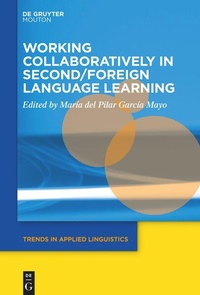
Working Collaboratively in Second/Foreign Language Learning
Description
Alles über E-Books | Antworten auf Fragen rund um E-Books, Kopierschutz und Dateiformate finden Sie in unserem Info- & Hilfebereich.
Since the introduction of communicative language teaching, collaborative learning has played an important role in the second language (L2) classroom. Drawing from sociocultural theory, which states that human cognitive development is a socially situated activity mediated by language, studies in L2 pedagogy advocate the use of tasks that require learners to work together. Collaborative dialogue encourages language learning, and research shows that the solutions reached by students in this process are more often correct with a lasting influence on their language comprehension.
This volume includes ten chapters that illustrate the benefits of collaborative dialogue in second foreign language classrooms. The volume considers key issues dealing with collaborative tasks and implications for language teaching.
More details
Other editions
Additional editions
Person
María del Pilar García Mayo , Universidad del País Vasco, Spain.

System requirements
File format: ePUB
Copy protection: Watermark-DRM (Digital Rights Management)
System requirements:
- Computer (Windows; MacOS X; Linux): Use a reading software that can process the file format ePUB: e.g., Adobe Digital Editions or FBReader – both free (see eBook Help).
- Tablet/Smartphone (Android; iOS): Before downloading, install the free app Adobe Digital Editions (see eBook Help).
- E-reader: Bookeen, Kobo, Pocketbook, Sony, Tolino and many more (not Kindle).
The file format ePUB works well for novels and non-fiction books – i.e., „flowing” text without complex layout. On an e-reader or smartphone, line and page breaks automatically adjust to fit the small displays.
This eBook uses Watermark-DRM, a „soft” copy protection. This means that there are no technical restrictions to prevent illegal distribution. However, there is a personalised watermark embedded in the eBook that can be used to identify the purchaser of the eBook in the event of misuse and to provide evidence for legal purposes.
For more information, see our eBook Help page.