

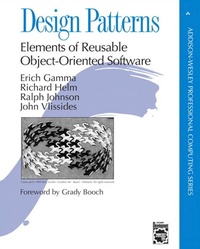
Design Patterns
Elements of Reusable Object-Oriented Software (Adobe Reader)
1st Edition
Published on 31. October 1994
416 pages
978-0-321-70074-2 (ISBN)
Description

Capturing a wealth of experience about the design of object-oriented software, four top-notch designers present a catalog of simple and succinct solutions to commonly occurring design problems. Previously undocumented, these 23 patterns allow designers to create more flexible, elegant, and ultimately reusable designs without having to rediscover the design solutions themselves.
The authors begin by describing what patterns are and how they can help you design object-oriented software. They then go on to systematically name, explain, evaluate, and catalog recurring designs in object-oriented systems. With Design Patterns as your guide, you will learn how these important patterns fit into the software development process, and how you can leverage them to solve your own design problems most efficiently.
Each pattern describes the circumstances in which it is applicable, when it can be applied in view of other design constraints, and the consequences and trade-offs of using the pattern within a larger design. All patterns are compiled from real systems and are based on real-world examples. Each pattern also includes code that demonstrates how it may be implemented in object-oriented programming languages like C++ or Smalltalk.
The authors begin by describing what patterns are and how they can help you design object-oriented software. They then go on to systematically name, explain, evaluate, and catalog recurring designs in object-oriented systems. With Design Patterns as your guide, you will learn how these important patterns fit into the software development process, and how you can leverage them to solve your own design problems most efficiently.
Each pattern describes the circumstances in which it is applicable, when it can be applied in view of other design constraints, and the consequences and trade-offs of using the pattern within a larger design. All patterns are compiled from real systems and are based on real-world examples. Each pattern also includes code that demonstrates how it may be implemented in object-oriented programming languages like C++ or Smalltalk.
More details
Edition
1. Auflage
Language
English
Place of publication
United States
Publishing group
Pearson Education (US)
Target group
Professional and scholarly
File size
18,03 MB
ISBN-13
978-0-321-70074-2 (9780321700742)
Copyright in bibliographic data and cover images is held by Nielsen Book Services Limited or by the publishers or by their respective licensors: all rights reserved.
Schweitzer Classification
Other editions
Additional editions
Erich Gamma | Richard Helm | Ralph Johnson
Design Patterns: Elements of Reusable Object-Oriented Software
Elements of Reusable Object-Oriented Software
Book
03/1995
1st Edition
Addison Wesley
€54.49
Available immediately
Persons
Dr. Erich Gamma is technical director at the Software Technology Center of Object Technology International in Zurich, Switzerland. Dr. Richard Helm is a member of the Object Technology Practice Group in the IBM Consulting Group in Sydney, Australia. Dr. Ralph Johnson is a faculty member at the University of Illinois at Urbana-Champaign's Computer Science Department.
John Vlissides is a member of the research staff at the IBM T. J. Watson Research Center in Hawthorne, New York. He has practiced object-oriented technology for more than a decade as a designer, implementer, researcher, lecturer, and consultant. In addition to co-authoring Design Patterns: Elements of Reusable Object-Oriented Software, he is co-editor of the book Pattern Languages of Program Design 2 (both from Addison-Wesley). He and the other co-authors of Design Patterns are recipients of the 1998 Dr. Dobb's Journal Excellence in Programming Award.
John Vlissides is a member of the research staff at the IBM T. J. Watson Research Center in Hawthorne, New York. He has practiced object-oriented technology for more than a decade as a designer, implementer, researcher, lecturer, and consultant. In addition to co-authoring Design Patterns: Elements of Reusable Object-Oriented Software, he is co-editor of the book Pattern Languages of Program Design 2 (both from Addison-Wesley). He and the other co-authors of Design Patterns are recipients of the 1998 Dr. Dobb's Journal Excellence in Programming Award.
Content
Preface.
Foreword.
Guide to Readers.
1. Introduction.
What Is a Design Pattern?
Design Patterns in Smalltalk MVC.
Describing Design Patterns.
The Catalog of Design Patterns.
Organizing the Catalog.
How Design Patterns Solve Design Problems.
How to Select a Design Pattern.
How to Use a Design Pattern.
2. A Case Study: Designing a Document Editor.
Design Problems.
Document Structure.
Formatting.
Embellishing the User Interface.
Supporting Multiple Look-and-Feel Standards.
Supporting Multiple Window Systems.
User Operations.
Spelling Checking and Hyphenation.
Summary.
Design Pattern Catalog.
3. Creational Patterns.
Abstract Factory.
Builder.
Factory Method.
Prototype.
Singleton.
Discussion of Creational Patterns.
4. Structural Pattern.
Adapter.
Bridge.
Composite.
Decorator.
Facade.
Flyweight.
Proxy.
Discussion of Structural Patterns.
5. Behavioral Patterns.
Chain of Responsibility.
Command.
Interpreter.
Iterator.
Mediator.
Memento.
Observer.
State.
Strategy.
Template Method.
Visitor.
Discussion of Behavioral Patterns.
6. Conclusion.
What to Expect from Design Patterns.
A Brief History.
The Pattern Community.
An Invitation.
A Parting Thought.
Appendix A: Glossary.
Appendix B: Guide to Notation.
Class Diagram.
Object Diagram.
Interaction Diagram.
Appendix C: Foundation Classes.
List.
Iterator.
ListIterator.
Point.
Rect.
Bibliography.
Index.
Foreword.
Guide to Readers.
1. Introduction.
What Is a Design Pattern?
Design Patterns in Smalltalk MVC.
Describing Design Patterns.
The Catalog of Design Patterns.
Organizing the Catalog.
How Design Patterns Solve Design Problems.
How to Select a Design Pattern.
How to Use a Design Pattern.
2. A Case Study: Designing a Document Editor.
Design Problems.
Document Structure.
Formatting.
Embellishing the User Interface.
Supporting Multiple Look-and-Feel Standards.
Supporting Multiple Window Systems.
User Operations.
Spelling Checking and Hyphenation.
Summary.
Design Pattern Catalog.
3. Creational Patterns.
Abstract Factory.
Builder.
Factory Method.
Prototype.
Singleton.
Discussion of Creational Patterns.
4. Structural Pattern.
Adapter.
Bridge.
Composite.
Decorator.
Facade.
Flyweight.
Proxy.
Discussion of Structural Patterns.
5. Behavioral Patterns.
Chain of Responsibility.
Command.
Interpreter.
Iterator.
Mediator.
Memento.
Observer.
State.
Strategy.
Template Method.
Visitor.
Discussion of Behavioral Patterns.
6. Conclusion.
What to Expect from Design Patterns.
A Brief History.
The Pattern Community.
An Invitation.
A Parting Thought.
Appendix A: Glossary.
Appendix B: Guide to Notation.
Class Diagram.
Object Diagram.
Interaction Diagram.
Appendix C: Foundation Classes.
List.
Iterator.
ListIterator.
Point.
Rect.
Bibliography.
Index.
