

Community Practice Skills
Description
Alles über E-Books | Antworten auf Fragen rund um E-Books, Kopierschutz und Dateiformate finden Sie in unserem Info- & Hilfebereich.
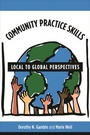
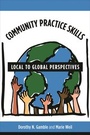
The authors open with a discussion of the theories for community work and the values of social justice and human rights, concerns that have guided the work of activists from Jane Addams and Martin Luther King Jr. to Cesar Chavez, Wangari Maathai, and Vandana Shiva. They survey the concepts, knowledge, and perspectives influencing community practice and evaluation strategies. Descriptions of eight practice models follow, incorporating real-life case examples from many parts of the world and demonstrating multiple applications for each model as well as the primary roles, competencies, and skills used by the practitioner. Complexities and variations encourage readers to determine, through comparative analysis, which model at which time best fits the goals of a community group or organization, given the context, culture, social, economic, and environmental issues and opportunities for change. An accompanying workbook stressing empowerment strategies and skills development is also available from Columbia University Press.
All prices
More details
Other editions
Additional editions
Persons
Content
List of Illustrations
Preface and Acknowledgments
Part I. Community Practice: Purpose and Knowledge Base
1. Communities and Community Practice in Local to Global Contexts
2. Conceptual Frameworks and Models for Community Practice
3. Evolution of Values, Concepts, and Community Practice Approaches
4. Theories and Perspectives for Community Practice
Part II. Eight Models of Community Practice for the Twenty-First Century
5. Neighborhood and Community Organizing
6. Organizing Functional Communities
7. Social, Economic, and Sustainable Development
8. Inclusive Program Development
9. Communities and Social Planning
10. Building Effective Coalitions
11. Political and Social Action
12. Movements for Progressive Change
13. The Challenges for Community Practice Ahead
References
Index

System requirements
File format: ePUB
Copy protection: Adobe-DRM (Digital Rights Management)
System requirements:
- Computer (Windows; MacOS X; Linux): Install the free reader Adobe Digital Editions prior to download (see eBook Help).
- Tablet/smartphone (Android; iOS): Install the free app Adobe Digital Editions or the app PocketBook before downloading (see eBook Help).
- E-reader: Bookeen, Kobo, Pocketbook, Sony, Tolino and many more (not Kindle).
The file format ePub works well for novels and non-fiction books – i.e., „flowing” text without complex layout. On an e-reader or smartphone, line and page breaks automatically adjust to fit the small displays.
This eBook uses Adobe-DRM, a „hard” copy protection. If the necessary requirements are not met, unfortunately you will not be able to open the eBook. You will therefore need to prepare your reading hardware before downloading.
Please note: We strongly recommend that you authorise using your personal Adobe ID after installation of any reading software.
For more information, see our ebook Help page.
File format: ePUB
Copy protection: Watermark-DRM (Digital Rights Management)
System requirements:
- Computer (Windows; MacOS X; Linux): Use a reading software that can process the file format ePUB: e.g., Adobe Digital Editions or FBReader – both free (see eBook Help).
- Tablet/Smartphone (Android; iOS): Before downloading, install the free app Adobe Digital Editions (see eBook Help).
- E-reader: Bookeen, Kobo, Pocketbook, Sony, Tolino and many more (not Kindle).
The file format ePUB works well for novels and non-fiction books – i.e., „flowing” text without complex layout. On an e-reader or smartphone, line and page breaks automatically adjust to fit the small displays.
This eBook uses Watermark-DRM, a „soft” copy protection. This means that there are no technical restrictions to prevent illegal distribution. However, there is a personalised watermark embedded in the eBook that can be used to identify the purchaser of the eBook in the event of misuse and to provide evidence for legal purposes.
For more information, see our eBook Help page.