


Taking Charge, Making Change
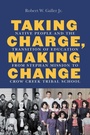
Native People and the Transition of Education from Stephan Mission to Crow Creek Tribal School
1st Edition
Published on 1. January 2025
452 pages
978-1-4962-4205-1 (ISBN)
Description

Taking Charge, Making Change gives voice to generations of Native people-from Crow Creek, Lower Brule, and other reservations in North Dakota and South Dakota-who shaped a school originally designed to foster Catholicism and assimilation. Local initiatives and collaboration transformed the Catholic Stephan Mission boarding school into the Crow Creek Tribal School, which now features both tribal traditions and American educational programs.
Through archival research and interviews with parents, graduates, teachers, and staff at Crow Creek and the surrounding community, Robert W. Galler Jr. places Native students at the heart of the narrative, demonstrating multifaceted family connections at a nineteenth-century, on-reservation religious school that evolved into a tribally run institution in the 1970s. He shows numerous ways that community members worked with Catholic leaders and ultimately transformed their mindsets and educational approaches over nearly a century. While recognizing the many challenges and tragedies that Native students endured, Galler highlights the creativity, collaborations, and contributions of the students and graduates to their communities.
Taking Charge, Making Change shows how individuals and families helped to found the school, maintain enrollment, secure funding, and influence school policies. Its graduates went on to serve with distinction in the U.S. military, earn advanced degrees after college, join and lead tribal councils in North and South Dakota, help their communities push back against federal policies, and continue to run their own education system.
Through archival research and interviews with parents, graduates, teachers, and staff at Crow Creek and the surrounding community, Robert W. Galler Jr. places Native students at the heart of the narrative, demonstrating multifaceted family connections at a nineteenth-century, on-reservation religious school that evolved into a tribally run institution in the 1970s. He shows numerous ways that community members worked with Catholic leaders and ultimately transformed their mindsets and educational approaches over nearly a century. While recognizing the many challenges and tragedies that Native students endured, Galler highlights the creativity, collaborations, and contributions of the students and graduates to their communities.
Taking Charge, Making Change shows how individuals and families helped to found the school, maintain enrollment, secure funding, and influence school policies. Its graduates went on to serve with distinction in the U.S. military, earn advanced degrees after college, join and lead tribal councils in North and South Dakota, help their communities push back against federal policies, and continue to run their own education system.
Reviews / Votes
"Taking Charge, Making Change tells us about a more than one-hundred-year transition of struggle and Indigenizing a Catholic mission into a successful Dakota operated school. This is a beautiful story of Native resilience, Indian self-determination, and tribal sovereignty."-Donald L. Fixico (Muscogee, Seminole, Shawnee, and Sac and Fox), author of Call for Change: The Medicine Way of American Indian History, Ethos, and Reality "Galler gives our Iha?ktuwan?a relatives at Crow Creek the complex and nuanced discussion they deserve through this well-researched and thoughtful contribution. He shares their history as advocates fighting for their sovereignty and the future of their community through taking back control of their education system."-Iyekiyapiwin Darlene St. Clair (Mdewaka?tu?wa? Dakota, Lower Sioux), Indigenous research professor in the College of Education and Human Development at the University of Minnesota "Taking Charge, Making Change skillfully braids together a rich and deeply rooted community history with the broader strands of the American story. The result is a profound illustration of the power of Indigenous families' everyday decisions in shaping their community, state, and nation. In centering the families who maintained the Stephan Mission School it reveals that the school was never just a school and not merely a colonial tool, but a key site of survival, intergenerational relationships, and enduring visions of tribal sovereignty."-Cathleen D. Cahill, author of Recasting the Vote: How Women of Color Transformed the Suffrage Movement "This authoritative and inclusive history of Stephan Mission traces the motivations of the Catholic Church and the Crow Creek Sioux Tribe for educating Indian children in Crow Creek Reservation, culminating with the tribe recently taking control back from the church."-Craig Howe (Oglala Sioux Tribe), founder and director of the Center for American Indian Research and Native Studies at the Pine Ridge Reservation and coeditor of He Sapa Woihanble: Black Hills Dream "Taking Charge, Making Change is important because it outlines the history of a school that has not been thoroughly documented in other studies. Further, this book will enhance the literature that is already in place because it examines a boarding institution that facilitates the needs of (primarily) the Dakota and Lakota Sioux in the aftermath of the Minnesota Sioux War of 1862."-Cynthia Leanne Landrum, author of The Dakota Sioux Experience at Flandreau and Pipestone Indian SchoolsMore details
Series
Language
English
Place of publication
Lincoln
United States
Target group
Professional and scholarly
College/higher education
Illustrations
23 photographs, 2 maps, 3 tables, index
ISBN-13
978-1-4962-4205-1 (9781496242051)
Copyright in bibliographic data and cover images is held by Nielsen Book Services Limited or by the publishers or by their respective licensors: all rights reserved.
Schweitzer Classification
Other editions
Additional editions
Robert W. Galler
Taking Charge, Making Change
Native People and the Transition of Education from Stephan Mission to Crow Creek Tribal School
Book
01/2025
University of Nebraska Press
€72.50
Shipment within 15-20 days
Person
Robert W. Galler Jr. is a professor of history at St. Cloud State University.
Content
List of Illustrations
List of Tables
Acknowledgments
Author's Note on Terminology
Introduction
1. Adapting to New Environments and People
2. Cultivating Catholic Alliances
3. Founding a Catholic Mission School
4. Establishing Seasonal Rhythms
5. Balancing Church, State, and Tribal Interests
6. Confronting Internal and External Challenges
7. Building and Rebuilding
8. Responding to World War I, the Global Pandemic, and the 1920s
9. Surviving the Great Depression
10. Contributing to World War II
11. Leading a New Generation
12. Promoting Collaboration and Growth
13. Sacrificing for Country and Communities
14. Moving toward Self-Determination
15. Advancing from Catholic Mission to Tribal School
Epilogue
Notes
Bibliography
Index
List of Tables
Acknowledgments
Author's Note on Terminology
Introduction
1. Adapting to New Environments and People
2. Cultivating Catholic Alliances
3. Founding a Catholic Mission School
4. Establishing Seasonal Rhythms
5. Balancing Church, State, and Tribal Interests
6. Confronting Internal and External Challenges
7. Building and Rebuilding
8. Responding to World War I, the Global Pandemic, and the 1920s
9. Surviving the Great Depression
10. Contributing to World War II
11. Leading a New Generation
12. Promoting Collaboration and Growth
13. Sacrificing for Country and Communities
14. Moving toward Self-Determination
15. Advancing from Catholic Mission to Tribal School
Epilogue
Notes
Bibliography
Index
