


Erodiano e Commodo
Traduzione e commento storico al primo libro della Storia dell'Impero dopo Marco
1st Edition
Published on 11. December 2013
187 pages
978-3-647-25303-9 (ISBN)
Description

Alessandro Galimberti legt mit diesem Buch den ersten historischen Kommentar zum ersten Buch Herodians »Die Geschichte des Imperiums nach Marcus« vor. Seine Analysen zeigen, dass Herodian zu einer weitaus differenzierteren und weniger negativen Beurteilung über die Herrschaft von Kaiser Commodus als die meisten anderen zeitgenössischen Quellen kommt, die vor allem die Sicht des Senats widerspiegeln. So charakterisiert er dessen Herrschaft als verpasste Gelegenheit. Commodus vergeudete sein Talent und seine adlige Abstammung, was letztendlich zu seinem Niedergang führte. Dem italienischen Kommentar voraus geht eine historische Einführung und eine italienische Übersetzung des ersten Buchs Herodians.
It's the first historical commentary on the first book of Herodian's "History of the Empire after Marcus" on Commodus' principate. The commentary is accompanied by an extensive historiographical introduction and by the italian translation. The analysis of the first book shows that Herodian was an eyewitness of Commodus' reign and integrates this testimony, made of personal memories, with oral and written sources. There is no reason to exclude that Herodian had read the work of Cassius Dio - who was also an eyewitness of Commodus' time - indeed, it is very likely that Dio was among the sources of Herodian, although it is wrong to think that Herodian depends exclusively from Dio and consequently to understimate the testimony of Herodian in favor of that of Dion. Herodian, who writes for a greek audience is for us a very valuable source for Commodus' reign for at least two reasons: first, because it preserves a point of view different from the senatorial one that is in Dion and in the Commodus life in the Historia Augusta, as well as in other minor sources, radically hostile to Commodus, among which Galen's De indolentia, whose testimony (the oldest in the reign of Commodus) is here valued for the first time. Herodian's judgment of Commodus is also more complex than the other sources. The final judgment of Commodus is emblematic of the point of view of Herodian and that is a missed opportunity: Commodus wasted his talent and his nobility. His downfall is ultimately due to the fact of having disregarded the expectations that had been created around him.
It's the first historical commentary on the first book of Herodian's "History of the Empire after Marcus" on Commodus' principate. The commentary is accompanied by an extensive historiographical introduction and by the italian translation. The analysis of the first book shows that Herodian was an eyewitness of Commodus' reign and integrates this testimony, made of personal memories, with oral and written sources. There is no reason to exclude that Herodian had read the work of Cassius Dio - who was also an eyewitness of Commodus' time - indeed, it is very likely that Dio was among the sources of Herodian, although it is wrong to think that Herodian depends exclusively from Dio and consequently to understimate the testimony of Herodian in favor of that of Dion. Herodian, who writes for a greek audience is for us a very valuable source for Commodus' reign for at least two reasons: first, because it preserves a point of view different from the senatorial one that is in Dion and in the Commodus life in the Historia Augusta, as well as in other minor sources, radically hostile to Commodus, among which Galen's De indolentia, whose testimony (the oldest in the reign of Commodus) is here valued for the first time. Herodian's judgment of Commodus is also more complex than the other sources. The final judgment of Commodus is emblematic of the point of view of Herodian and that is a missed opportunity: Commodus wasted his talent and his nobility. His downfall is ultimately due to the fact of having disregarded the expectations that had been created around him.
More details
Other editions
Additional editions
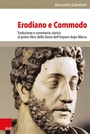
Alessandro Galimberti
Erodiano e Commodo
Traduzione e commento storico al primo libro della Storia dell'Impero dopo Marco
Book
12/2013
1st Edition
Vandenhoeck & Ruprecht
€95.00
Shipment within 5-7 days
Persons
Content
- Cover
- Title Page
- Copyright
- Table of Contents
- Body
- Introduzione
- Traduzione e commento storico
- Indice dei nomi
- Back Cover
