

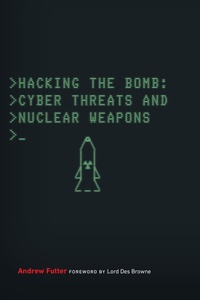
Hacking the Bomb
Description

Are nuclear arsenals safe from cyber-attack? Could terrorists launch a nuclear weapon through hacking? Are we standing at the edge of a major technological challenge to global nuclear order? These are among the many pressing security questions addressed in Andrew Futter's ground-breaking study of the cyber threat to nuclear weapons.
Hacking the Bomb provides the first ever comprehensive assessment of this worrying and little-understood strategic development, and it explains how myriad new cyber challenges will impact the way that the world thinks about and manages the ultimate weapon. The book cuts through the hype surrounding the cyber phenomenon and provides a framework through which to understand and proactively address the implications of the emerging cyber-nuclear nexus. It does this by tracing the cyber challenge right across the nuclear weapons enterprise, explains the important differences between types of cyber threats, and unpacks how cyber capabilities will impact strategic thinking, nuclear balances, deterrence thinking, and crisis management. The book makes the case for restraint in the cyber realm when it comes to nuclear weapons given the considerable risks of commingling weapons of mass disruption with weapons of mass destruction, and argues against establishing a dangerous norm of "hacking the bomb."
This timely book provides a starting point for an essential discussion about the challenges associated with the cyber-nuclear nexus, and will be of great interest to scholars and students of security studies as well as defense practitioners and policy makers.
More details
Other editions
Additional editions
Person
Andrew Futter is an associate professor in the School of History, Politics, and International Relations at the University of Leicester. He is the author of The Politics of Nuclear Weapons and Ballistic Missile Defence and US National Security Policy, the editor of The United Kingdom and the Future of Nuclear Weapons, and co-editor of Reassessing the Revolution in Military Affairs.
Content
Foreword by The Rt. Hon. Lord Browne of Ladyton
Acknowledgments
Introduction: WarGames Redux?
Part 1: The Nature of the Challenge
1. What Exactly Do We Mean by the Cyber Challenge?
2. How and Why Might Nuclear Systems Be Vulnerable?
Part 2: What Might Hackers Do to Nuclear Systems?
3. Stealing Nuclear Secrets
4. Could Cyberattcks Lead to Nuclear Use or Stop Systems from Working?
Part 3: The Cyber-Nuclear Nexus at the Strategic Level
5. Cyberdeterrence, Nuclear Weapons, and Managing Strategic Threats
6. A Cyber-Nuclear Security Dilemma, Nuclear Stability, and Crisis Management
Part 4: Challenges for Our Cyber-Nuclear Future
7. Nuclear Weapons Modernization, Advanced Conventional Weapons, and the Future Global Nuclear Environment
Conclusion:Managing Our Cyber-Nuclear Future
Bibliography
Index
About the Author
