

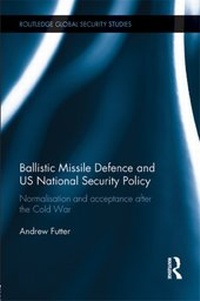
Ballistic Missile Defence and US National Security Policy
Normalisation and Acceptance after the Cold War
1st Edition
Published on 12. April 2013
240 pages
978-1-136-65530-2 (ISBN)
Description

This book examines the transformation in US thinking about the role of Ballistic Missile Defence (BMD) in national security policy since the end of the Cold War.
The evolution of the BMD debate after the Cold War has been complex, complicated and punctuated. As this book shows, the debate and subsequent policy choices would often appear to reflect neither the particular requirements of the international system for US security at any given time, nor indeed the current capabilities of BMD technology.
Ballistic Missile Defence and US National Security Policy traces the evolution of policy from the zero-sum debates that surrounded the Strategic Defense Initiative as Ronald Reagan left office, up to the relative political consensus that exists around a limited BMD deployment in 2012. The book shows how and why policy evolved in such a complex manner during this period, and explains the strategic reasoning and political pressures shaping BMD policy under each of the presidents who have held office since 1989. Ultimately, this volume demonstrates how relative advancements in technology, combined with growth in the perceived missile threat, gradually shifted the contours and rhythm of the domestic missile defence debate in the US towards acceptance and normalisation.
This book will be of much interest to students of missile defence and arms control, US national security policy, strategic studies and international relations in general.
The evolution of the BMD debate after the Cold War has been complex, complicated and punctuated. As this book shows, the debate and subsequent policy choices would often appear to reflect neither the particular requirements of the international system for US security at any given time, nor indeed the current capabilities of BMD technology.
Ballistic Missile Defence and US National Security Policy traces the evolution of policy from the zero-sum debates that surrounded the Strategic Defense Initiative as Ronald Reagan left office, up to the relative political consensus that exists around a limited BMD deployment in 2012. The book shows how and why policy evolved in such a complex manner during this period, and explains the strategic reasoning and political pressures shaping BMD policy under each of the presidents who have held office since 1989. Ultimately, this volume demonstrates how relative advancements in technology, combined with growth in the perceived missile threat, gradually shifted the contours and rhythm of the domestic missile defence debate in the US towards acceptance and normalisation.
This book will be of much interest to students of missile defence and arms control, US national security policy, strategic studies and international relations in general.
Reviews / Votes
'Futter succeeds in making sense of the miasma of names, dates and technologies as well as the changing policy debates on the issue. The breadth of the book is extensive, covering US policy from 1989 to 2012. Written in a very engaging style, this book would be of great interest to both specialists and non-specialists alike and should be the first port of call for anyone wishing to understand the evolution of US missile defence policy after the Cold War.' - Jason Douglas, University College Cork, IrelandMore details
Series
Language
English
Place of publication
London
United Kingdom
Publishing group
Taylor & Francis Ltd
Target group
College/higher education
Professional and scholarly
File size
6,12 MB
ISBN-13
978-1-136-65530-2 (9781136655302)
Copyright in bibliographic data and cover images is held by Nielsen Book Services Limited or by the publishers or by their respective licensors: all rights reserved.
Schweitzer Classification
Other editions
Additional editions
Andrew Futter
Ballistic Missile Defence and US National Security Policy
Normalisation and Acceptance after the Cold War
Book
08/2015
1st Edition
Routledge
€76.40
Shipment within 10-20 days
Andrew Futter
Ballistic Missile Defence and US National Security Policy
Normalisation and Acceptance after the Cold War
Book
03/2013
1st Edition
Routledge
€231.70
Shipment within 15-20 days
Person
Andrew Futter is Lecturer in International Politics at the University of Leicester, and has a PhD in Internatoinal Relations from the University of Birmingham, UK.
Content
Introduction 1. The Origins of the US Ballistic Missile Defence Debate (1945-1989) 2. The Missile Defence Pragmatist - George H. W. Bush (1989-1993) 3. Bill Clinton and the End of the Star Wars Era (1993-1997) 4. Party Politics and Republican Pressure for Deployment (1997-2001) 5. George W. Bush, ABM Treaty Abrogation and Deployment (2001-2005) 6. Expanding and Integrating the US Missile Defence Programme (2005-2009) 7. The Reluctant Convert - Barack Obama (2009-2012) Conclusion: Normalisation and Acceptance
