

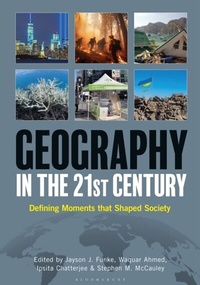
Geography in the 21st Century
Defining Moments That Shaped Society [2 Volumes]
1st Edition
Published on 6. March 2025
640 pages
978-1-4408-7325-6 (ISBN)
Description

Geography studies the relationship of humans and the natural environment, and these 40 essays examine those geographical events that have most profoundly shaped global society in the opening decades of the 21st century.
Explore how these events have transformed how people interact with the environment, from political and economic issues such as elections, market practices, and war, to cultural and social issues such as racism and gender stereotyping at work. Landscapes, regions, cities, nature, society, development - our entire existence - is tied up with space and geography, and thus geography is well-placed to provide important insights and perspectives on the complex events and issues of our time. Geography in the 21st Century studies the world's rapidly changing environments and its shifting economic, political, and cultural landscapes.
The entries address social, political, economic, and environmental events - from the Arab Spring Movements to the Mexico border crisis in the USA - that are often complex, transnational, and interrelated. Clear explanations help readers understand the historical and geographical continuity and confluence that underlie these defining moments. All chapters follow the same structure to provide consistency throughout and allow students to compare multiple events. Each begins with an overview of the event; followed by a background section that describes the historical and geographic context within which the event occurred; then a section on social, political, economic, and environmental Impacts that describes the results of the event; and a section that analyzes the event from a spatial or geographic perspective and explains why it is important. Each chapter also includes a list of references and sources for further reading and a sidebar on a related topic.
Explore how these events have transformed how people interact with the environment, from political and economic issues such as elections, market practices, and war, to cultural and social issues such as racism and gender stereotyping at work. Landscapes, regions, cities, nature, society, development - our entire existence - is tied up with space and geography, and thus geography is well-placed to provide important insights and perspectives on the complex events and issues of our time. Geography in the 21st Century studies the world's rapidly changing environments and its shifting economic, political, and cultural landscapes.
The entries address social, political, economic, and environmental events - from the Arab Spring Movements to the Mexico border crisis in the USA - that are often complex, transnational, and interrelated. Clear explanations help readers understand the historical and geographical continuity and confluence that underlie these defining moments. All chapters follow the same structure to provide consistency throughout and allow students to compare multiple events. Each begins with an overview of the event; followed by a background section that describes the historical and geographic context within which the event occurred; then a section on social, political, economic, and environmental Impacts that describes the results of the event; and a section that analyzes the event from a spatial or geographic perspective and explains why it is important. Each chapter also includes a list of references and sources for further reading and a sidebar on a related topic.
More details
Language
English
Place of publication
New York
United States
Publishing group
Bloomsbury Publishing Plc
File size
14,86 MB
ISBN-13
978-1-4408-7325-6 (9781440873256)
Copyright in bibliographic data and cover images is held by Nielsen Book Services Limited or by the publishers or by their respective licensors: all rights reserved.
Schweitzer Classification
Other editions
Additional editions
Jayson J. Funke | Waquar Ahmed | Ipsita Chatterjee
Geography in the 21st Century
Defining Moments that Shaped Society [2 volumes]
Book
06/2025
Bloomsbury Academic
€343.50
Shipment within 10-20 days
Persons
Jayson J. Funke teaches geography at Western Connecticut State University, USA.
Waquar Ahmed is Associate Professor of geography at the University of North Texas, USA.
Ipsita Chatterjee is Associate Professor at the University of North Texas, USA.
Stephen M. McCauley is Associate Professor of Teaching at Worcester Polytechnic Institute, USA.
Waquar Ahmed is Associate Professor of geography at the University of North Texas, USA.
Ipsita Chatterjee is Associate Professor at the University of North Texas, USA.
Stephen M. McCauley is Associate Professor of Teaching at Worcester Polytechnic Institute, USA.
Content
Table of Contents
Preface/Acknowledgements
Introduction
Defining Moments World Map
Chapter 1: Second Intifada (2000-2005)
Chapter 2: Democracy Movement in Nepal (2001-2006)
Chapter 3: September 11 Terrorist Attacks, United States of America (2001)
Chapter 4: United States' War on Terrorism: Afghanistan (2001), Iraq (2003)
Chapter 5: Establishment of the African Union (2002)
Chapter 6: Rise of Social Media (2004)
Chapter 7: Indian Ocean Earthquake and Tsunami (2004)
Chapter 8: Hurricane Katrina, United States of America (2005)
Chapter 9: Kashmir Earthquake of 2005
Chapter 10: Financial Crises and Economic Recession in the United States of America (2007-2009)
Chapter 11: International Financial Crisis and Economic Recession (2007-2010)
Chapter 12: Global Food Crisis (2007-2008)
Chapter 13: Saffron Revolution in Mynmar (2007)
Chapter 14: End of Sri Lanka Civil War (2009)
Chapter 15: Earthquake in Haiti (2010)
Chapter 16: Deepwater Horizon Explosion and Oil Spill in the Gulf of Mexico (2010)
Chapter 17: Collapse of the San José Mine, Chile, and the Rescue of 33 Miners (2010)
Chapter 18: Arab Spring Movements (2010-2011)
Chapter 19: Fukushima Dai-ichi Nuclear Disaster, Japan (2011)
Chapter 20: Grand Ethiopian Renaissance Dam and the Nile River (2011)
Chapter 21: Conflict in Kashmir (2013)
Chapter 22: Pope Francis Elected to Head Roman Catholic Church (2013)
Chapter 23: Rana Plaza Industrial Disaster, Bangladesh (2013)
Chapter 24: China's Belt and Road Initiative (2013-)
Chapter 25: Ebola Outbreak, West Africa (2013-2016)
Chapter 26: Chibok Kidnappings, Nigeria (2014)
Chapter 27: Flint, Michigan Water Crisis, United States of America (2014)
Chapter 28: War in Yemen (2014-)
Chapter 29: Degradation of the Great Barrier Reef (2016)
Chapter 30: Brexit, Great Britain (2016-)
Chapter 31: Attempted Coup d'etats in Türkiye and Subsequent Political Purges (2016-2018)
Chapter 32: Presidential Election in the United States of America (2016)
Chapter 33: Standing Rock Indian Reservation Protests (Dakota Access Pipeline) (2016)
Chapter 34: Hurricanes Harvey, Irma, and Maria, United States of America and the Caribbean (2017)
Chapter 35: Rohingya Conflict, Myanmar (2017)
Chapter 36: California Wildfires (2017-2018)
Chapter 37: Mexico Border Crisis, United States of America (2018-2019)
Chapter 38: Coronavirus/COVID-19 Pandemic (2020-2023)
Chapter 39: Ukraine Crisis (2022-)
Chapter 40: Floods in Pakistan (2022)
Bibliography
About the Contributors
Index
Preface/Acknowledgements
Introduction
Defining Moments World Map
Chapter 1: Second Intifada (2000-2005)
Chapter 2: Democracy Movement in Nepal (2001-2006)
Chapter 3: September 11 Terrorist Attacks, United States of America (2001)
Chapter 4: United States' War on Terrorism: Afghanistan (2001), Iraq (2003)
Chapter 5: Establishment of the African Union (2002)
Chapter 6: Rise of Social Media (2004)
Chapter 7: Indian Ocean Earthquake and Tsunami (2004)
Chapter 8: Hurricane Katrina, United States of America (2005)
Chapter 9: Kashmir Earthquake of 2005
Chapter 10: Financial Crises and Economic Recession in the United States of America (2007-2009)
Chapter 11: International Financial Crisis and Economic Recession (2007-2010)
Chapter 12: Global Food Crisis (2007-2008)
Chapter 13: Saffron Revolution in Mynmar (2007)
Chapter 14: End of Sri Lanka Civil War (2009)
Chapter 15: Earthquake in Haiti (2010)
Chapter 16: Deepwater Horizon Explosion and Oil Spill in the Gulf of Mexico (2010)
Chapter 17: Collapse of the San José Mine, Chile, and the Rescue of 33 Miners (2010)
Chapter 18: Arab Spring Movements (2010-2011)
Chapter 19: Fukushima Dai-ichi Nuclear Disaster, Japan (2011)
Chapter 20: Grand Ethiopian Renaissance Dam and the Nile River (2011)
Chapter 21: Conflict in Kashmir (2013)
Chapter 22: Pope Francis Elected to Head Roman Catholic Church (2013)
Chapter 23: Rana Plaza Industrial Disaster, Bangladesh (2013)
Chapter 24: China's Belt and Road Initiative (2013-)
Chapter 25: Ebola Outbreak, West Africa (2013-2016)
Chapter 26: Chibok Kidnappings, Nigeria (2014)
Chapter 27: Flint, Michigan Water Crisis, United States of America (2014)
Chapter 28: War in Yemen (2014-)
Chapter 29: Degradation of the Great Barrier Reef (2016)
Chapter 30: Brexit, Great Britain (2016-)
Chapter 31: Attempted Coup d'etats in Türkiye and Subsequent Political Purges (2016-2018)
Chapter 32: Presidential Election in the United States of America (2016)
Chapter 33: Standing Rock Indian Reservation Protests (Dakota Access Pipeline) (2016)
Chapter 34: Hurricanes Harvey, Irma, and Maria, United States of America and the Caribbean (2017)
Chapter 35: Rohingya Conflict, Myanmar (2017)
Chapter 36: California Wildfires (2017-2018)
Chapter 37: Mexico Border Crisis, United States of America (2018-2019)
Chapter 38: Coronavirus/COVID-19 Pandemic (2020-2023)
Chapter 39: Ukraine Crisis (2022-)
Chapter 40: Floods in Pakistan (2022)
Bibliography
About the Contributors
Index
