

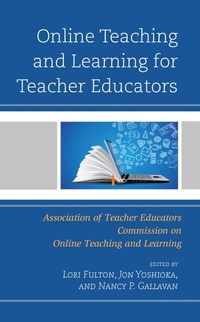
Online Teaching and Learning for Teacher Educators
1st Edition
Published on 15. May 2021
182 pages
979-8-7651-7625-2 (ISBN)
Description

Online Teaching and Learning for Teacher Educators is the first book written exclusively by teacher educators for teacher educators in higher education, K-12 classrooms, and for candidates preparing to become teacher educators. Written as a practical, easy to understand and use guide, this book is designed to support and empower teacher educators from all settings as they transition into and advance their knowledge, skills, and dispositions in online teaching and learning. Readers will find ten informative and stimulating chapters, drawn from each author's personal experience, that focus on the essential topics and emerging issues relevant to the ever-expanding and rapidly changing online environment unique to teacher educators.
Topics covered include planning developmentally appropriate content and context in creative ways; establishing and engaging with collaborative communities of learners; optimizing opportunities for engagement, expression, exchange of ideas, innovation, and inspiration; incorporating meaningful assessments, rubrics, and feedback that promote thinking, growth, and reflection; and advancing awareness, application, and appreciation of ethics, equity, and efficacy. Plus, issues related to the challenges, choices, and changes associated with effective online teaching and learning, specifically for teacher educators, are highlighted. Every teacher educator, whether a seasoned veteran or aspiring newcomer, will benefit greatly from reading this outstanding book. We sincerely hope that our experiences will help you in your quest to become the best online educator that you can be.
Topics covered include planning developmentally appropriate content and context in creative ways; establishing and engaging with collaborative communities of learners; optimizing opportunities for engagement, expression, exchange of ideas, innovation, and inspiration; incorporating meaningful assessments, rubrics, and feedback that promote thinking, growth, and reflection; and advancing awareness, application, and appreciation of ethics, equity, and efficacy. Plus, issues related to the challenges, choices, and changes associated with effective online teaching and learning, specifically for teacher educators, are highlighted. Every teacher educator, whether a seasoned veteran or aspiring newcomer, will benefit greatly from reading this outstanding book. We sincerely hope that our experiences will help you in your quest to become the best online educator that you can be.
More details
Other editions
Additional editions
Lori Fulton | Jon Yoshioka | Nancy P. Gallavan
Online Teaching and Learning for Teacher Educators
Book
05/2021
Rowman & Littlefield Publishers
€38.20
Shipment within 10-20 days
Persons
Lori Fulton, PhD, is associate professor of elementary education in the Institute for Teacher Education at the University of Hawai?i at Manoa. She specializes in elementary science education, the oral and written discourse of science, teacher education and professional development, and PDS/University partnerships.
Jon Yoshioka, PhD, is professor and department chair of the Master of Education in Teaching Program at the University of Hawai?i at Manoa's Institute for Teacher Education. His research interests include teacher education, teacher preparation and professional development, transnational education, PDS/university partnerships, and culturally responsive pedagogy.
Nancy P. Gallavan, PhD, is professor emerita of teacher education at the University of Central Arkansas specializing in classroom assessments, cultural diversity and inclusion, doctoral studies, field supervision, and instructional coaching. With more than 200 peer-reviewed publications, Nancy is an ATE past president, ATE distinguished member, and ATE distinguished mentor.
Jon Yoshioka, PhD, is professor and department chair of the Master of Education in Teaching Program at the University of Hawai?i at Manoa's Institute for Teacher Education. His research interests include teacher education, teacher preparation and professional development, transnational education, PDS/university partnerships, and culturally responsive pedagogy.
Nancy P. Gallavan, PhD, is professor emerita of teacher education at the University of Central Arkansas specializing in classroom assessments, cultural diversity and inclusion, doctoral studies, field supervision, and instructional coaching. With more than 200 peer-reviewed publications, Nancy is an ATE past president, ATE distinguished member, and ATE distinguished mentor.
Content
Foreword: Shirley Lefever
Introduction: Nancy P. Gallavan
Chapter 1:Inspiration, Aspiration, and Optimization Advancing Online Teaching and Learning
Nancy P. Gallavan & LeAnn G. Putney
Chapter 2: Cultural Competence and Global Awareness in an Online Environment
Marie Byrd & Glenda L. Black
Chapter 3: Learning Content Online: Knowledge, Skills, and Dispositions
Jon Yoshioka, Lori Fulton, Rosela C. Balinbin Santos, & Rayna R. H. Fujii
Chapter 4: Pedagogical and Andragogical Considerations in Online Teacher Education
Mark M. Diacopoulous & Brandon M. Butler
Chapter 5: Classroom Assessment Purposes, Practices, and Proficiency
Amy E. Thompson & Nancy P. Gallavan
Chapter 6: Meaningful Feedback in an Online Classroom
Ashlie R. Jack & Shirley Lefever
Chapter 7: Creating Collaborative Communities in Cyberspace
Lori Fulton & Jon Yoshioka
Chapter 8: Professional Integrity and Pedagogical Ethics
Winnie Namotovu & Nancy P. Gallavan
Chapter 9: Enhance Efficacy and Advocate Agency in Online Classrooms
Walter S. Polka & Amanda Rudolph
Chapter 10: Stories from the Field
Lori Fulton, Jon Yoshioka, John Hicks, Glenda L. Black, Rosela C. Balinbin Santos, Mark M. Diacopoulous, V. Carole Smith, & Erin O. Shaw
Epilogue: Challenges, Choices, Changes, and Cheers
Erin O. Shaw, Monica K. Amyett, & Nancy P. Gallavan
About the Authors
Introduction: Nancy P. Gallavan
Chapter 1:Inspiration, Aspiration, and Optimization Advancing Online Teaching and Learning
Nancy P. Gallavan & LeAnn G. Putney
Chapter 2: Cultural Competence and Global Awareness in an Online Environment
Marie Byrd & Glenda L. Black
Chapter 3: Learning Content Online: Knowledge, Skills, and Dispositions
Jon Yoshioka, Lori Fulton, Rosela C. Balinbin Santos, & Rayna R. H. Fujii
Chapter 4: Pedagogical and Andragogical Considerations in Online Teacher Education
Mark M. Diacopoulous & Brandon M. Butler
Chapter 5: Classroom Assessment Purposes, Practices, and Proficiency
Amy E. Thompson & Nancy P. Gallavan
Chapter 6: Meaningful Feedback in an Online Classroom
Ashlie R. Jack & Shirley Lefever
Chapter 7: Creating Collaborative Communities in Cyberspace
Lori Fulton & Jon Yoshioka
Chapter 8: Professional Integrity and Pedagogical Ethics
Winnie Namotovu & Nancy P. Gallavan
Chapter 9: Enhance Efficacy and Advocate Agency in Online Classrooms
Walter S. Polka & Amanda Rudolph
Chapter 10: Stories from the Field
Lori Fulton, Jon Yoshioka, John Hicks, Glenda L. Black, Rosela C. Balinbin Santos, Mark M. Diacopoulous, V. Carole Smith, & Erin O. Shaw
Epilogue: Challenges, Choices, Changes, and Cheers
Erin O. Shaw, Monica K. Amyett, & Nancy P. Gallavan
About the Authors
