

Selected Poems
Published on 5. November 2012
256 pages
978-1-84777-653-2 (ISBN)
Description

From his first wartime collection evoking a generation's experience of a country made strange by blackouts and air raids, the 'vivid allegorical / Reality of gun and hangar', to the consolatory wisdom of the Last Poems of 1993, Roy Fuller was a poet of the familiar and ordinary made extraordinary. Mundane details, observed with Fuller's tolerant humour and acute eye, reveal depths and dissonances from which a civilised life may be created: the unremarkable year 'of painting the shed ... Is also that of harmonies / That have made one's life and art for evermore off-key'.
On the centenary of Fuller's birth, this generous selection, introduced by John Fuller, the poet's son, and with an afterword by Neil Powell, Fuller's biographer, brings to a new generation of readers the work of one of the essential twentieth-century poets.
With an afterword by Neil Powell
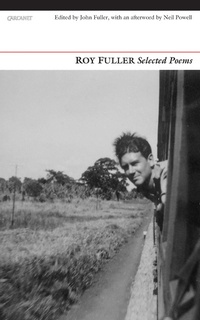
COVER PHOTOGRAPH Roy Fuller, February 1943. Annotated by Roy Fuller, 'On the way up - Uganda somewhere'. Reproduced by permission of John Fuller.
On the centenary of Fuller's birth, this generous selection, introduced by John Fuller, the poet's son, and with an afterword by Neil Powell, Fuller's biographer, brings to a new generation of readers the work of one of the essential twentieth-century poets.
With an afterword by Neil Powell
COVER PHOTOGRAPH Roy Fuller, February 1943. Annotated by Roy Fuller, 'On the way up - Uganda somewhere'. Reproduced by permission of John Fuller.
Reviews / Votes
Roy Fuller has been neglected of late: it is time for a reappraisal.Roy Fuller (1912-91) wrote in 'Poem Out of Character', which is not included in this selection, 'Rapidly moving from the end / To the middle of anthologies / The poet starts to comprehend / The styles that can never be his.' The deft matter-of-factness of this quatrain is characteristic, but we should not suppose that Fuller's own range is narrow or his method limited. By the end of the poem, although 'The dreams of the tremendous statements fade', behind the minute attention to cats and birds, we find 'Weltering in blood, enormous joys / Lighting their faces, [...] a frieze / Of giantesses, gods and boys / And lions and inhuman trees.' The modesty he claims elsewhere as temperamental seems in part a means of keeping some perspective on the bigger and often terrible picture.
Fuller's early work, Poems (1939) and The Middle of a War (1942), shows how pervasive Auden's influence had rapidly become, but what distinguishes Fuller from many others is that Fuller had something of his own to offer, a combination of moral seriousness, political engagement and pessimism, exemplified in 'The White Conscript and the Black Conscript', which refuses uplift without withdrawing commitment. Speaker and recipient share no language, which seems to make truthfulness especially important: 'Among our tribe, like yours, / There are some bad, some good - / That is all I am able to say: / Because you would not believe me if I could / Tell you it is for you, the oppressed, the good / Only desire to die.'
After spending the war with the Royal Navy in Africa, in peacetime Fuller resumed work as a solicitor with the Woolwich Building Society, of which he eventually became a director. His early socialism may have softened in a routine 'part managerial, part poetic', but as John Fuller records in the introduction, his father once replied to his son's rebuke: 'I have never voted Tory in my life.' The building societies he knew (for whose branch of law Fuller wrote a textbook) were mutual societies rather than banks. God knows what he would have made of Northern Rock, although the crisis of capital is there to be seen in 'The Middle of a War', written almost 70 years before the outbreak of our continuing financial disaster: 'The ridiculous empires break like biscuits. / Ah, life has been abandoned by the boats - / Only the trodden island and the dead / Remain, and the once-inestimable caskets.' 'Schwere Gustav' likewise resonates, named for a giant German gun: 'worked by fifteen hundred troops / Topped by a general, no less, / Gustav fired two rounds a day, / But after sixty was u/s.'
While John Fuller makes an eloquent case for his father's late work, the historical and mythological poems (including the brilliant 'Mythological Sonnets') written until around 1970 may have the more compelling claim. 'The Ides of March' finds Brutus wondering whether to act when his associates call for him: 'I have caught the times like a disease / Whose remedy is still experimental.' Where once Fuller's pessimism may have seemed confined by the assumptions of a period, it now assumes a prophetic urgency. In 'Meredithian Sonnets', from the early 60s, we observe 'the flight of coin, the absence of ideas', while the narrator feels an almost privileged terror of recognition, seeing 'the yellow face of time against / The racing sky. So this is the thing it is, / He says aloud, to live in mortal cities - / Haunted by trivial music, stomach tensed.'
By this stage of Fuller's work he seems entirely self-possessed as a poet, able to encompass large, public themes without sounding journalistic or enthralled either by Auden or by the merely habitual irony to which the middle aged are prone. Nor is he ingratiating. Seeing girls dressed in the latest fashions, the narrator of 'Meredithian Sonnets' musters a typically complicated response: 'Their high indifferent voices utter words / Whose spell the meaning cannot quite defeat', alluding to Eliot while adjusting him to a sensibility not imprisoned by fastidiousness.
The recurrent and persuasive sense is of waking up to discover that things merely present are in fact real, and that the forces that compel them are both economic and psychic and not only to be found in books. Quite how nightmarish the wellsprings might be is considered in two grimly, but stylishly comic poems, 'Autobiography of a Lungworm' and 'Love and Murder': 'Strange that in 'crimes of passion' what results / Is women folded into trunks like suits, / Or chopped in handy joints to burn or lose'. It is, Fuller seems to imply, only the comic note that allows us to 'entertain' such realities, though the laughter is, to put it mildly, uneasy.
The reader trying to place Fuller finds it difficult, partly because in a long and diverse career (he was also a distinguished novelist and a critic with firm opinions), once he had absorbed Auden he belonged nowhere exactly among the schools and movements that followed. From this judicious selection it becomes clear that he survives as a considerable figure. His recent comparative neglect is understandable as part of the process of sifting - and he would surely have expected it - but here is the opportunity to see what an impressive and memorable body of work has temporarily been missing from the picture.
The original article can be found here.
More details
Language
English
Place of publication
London
United Kingdom
Publishing group
Carcanet Press Ltd
File size
0,57 MB
ISBN-13
978-1-84777-653-2 (9781847776532)
Copyright in bibliographic data and cover images is held by Nielsen Book Services Limited or by the publishers or by their respective licensors: all rights reserved.
Schweitzer Classification
Other editions
Additional editions
Roy Fuller | John Fuller
Selected Poems
Book
02/2012
Carcanet Press Ltd
€21.00
Article exhausted; check different version
Persons
Roy Fuller was born in Failsworth, Lancashire in 1912 and grew up in Blackpool. On leaving school, he trained as a solicitor. He married in 1936, and his son John was born the following year. He served in the Royal Navy during the Second World War and then spent his working life with the Woolwich Building Society, of which he became a director. His prolific literary output included eighteen collections of poetry, nine novels and four volumes of memoirs, as well as books for children. He was Professor of Poetry at Oxford from 1968 to 1973, and served on the BBC Board of Governors for seven years from 1972 and as Chairman of the Arts Council Literature Panel, 1976-7. He was awarded the CBE and the Queen's Gold Medal for Poetry in 1970. Roy Fuller died in 1991. John Fuller was born in 1937. A poet, novelist and critic, from 1966 to 2002 he was Fellow and Tutor in English at Magdalen college, Oxford, where he is now Emeritus Fellow. His Collected Poems were published in 1996, and his Stones and Fires won the Forward Prize in 1997. The latest of his nineteen collections of poetry, Pebble and I (Chatto) and Writing the Picture, with the photographer David Hurn (Seren), appeared in 2010. His critical book Who is Ozymandias? And Other Puzzles in Poetry was published by Chatto in 2011.
Content
A Note on the Text
Preface by John Fuller
1
1938-1944
from Poems (1939) and As From the Thirties (1983)
To M.S., Killed in Spain
August 1938
After the Spanish Civil War
To My Brother
from The Middle of a War (1942)
Autumn 1939
The Barber
First Winter of War
To My Wife
Autumn 1940
Soliloquy in an Air Raid
Epitaph on a Bombing Victim
ABC of a Naval Trainee
Defending the Harbour
Royal Naval Air Station
The End of a Leave
The Middle of a War
Another War
Spring 1942
Harbour Ferry
Goodbye for a Long Time
Troopship
from A Lost Season (1944)
The Photographs
The Green Hills of Africa
The Giraffes
The Plains
Askari's Song
The White Conscript and the Black Conscript
Convicts Working on the Aerodrome
The Tribes
Sadness, Theory, Glass
Shore Leave Lorry
The Coast
The Petty Officer's Mess
Today and Tomorrow
The Emotion of Fiction
The Statue
Epitaphs for Soldiers
Winter in Camp
2
1945-1962
from Epitaphs and Occasions (1949)
During a Bombardment by V-Weapons
Schwere Gustav
Meditation
To My Son
The Gaze
Obituary of R. Fuller
from Counterparts (1954)
Rhetoric of a Journey
Youth Revisited
The Image
Translation
The Meeting
from Brutus's Orchard (1957)
Autobiography of a Lungworm
On Grazing a Finger
The Day
The Ides of March
The Perturbations of Uranus
Mythological Sonnets
from Collected Poems (1962)
Monologue in Autumn
On the Mountain
from Faustian Sketches
Questions to Mephistopheles
The Princes
The Hittites
Versions of Love
from Meredithian Sonnets
from Buff (1965)
Love and Murder
The Historian
3
1963-1977
from New Poems (1968)
The Symphonist
Chinoiserie
Reading The Bostonians in Algeciras Bay
The Map
Ambiguities of Travel
In Memory of my Cat, Domino: 1951-66
Orders
The Visitors
Disasters
Those of Pure Origin
Afternoons
Windows
Departures
Last Sheet
from Tiny Tears (1973)
Deficiencies
Tiny Tears
The Unremarkable Year
Georgic
from From the Joke Shop (1975)
The Card Table
Shakespeare and Co
Elephants, Ants, Doves
The Voyage
Essential Memory
Late November
Strange Meeting
From the Joke Shop
The Future
Being
from The Reign of Sparrows (1980)
Two Muses
Ghost Voice
Hedge-Sparrows and House-Sparrows
1935-75
The Old Toy
from In His Sixty-Fifth Year
1976 Draws to a Close
Singing, 1977
from Quatrains of an Elderly Man
In the Night
Poetry and Whist
Ordinary Seaman
Winter
4
1977-1989
from New and Collected Poems (1985)
Years
Autumn 1981
On the 160th Anniversary of the Discovery of the First Quarto of Hamlet
Old Themes
from Mianserin Sonnets
Dreams and Art
from Subsequent to Summer (1985)
Symphonic Dances
Death on the Heath
Dimensions
In God a Mathematician?
In the Park
The Powers
Anatomy of a Cat
from Consolations (1987)
Down Kaunda Street
Questions of Entropy
The Scale
Touching
Booloo
The Marcellus Version
from Literary Footnotes
Felicity
Amatory Dreaming in Old Age
Preserving
Ward 1G
from Available for Dreams (1989)
Another Art
Lessons of the Summer
Teatimes Past and Present
The Hairbrush
The Elderly Husband
Bird of Passage
Oneself
Nature Programme
Dans un Omnibus de Londres
News of the World
from The Cancer Hospital
Your Absence
Postscript
from Last Poems (1993)
Minor Keys
Summer Laughter
Nasty Weather Ahead
Metaphors
Advice to the Elderly
The Envious Poet
Triangles
The Letter
Venus, Mars and Cupid
My Life
Later Sonnets from the Portuguese
The Story
Afterword by Neil Powell
Index of Titles and First lines
Preface by John Fuller
1
1938-1944
from Poems (1939) and As From the Thirties (1983)
To M.S., Killed in Spain
August 1938
After the Spanish Civil War
To My Brother
from The Middle of a War (1942)
Autumn 1939
The Barber
First Winter of War
To My Wife
Autumn 1940
Soliloquy in an Air Raid
Epitaph on a Bombing Victim
ABC of a Naval Trainee
Defending the Harbour
Royal Naval Air Station
The End of a Leave
The Middle of a War
Another War
Spring 1942
Harbour Ferry
Goodbye for a Long Time
Troopship
from A Lost Season (1944)
The Photographs
The Green Hills of Africa
The Giraffes
The Plains
Askari's Song
The White Conscript and the Black Conscript
Convicts Working on the Aerodrome
The Tribes
Sadness, Theory, Glass
Shore Leave Lorry
The Coast
The Petty Officer's Mess
Today and Tomorrow
The Emotion of Fiction
The Statue
Epitaphs for Soldiers
Winter in Camp
2
1945-1962
from Epitaphs and Occasions (1949)
During a Bombardment by V-Weapons
Schwere Gustav
Meditation
To My Son
The Gaze
Obituary of R. Fuller
from Counterparts (1954)
Rhetoric of a Journey
Youth Revisited
The Image
Translation
The Meeting
from Brutus's Orchard (1957)
Autobiography of a Lungworm
On Grazing a Finger
The Day
The Ides of March
The Perturbations of Uranus
Mythological Sonnets
from Collected Poems (1962)
Monologue in Autumn
On the Mountain
from Faustian Sketches
Questions to Mephistopheles
The Princes
The Hittites
Versions of Love
from Meredithian Sonnets
from Buff (1965)
Love and Murder
The Historian
3
1963-1977
from New Poems (1968)
The Symphonist
Chinoiserie
Reading The Bostonians in Algeciras Bay
The Map
Ambiguities of Travel
In Memory of my Cat, Domino: 1951-66
Orders
The Visitors
Disasters
Those of Pure Origin
Afternoons
Windows
Departures
Last Sheet
from Tiny Tears (1973)
Deficiencies
Tiny Tears
The Unremarkable Year
Georgic
from From the Joke Shop (1975)
The Card Table
Shakespeare and Co
Elephants, Ants, Doves
The Voyage
Essential Memory
Late November
Strange Meeting
From the Joke Shop
The Future
Being
from The Reign of Sparrows (1980)
Two Muses
Ghost Voice
Hedge-Sparrows and House-Sparrows
1935-75
The Old Toy
from In His Sixty-Fifth Year
1976 Draws to a Close
Singing, 1977
from Quatrains of an Elderly Man
In the Night
Poetry and Whist
Ordinary Seaman
Winter
4
1977-1989
from New and Collected Poems (1985)
Years
Autumn 1981
On the 160th Anniversary of the Discovery of the First Quarto of Hamlet
Old Themes
from Mianserin Sonnets
Dreams and Art
from Subsequent to Summer (1985)
Symphonic Dances
Death on the Heath
Dimensions
In God a Mathematician?
In the Park
The Powers
Anatomy of a Cat
from Consolations (1987)
Down Kaunda Street
Questions of Entropy
The Scale
Touching
Booloo
The Marcellus Version
from Literary Footnotes
Felicity
Amatory Dreaming in Old Age
Preserving
Ward 1G
from Available for Dreams (1989)
Another Art
Lessons of the Summer
Teatimes Past and Present
The Hairbrush
The Elderly Husband
Bird of Passage
Oneself
Nature Programme
Dans un Omnibus de Londres
News of the World
from The Cancer Hospital
Your Absence
Postscript
from Last Poems (1993)
Minor Keys
Summer Laughter
Nasty Weather Ahead
Metaphors
Advice to the Elderly
The Envious Poet
Triangles
The Letter
Venus, Mars and Cupid
My Life
Later Sonnets from the Portuguese
The Story
Afterword by Neil Powell
Index of Titles and First lines
