

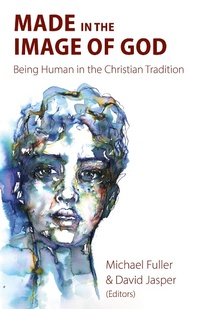
Made in the Image of God
Being Human in the Christian Tradition
Published on 15. May 2021
290 pages
978-1-78959-172-9 (ISBN)
Description

The question of our humanity has never been more pressing or uncertain. As human beings, is our nature simply biological? What is the place of philosophy and theology in determining our self-understanding? Are we dependent on our relationships with one another? Are we creatures created by God? Is our physical death an end of our being? All these questions are discussed in this book, which addresses the question of what it is to be human, made in the image of God. Its twelve essays cover a wide range of perspectives ranging from the Bible to issues in science and gender.
More details
Language
English
Place of publication
Durham
United Kingdom
File size
0,95 MB
ISBN-13
978-1-78959-172-9 (9781789591729)
Copyright in bibliographic data and cover images is held by Nielsen Book Services Limited or by the publishers or by their respective licensors: all rights reserved.
Schweitzer Classification
Other editions
Additional editions
Book
05/2021
Sacristy Press
€36.70
Shipment within 3-4 weeks
Persons
Content
- Intro
- Acknowledgements
- Contributors
- Foreword (Mark Strange)
- Introduction (Michael Fuller and David Jasper)
- Chapter 1. In the image of God: Being human in the biblical tradition (Nicholas Taylor)
- Humanity in creation
- The image of God and human redemption in the New Testament
- Concluding reflections
- Questions for discussion
- Further reading
- Chapter 2. Human being and the praise of God (John Rueben Davies)
- Saviours, religion and human societies
- Homo religiosus
- Homo orans
- Homo adorans
- Homo laudans
- Questions for discussion
- Further reading
- Chapter 3. "A little lower than the angels": The riddle of humanity in Christian theology (Trevor Hart)
- Who on earth do we think we are?
- How can we discover what we are?
- Some predicaments of being human
- Putting us finally in our place
- Questions for discussion
- Further reading
- Chapter 4. The end of the line? Life, death and the future of humanity (Robert Gillies)
- Introduction
- The human being
- Humility addressing creation
- Thoughts before tree fruits
- Language as gift from God
- Moving on quickly to the fifteenth century
- Augustine of Hippo (AD 354-430)
- "Will you not watch with me . . . ?"
- Looking ahead
- Questions for discussion
- Further reading
- Chapter 5. Participation in God: Ecumenical insights into theological anthropology from Eastern Orthodoxy (John McLuckie)
- The Buffalo Statement
- Theosis
- Human capacity for God
- Priests of creation
- Conclusion
- Questions for discussion
- Further reading
- Chapter 6. Compassion, human and divine (Harriet Harris)
- Compassion and human nature
- Compassion as an answer to the question "How are we to live?"
- Harmony of love for God, self and other
- Compassion in scripture
- Defining compassion, sympathy and empathy
- Compassion is not empathy
- Compassion in healing ourselves and our world
- "Compassion fatigue"?
- Compassion and divine nature
- Concluding remarks
- Questions for discussion
- Further reading
- Chapter 7. Being human in the European tradition and the Post-Enlightenment response (David Jasper)
- From the medieval to the modern mind
- From Romanticism to Nietzsche
- The twentieth century
- Conclusion
- Questions for discussion
- Further reading
- Chapter 8. Unique? Scientific constraints around theological anthropology (Michael Fuller)
- Introduction
- The imago Dei
- Are we alone in the universe?
- Are we unique amongst terrestrial creatures?
- Conclusion
- Questions for discussion
- Further reading
- Chapter 9. The biochemistry of being human (Delyth M. Reid)
- Introduction
- Humans are related to all life on earth
- Taking on the human form
- Modern humans
- The human brain and the seat of the soul
- Hormones holding us together
- Women's battle with hormones
- Testosterone
- MAOA, the so-called warrior gene
- Cortisol
- The neuro-biochemistry of the human brain
- Histamine, a controller to be controlled
- Mood and brain biochemistry
- Artificially altering our moods
- The consequences of alcohol for brain biochemistry
- Love and human brain biochemistry
- Oxytocin is the food of love and bonding
- Taking steps to the control of our biology
- Can we preserve our dead bodies for a human-made resurrection?
- Conclusion
- Questions for discussion
- Further reading
- Chapter 10. Flourishing dominion? Human and animal creatures in relationship (Margaret B. Adam)
- God creates humans and animals to be creatures together sharing dependence, particularity and flourishing
- The responsibility of dominion in the image of God
- Questions for discussion
- Further reading
- Chapter 11. Never unnecessary: Being human in the age of artificial intelligence (Eric Stoddart)
- The presence of the future
- "Alexa, have I been made redundant?"
- 226"Yes Siri, yes Siri, three bags full, Siri"
- The drudgery of freedom?
- "Work, rest and play": the theological importance of work
- Onward Christian cyborgs
- Humans-never trash, never unnecessary
- Questions for discussion
- Further reading
- Chapter 12. Made in the image of God: Theology and transgender (Alison Jasper)
- Poetics and the image of God
- In the beginning: Genesis: 1-3
- Relations between the sexes as a source of symbolism: anthropological insights
- The image and likeness of God: the creational order of loving interdependence
- We are still troubled: coming to some theopoetic conclusions
- Questions for discussion
- Further reading
- Afterword
