

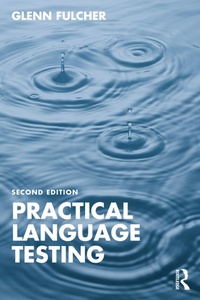
Practical Language Testing
2nd Edition
Published on 29. November 2024
364 pages
978-1-040-15332-1 (ISBN)
Description

Practical Language Testing equips you with the skills, knowledge and principles necessary to understand and construct language tests. This practical guide offers step-by-step guidelines on the design of assessments within the classroom and provides the necessary tools to analyse and improve assessments, as well as deal with alignment to externally imposed standards. Testing is situated both within the classroom and within the larger social context, and readers are provided with the knowledge necessary to make realistic and fair decisions about the use and implementation of tests.
Now in its second edition, this respected text has been substantially revised and updated, including a new chapter on validity drawing from the author's Messick Award for innovation in validity theory and practice. It also includes expanded coverage of standardised testing and learning-oriented assessment, and introduces task design features, including authenticity, and automated assessment.
With its frequently updated online resources to support language assessment (https://languagetesting.info/), this book is the ideal introduction for students of applied linguistics, TESOL and modern foreign language teaching, as well as practising teachers required to design or implement language testing programmes.
Now in its second edition, this respected text has been substantially revised and updated, including a new chapter on validity drawing from the author's Messick Award for innovation in validity theory and practice. It also includes expanded coverage of standardised testing and learning-oriented assessment, and introduces task design features, including authenticity, and automated assessment.
With its frequently updated online resources to support language assessment (https://languagetesting.info/), this book is the ideal introduction for students of applied linguistics, TESOL and modern foreign language teaching, as well as practising teachers required to design or implement language testing programmes.
More details
Edition
2nd edition
Language
English
Place of publication
London
United Kingdom
Publishing group
Taylor & Francis Ltd
Target group
College/higher education
Professional and scholarly
Illustrations
22 Tables, black and white; 9 Line drawings, black and white; 34 Halftones, black and white; 43 Illustrations, black and white
ISBN-13
978-1-040-15332-1 (9781040153321)
Copyright in bibliographic data and cover images is held by Nielsen Book Services Limited or by the publishers or by their respective licensors: all rights reserved.
Schweitzer Classification
Other editions
Additional editions
Glenn Fulcher
Practical Language Testing
Book
11/2024
2nd Edition
Routledge
€197.10
Shipment within 10-20 days
Glenn Fulcher
Practical Language Testing
Book
11/2024
2nd Edition
Routledge
€58.10
Shipment within 10-20 days

Glenn Fulcher
Practical Language Testing
Book
11/2024
Taylor & Francis
Unfortunately, price unknown
Available (delivery time upon request)
Person
Glenn Fulcher is Emeritus Professor of Education and Language Assessment in the School of Education at the University of Leicester, UK. He is co-editor of The Routledge Handbook of Language Testing and author of Re-examining Language Testing: A Philosophical and Social Inquiry. These two books jointly won the SAGE/ILTA Book Award in 2016. His other books include Language Testing and Assessment: An Advanced Resource Book and Testing Second Language Speaking. He has published over 100 research papers. In 2021 he received the Messick Memorial Award from Educational Testing Service, and in 2022 was elected a fellow of the Academy of Social Sciences. He is also a UK National Teaching Fellow.
Content
Acknowledgements
Preface
Chapter 1 - Testing and assessment in context
1. Test purpose
2. Tests in educational systems
3. Testing rituals
4. Unintended consequences
5. Testing and society
6. Historical interlude I
7. The politics of language testing
8. Historical interlude II
9. Professionalising language education and testing
10. Validity
Activities
Chapter 2 - Standardised testing
1. Two paradigms
2. Testing as science
3. What's in a curve?
4. The curve and score meaning
5. Putting it into practice
6. Test scores in a consumer age
7. Testing the test
8. Introducing reliability
9. Calculating reliability
10. Living with uncertainty
11. Reliability and test length
12. Relationships with other measures
13. Measurement
Activities
Chapter 3 - Classroom assessment
1. Life at the chalk-face
2. Assessment for learning
3. Self- and peer-assessment
4. Dynamic assessment
5. Understanding change
6. Assessment and second language acquisition
7. Criterion-referenced testing
8. Dependability
9. Assessment literacy
Activities
Chapter 4 - Deciding what to test
1. The test design cycle
2. Construct definition
3. Where do constructs come from?
4. Models of communicative competence
5. From definition to design
Activities
Chapter 5 - Designing test specifications
1. What are test specifications?
2. Specifications for testing and teaching
3. A sample detailed specification for reading test
4. Granularity
5. Performance conditions
6. Target language use domain analysis
7. Accommodations
8. Back and forth
Activities
Chapter 6 - Evaluating, prototyping and piloting
1. Investigating usefulness and usability
2. Evaluating items, tasks and specifications
3. Guidelines for multiple-choice items
4. Prototyping
5. Piloting
6. Field testing
7. Item shells
8. Operational item review and pre-testing
Activities
Chapter 7 - Scoring language tests
1. Scoring items
2. Scorability
3. Scoring constructed response tasks
4. Automated scoring
5. Corrections for guessing
6. Avoiding own goals
Activities
Chapter 8 - Aligning tests to standards
1. It's as old as the hills
2. The definition of 'standards'
3. The uses of standards
4. Unintended consequences revisited
5. Using standards for harmonisation and identity
6. How many standards can we afford?
7. Performance level descriptors (PLDs) and test scores
8. Some initial decisions
9. Standards-setting methodologies
10. Evaluating standard-setting
11. Training
12. The special case of CEFR
13. You can always count on uncertainty
Activities
Chapter 9 - Validity
1. Preliminaries
2. The Messick consensus
3. Argument-based validation
4. Technicalism
5. The new realism
6. Constructivism
7. Pragmatic realism
8. Conclusion
Activities
Epilogue
Appendices
Glossary
References
Index
Preface
Chapter 1 - Testing and assessment in context
1. Test purpose
2. Tests in educational systems
3. Testing rituals
4. Unintended consequences
5. Testing and society
6. Historical interlude I
7. The politics of language testing
8. Historical interlude II
9. Professionalising language education and testing
10. Validity
Activities
Chapter 2 - Standardised testing
1. Two paradigms
2. Testing as science
3. What's in a curve?
4. The curve and score meaning
5. Putting it into practice
6. Test scores in a consumer age
7. Testing the test
8. Introducing reliability
9. Calculating reliability
10. Living with uncertainty
11. Reliability and test length
12. Relationships with other measures
13. Measurement
Activities
Chapter 3 - Classroom assessment
1. Life at the chalk-face
2. Assessment for learning
3. Self- and peer-assessment
4. Dynamic assessment
5. Understanding change
6. Assessment and second language acquisition
7. Criterion-referenced testing
8. Dependability
9. Assessment literacy
Activities
Chapter 4 - Deciding what to test
1. The test design cycle
2. Construct definition
3. Where do constructs come from?
4. Models of communicative competence
5. From definition to design
Activities
Chapter 5 - Designing test specifications
1. What are test specifications?
2. Specifications for testing and teaching
3. A sample detailed specification for reading test
4. Granularity
5. Performance conditions
6. Target language use domain analysis
7. Accommodations
8. Back and forth
Activities
Chapter 6 - Evaluating, prototyping and piloting
1. Investigating usefulness and usability
2. Evaluating items, tasks and specifications
3. Guidelines for multiple-choice items
4. Prototyping
5. Piloting
6. Field testing
7. Item shells
8. Operational item review and pre-testing
Activities
Chapter 7 - Scoring language tests
1. Scoring items
2. Scorability
3. Scoring constructed response tasks
4. Automated scoring
5. Corrections for guessing
6. Avoiding own goals
Activities
Chapter 8 - Aligning tests to standards
1. It's as old as the hills
2. The definition of 'standards'
3. The uses of standards
4. Unintended consequences revisited
5. Using standards for harmonisation and identity
6. How many standards can we afford?
7. Performance level descriptors (PLDs) and test scores
8. Some initial decisions
9. Standards-setting methodologies
10. Evaluating standard-setting
11. Training
12. The special case of CEFR
13. You can always count on uncertainty
Activities
Chapter 9 - Validity
1. Preliminaries
2. The Messick consensus
3. Argument-based validation
4. Technicalism
5. The new realism
6. Constructivism
7. Pragmatic realism
8. Conclusion
Activities
Epilogue
Appendices
Glossary
References
Index
